Easy48 hr cure
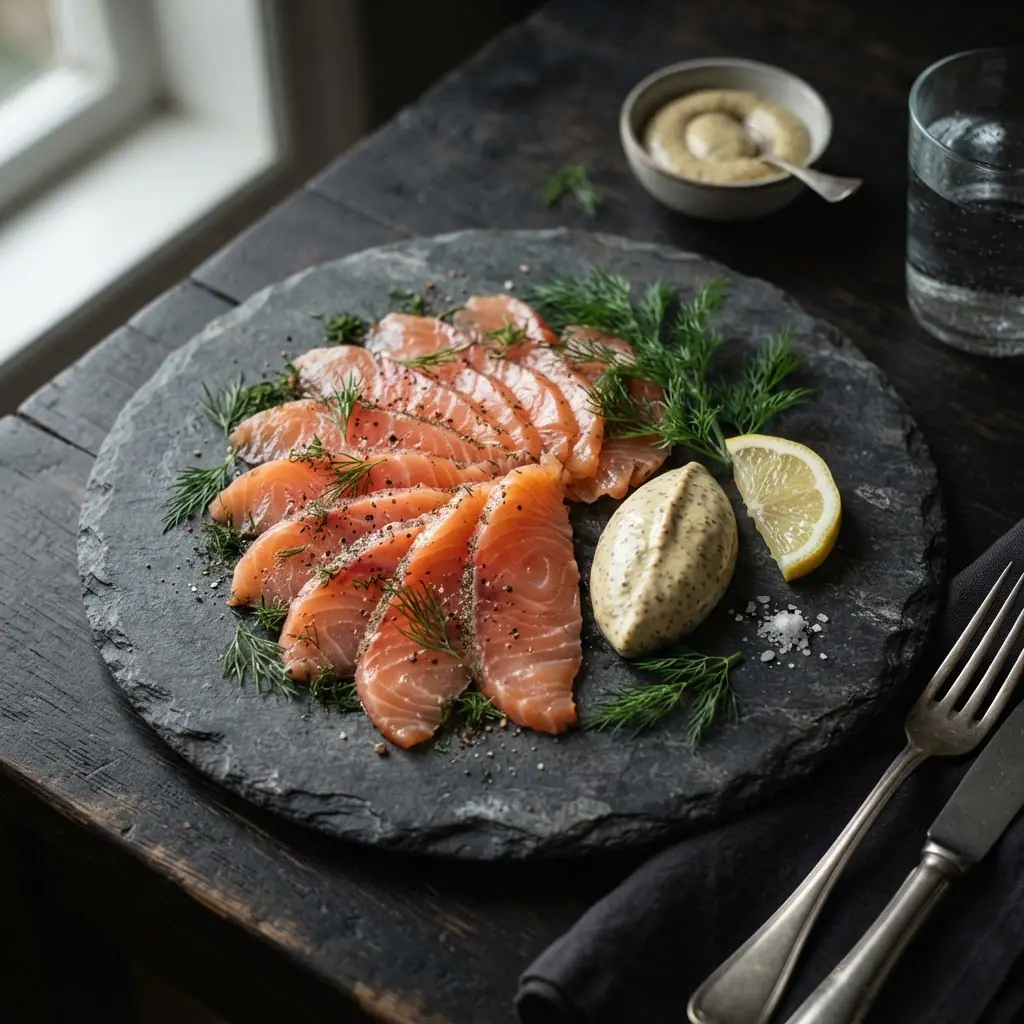
Gravlaks
Fjord salmon cured with dill, salt and sugar until silky and translucent, served with a sweet mustard sauce.
Salmon filletFresh dillSea saltSugar
View RecipeRegion · Western Fjords
Deep cold water on one side and near-vertical farmland on the other. The fjord coast built a cuisine of salt, wind, smoke and the long soak.
16 recipes · content last checked
Vestlandet is the part of Norway the sea reaches furthest into. Fjords cut inland a hundred kilometres and more, and they are deep: cold, saline water within rowing distance of farms hemmed in by rock. Cod come in on their winter spawning run as skrei; kveite, halibut, is traditionally the most prized white fish; blue mussels grow on ropes in water that stays cold all summer. The cooking is unhurried and plain in the best sense — cod poached just below a simmer with its own roe and liver, mussels opened under a lid in four minutes, a Bergen fish soup balanced with vinegar and sugar until it tastes bright rather than rich.
Salt and moving air did the rest, and the region's two preserving trades are not the same thing. Tørrfisk — stockfish — is cod split and hung on wooden racks to dry in cold air, unsalted. Klippfisk is cod salted in stacks first and dried afterwards. Both keep for months without refrigeration, and both turned western ports into trading towns. Bergen, in most accounts, was where the northern dried fish was gathered and sold on, its German merchants holding the trade for centuries. Klippfisk belongs more particularly to the Nordmøre and Sunnmøre coast. The return cargoes mattered as much as the outbound: trade with Spain and Portugal carried tomatoes, peppers and olive oil into Norwegian kitchens, and bacalao came of it.
Preserved fish is never the finished dish but the raw material for a slower one: tørrfisk wants seven to ten days in cold water, changed daily, before it will poach. Steeped in a lye bath instead, stockfish becomes lutefisk, the translucent Advent dish that divides every table it lands on. Persetorsk sits at the gentle end of that reasoning, cod salted and pressed under weight for hours; plukkfisk at the thrifty end, yesterday's cod and potato folded back into a white sauce.
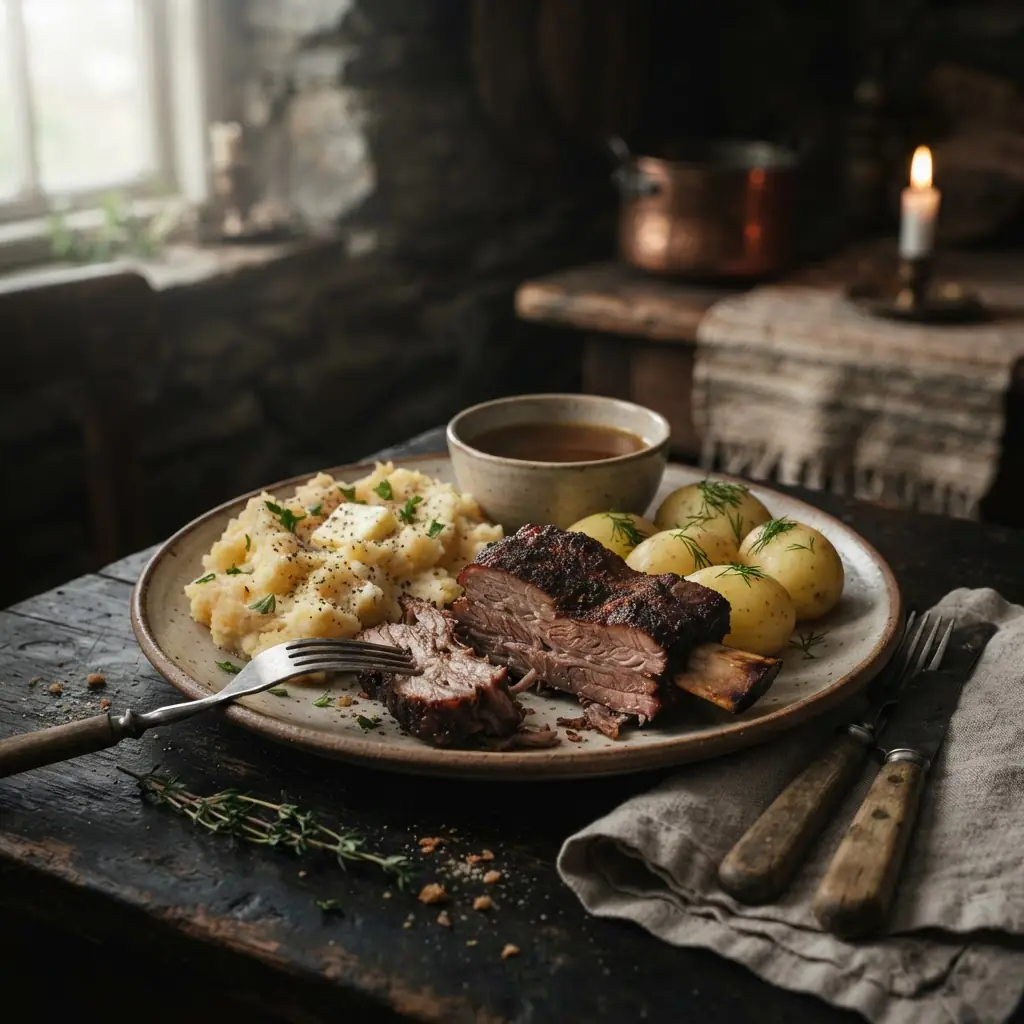
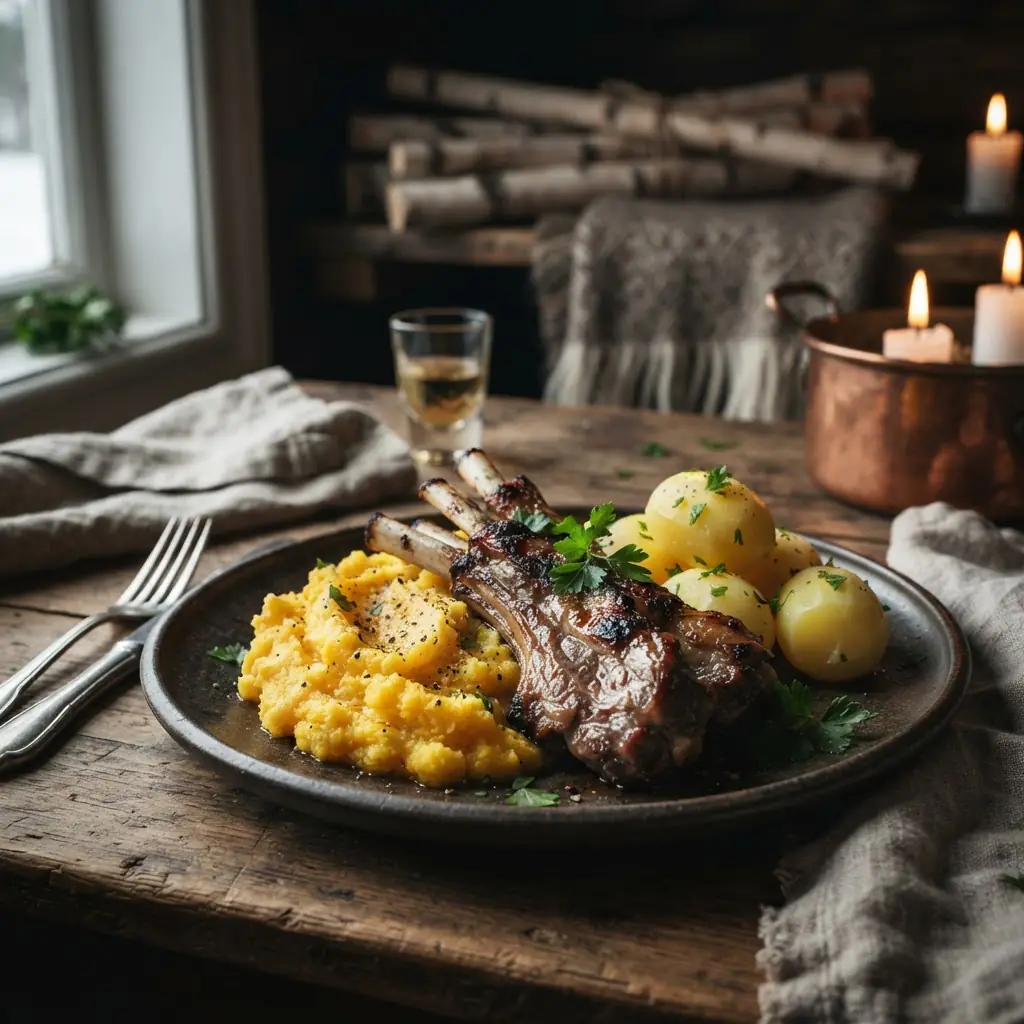
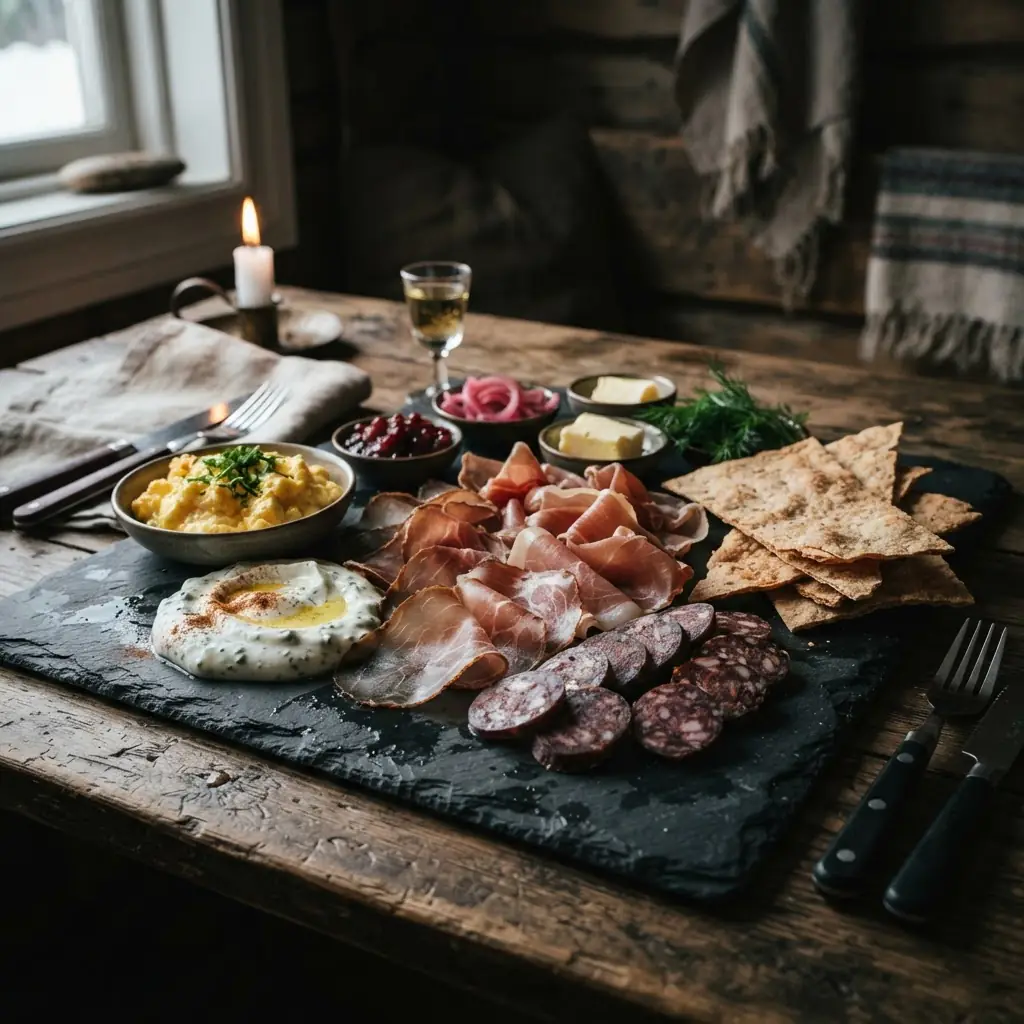
The relief that makes the fjords deep makes farming hard. Holdings run in narrow strips up the valley sides, and ground that will not take a plough will take sheep. Summer pasture high on the mountain, autumn slaughter, then months of salt, smoke and drying air — that sequence sits behind nearly every cured meat in the west. Pinnekjøtt, stick meat, is salted and often smoked mutton or lamb ribs, soaked about a day and steamed over peeled birch branches until the meat leaves the bone. Smalahove, the smoked sheep's head associated with Voss, comes of the same refusal to waste an animal, as does vossakorv, the valley's syrup-sweetened, birch-smoked sausage. A spekemat board is the summer face of that year.
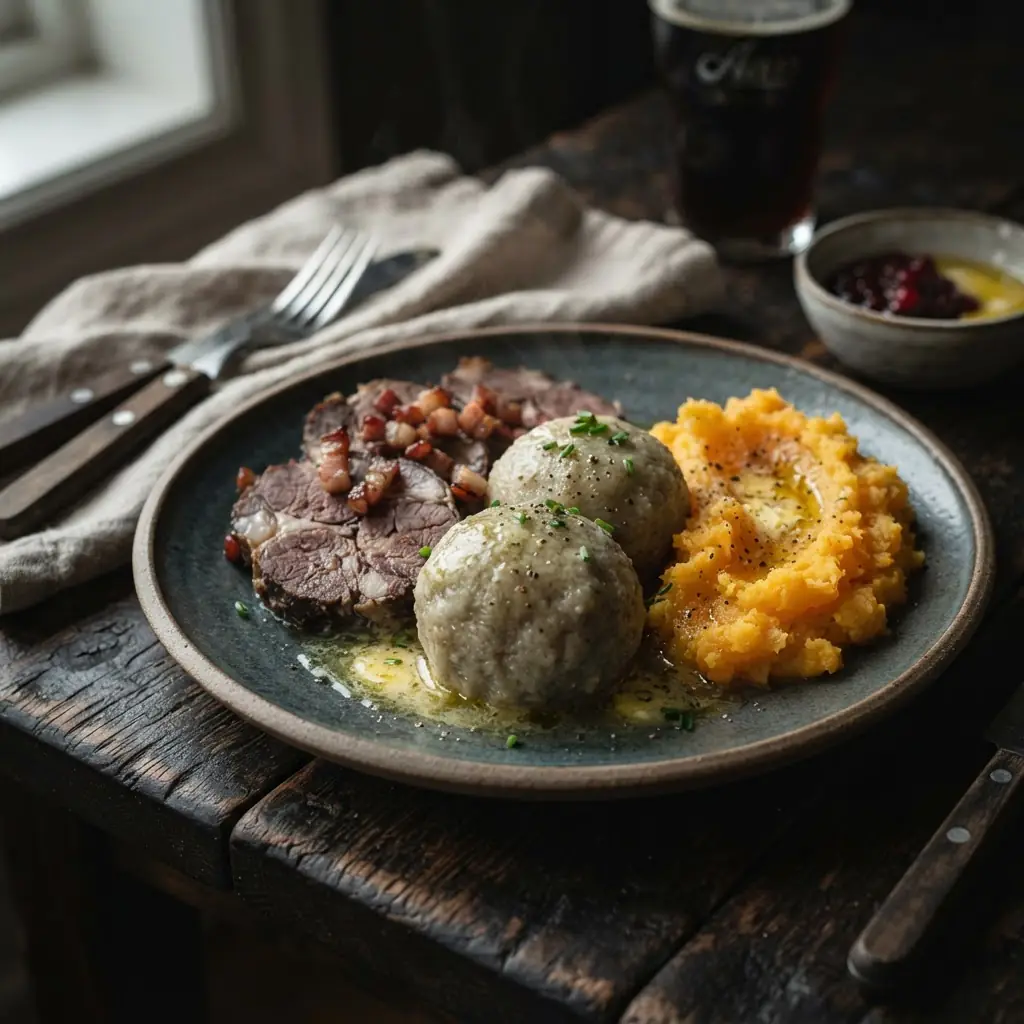
The potato arrived late and settled hard. Along this coast it produced a dumpling belt with almost as many names as parishes — raspeballer, komle, kompe, potetball — raw potato grated and wrung dry, bound with barley and wheat flour, commonly with salt pork in the middle, simmered in salted-meat broth. Filling food from very little, still a working Thursday fixture rather than a museum piece.
What holds it together is weather. The west takes the Atlantic first and a great deal of it — poor weather for drying in the sun, good weather for cold wind-drying, salting, smoke and the covered pot. It is why so much of the western repertoire comes in two stages: something put by months ago, brought back with a long soak, a slow steam, a bare simmer. The sixteen recipes here follow that order — what the water gives fresh, what was kept, what came off the mountain farms, and what the potato made of the rest.
Gravlaks is raw cured fish and spekemat is ready-to-eat cured meat. Salt and sugar curing does not cook fish or reliably destroy parasites, and both recipes carry food-safety callouts on their own pages with links to public-health authorities. Read the callout before preparing either.
Fjord salmon cured with dill, salt and sugar until silky and translucent, served with a sweet mustard sauce.
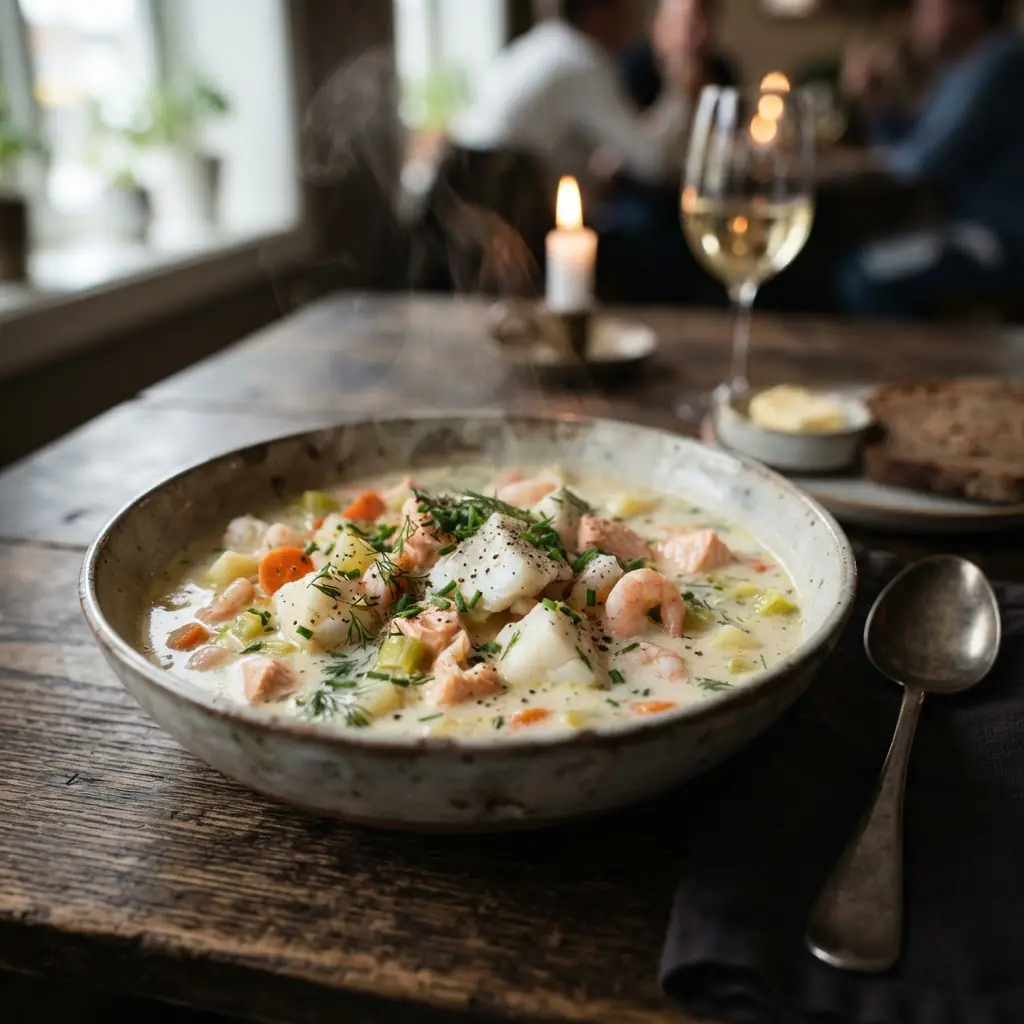
A velvety Bergen fish soup — sweet root vegetables, white fish and shellfish in a lightly soured cream broth.
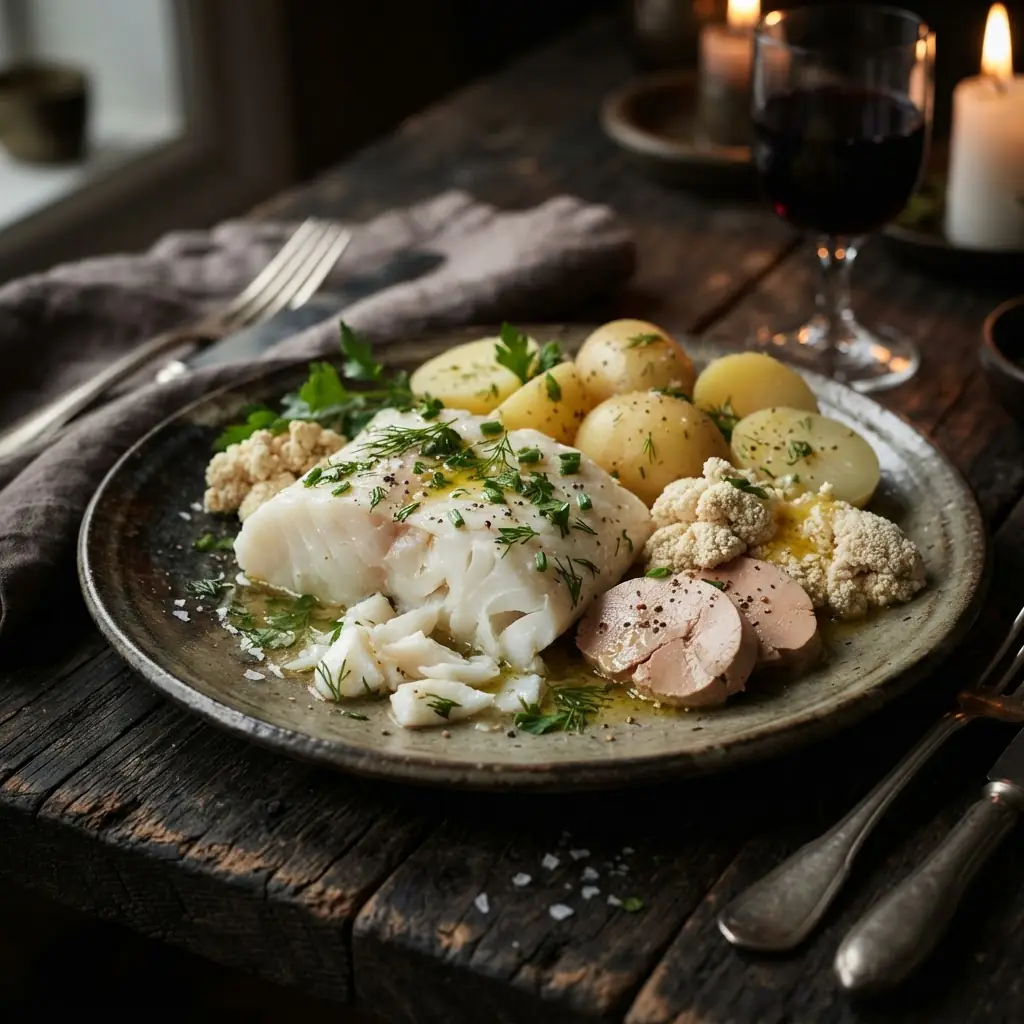
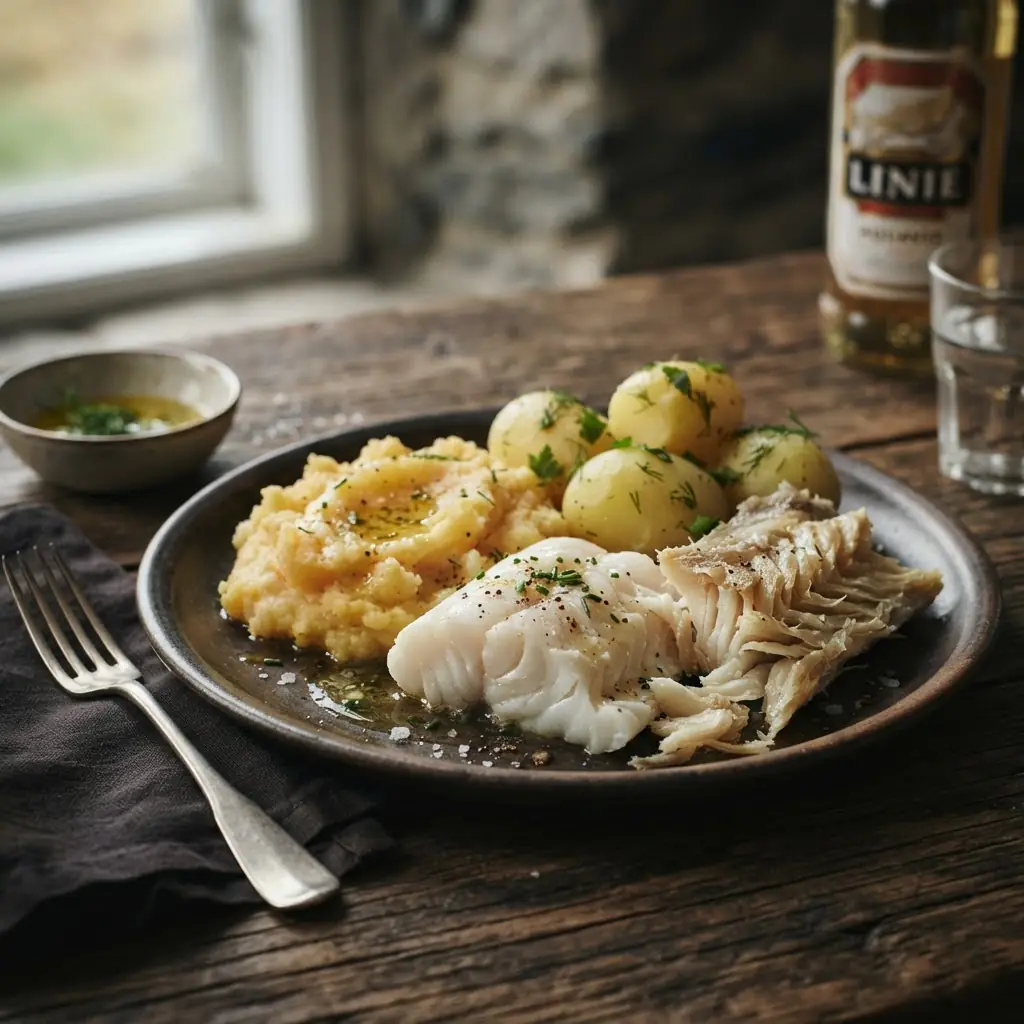
Poached winter cod served the coastal way — with its roe, liver, boiled potatoes and melted butter.
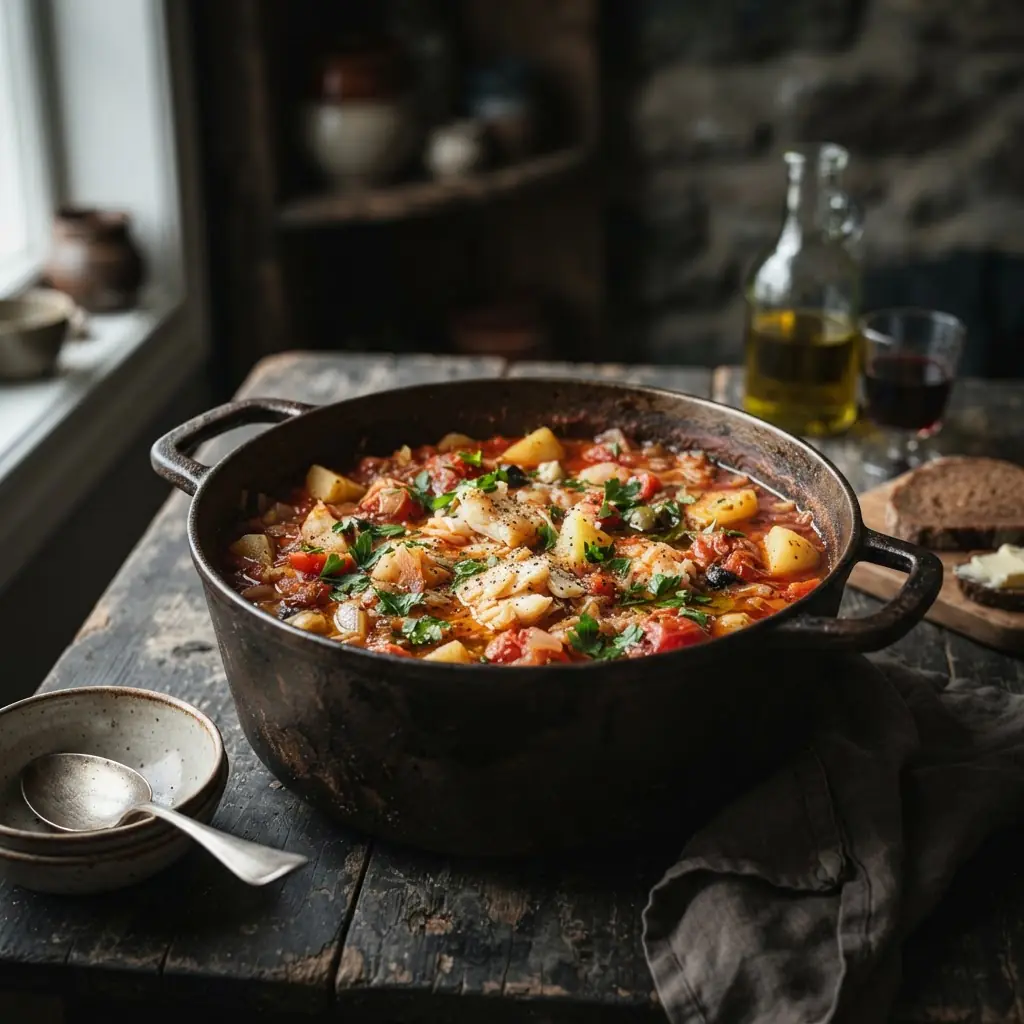
Salt-cod stewed with tomatoes, potatoes, onions and olive oil — Norway's Iberian-inflected coastal classic.
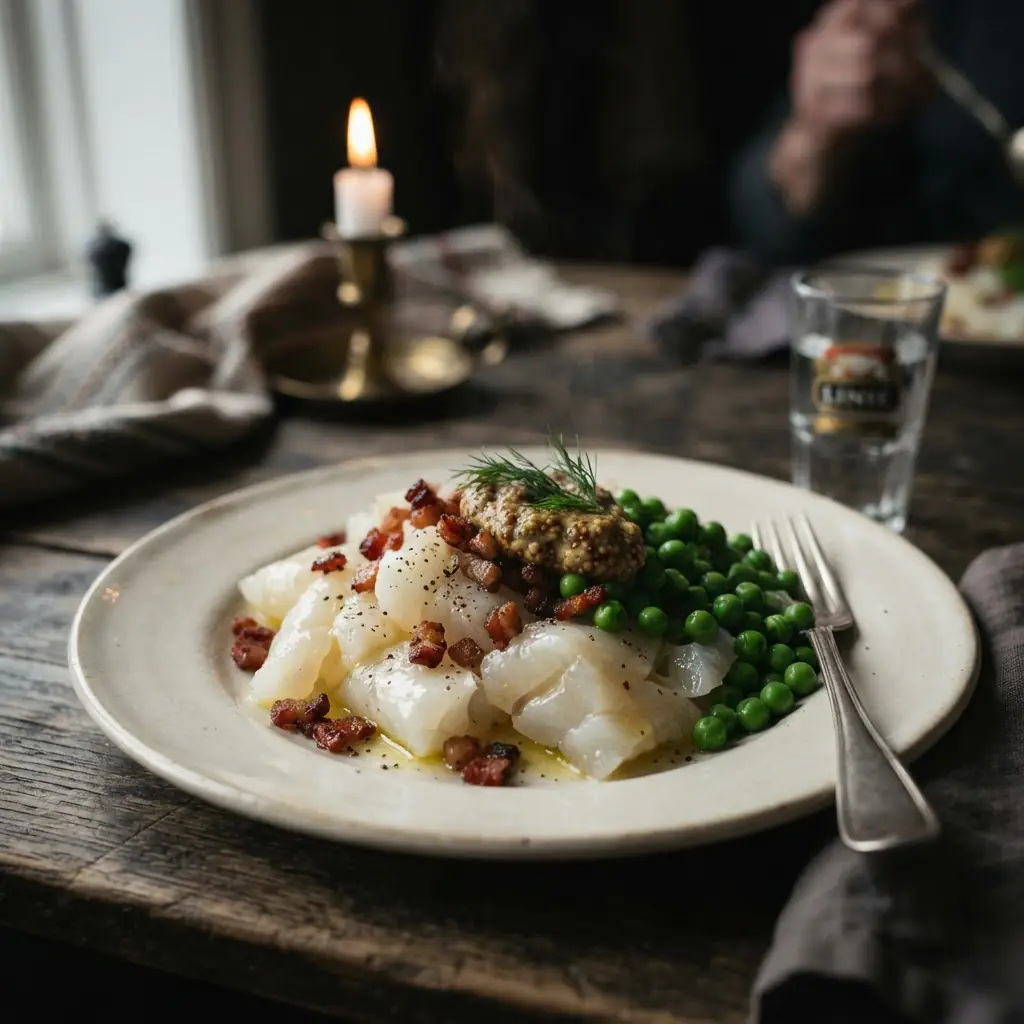
Lye-cured stockfish poached to a translucent, quivering jelly, served with bacon, peas and mustard.
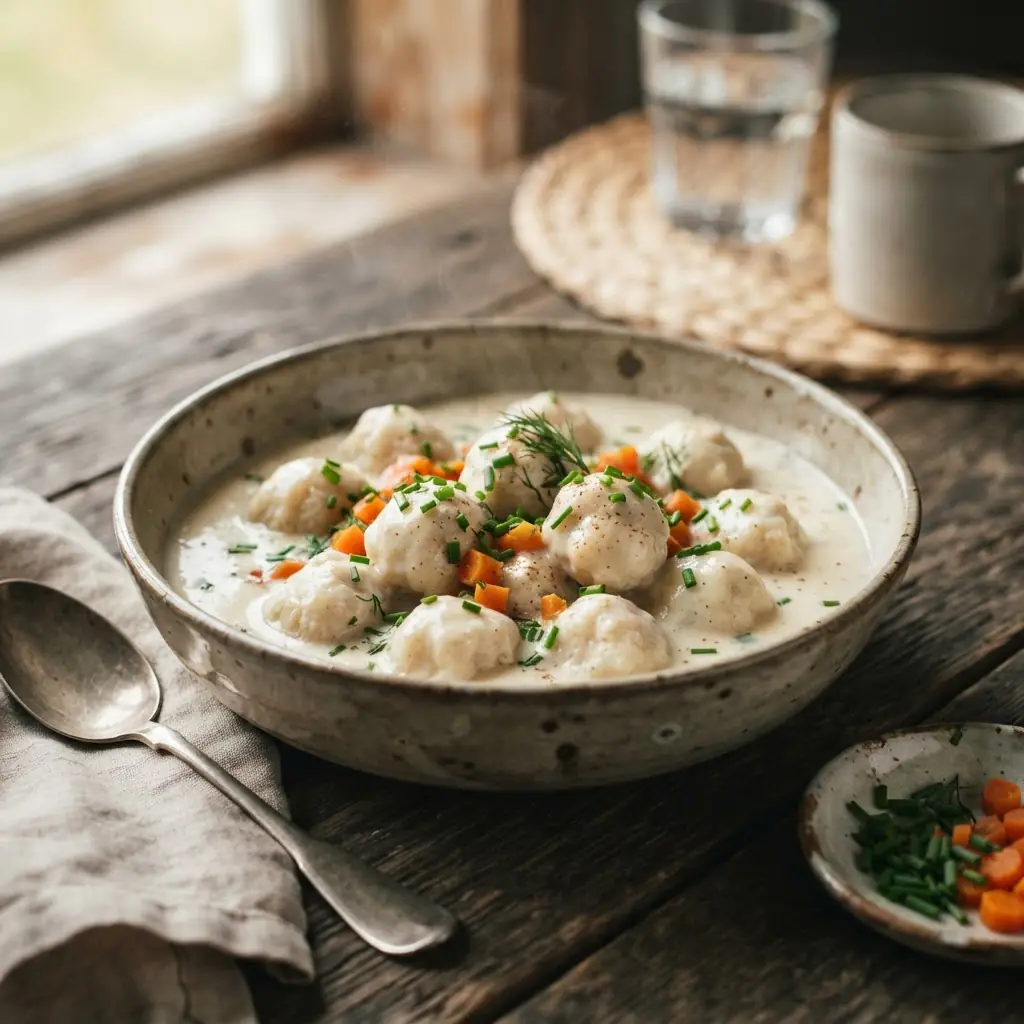
Feather-light poached fish balls in a silky white sauce, the tinned-pantry staple made from scratch.
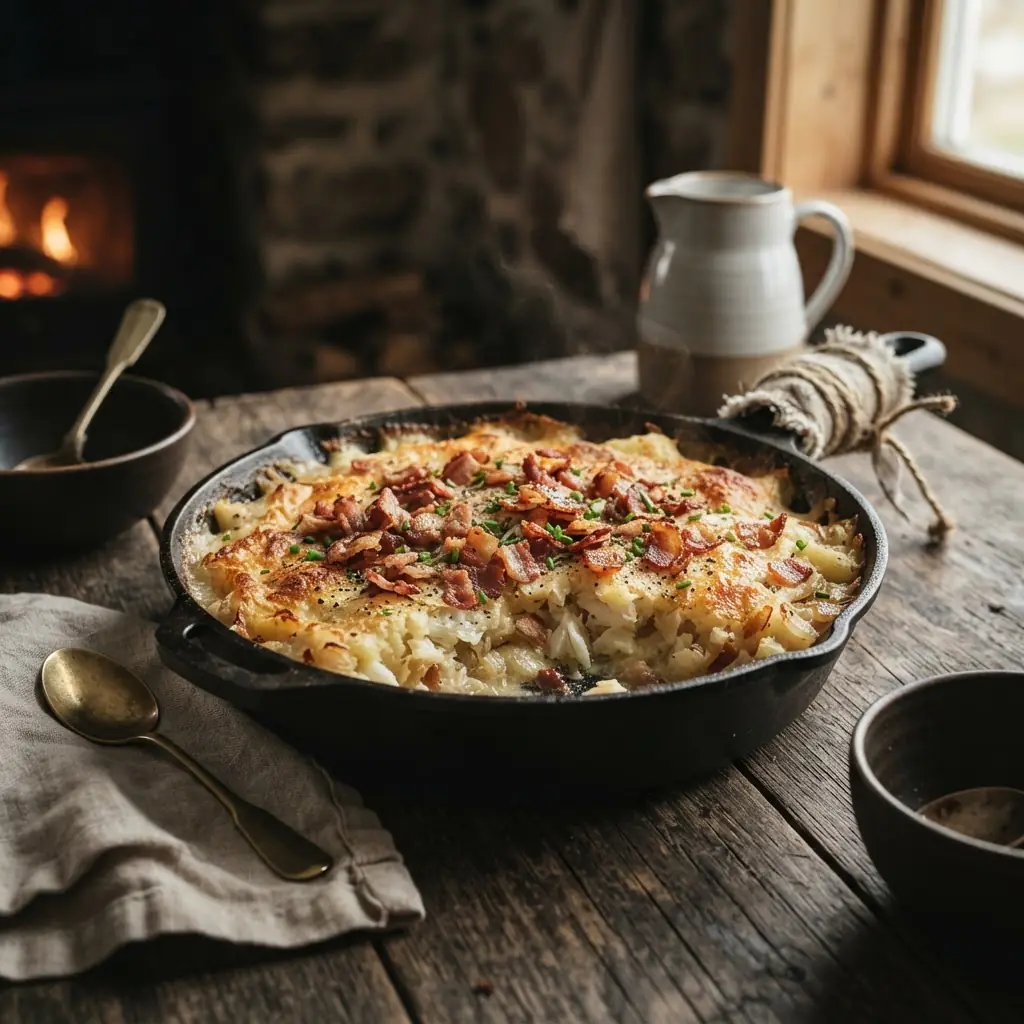
Leftover poached fish and potato, "plucked" into a creamy hash and browned, finished with crisp bacon.
A whole salt-cured, smoked sheep's head steamed until tender — the fearless heritage dish of Voss.
Salt-cured, dried lamb ribs steamed over birch sticks until falling from the bone — the western Christmas roast.
Dense potato dumplings simmered with salted meat, served with rutabaga, butter and crisp bacon.
A platter of air-dried cured meats — lamb, ham and sausage — with scrambled egg, sour cream and flatbread.
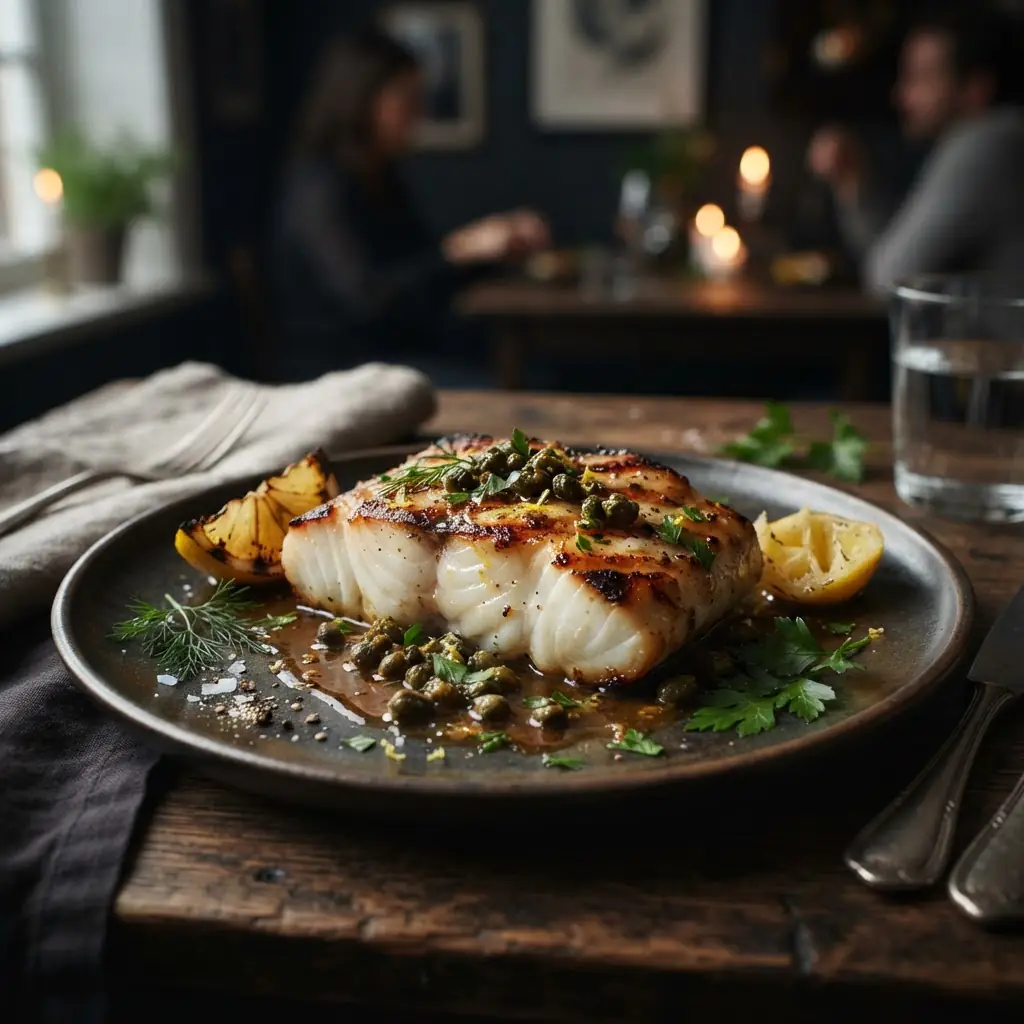
Thick halibut steaks grilled and glazed with brown butter, capers and lemon — pristine fjord fish.
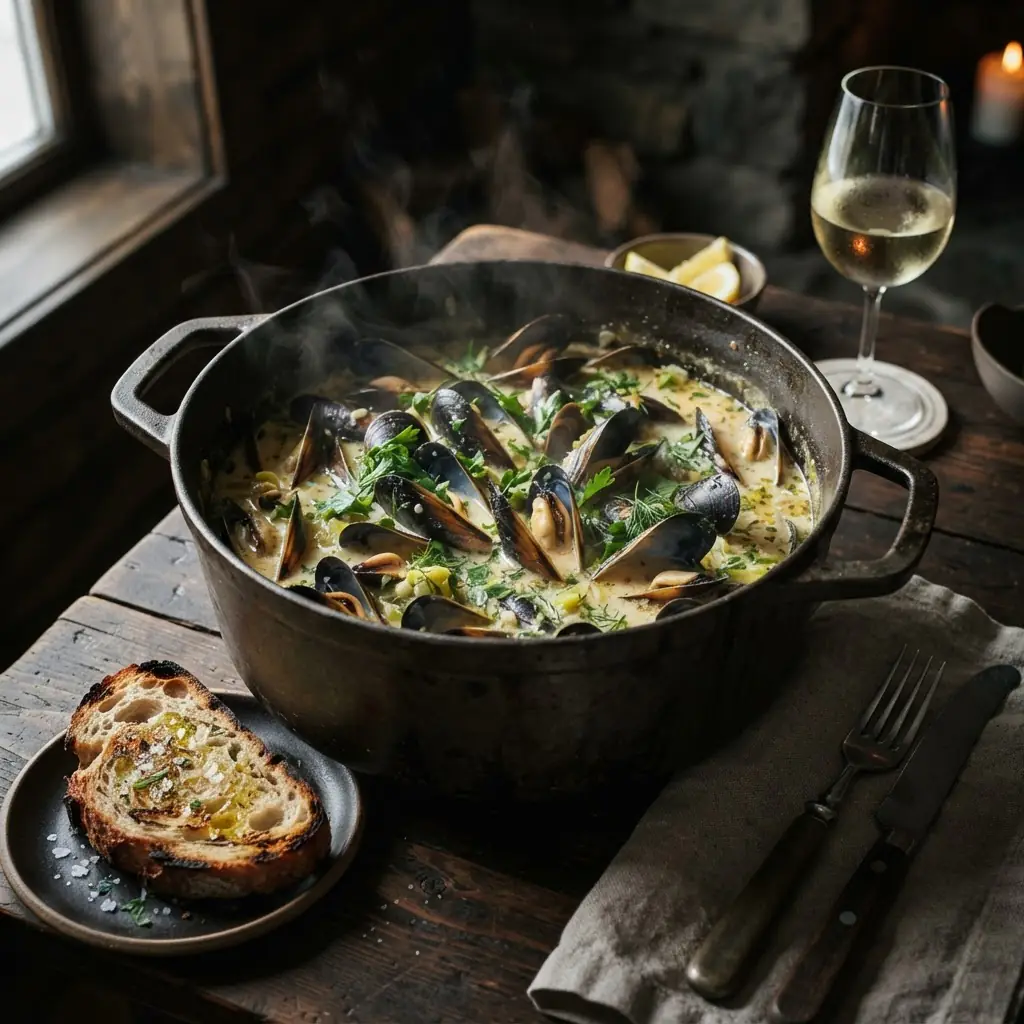
Fjord-farmed blue mussels steamed open in white wine, leek and cream, served with grilled bread.
Wind-dried Lofoten stockfish — intensely savoury — soaked, gently poached and served with root purée.
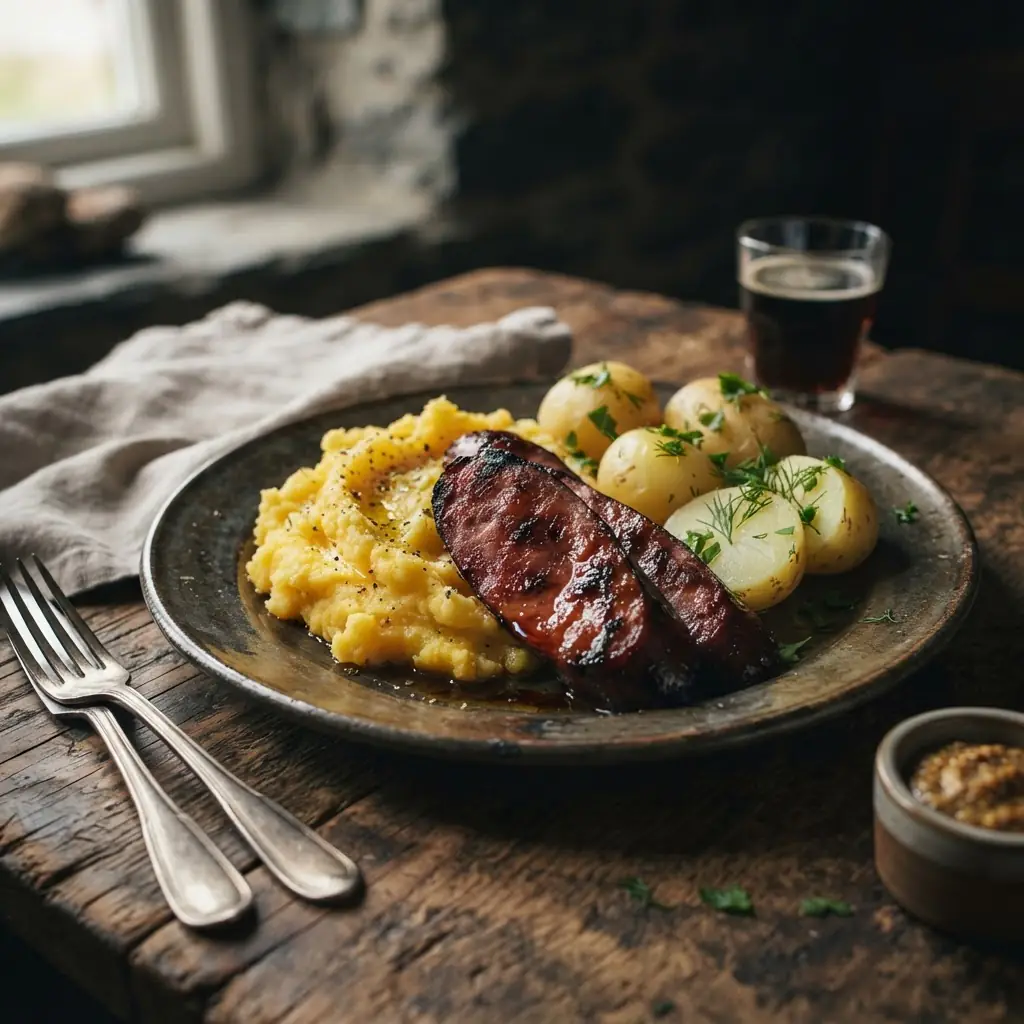
A dark, smoky Voss sausage of lamb and beef, simmered and sliced with potatoes and rutabaga mash.
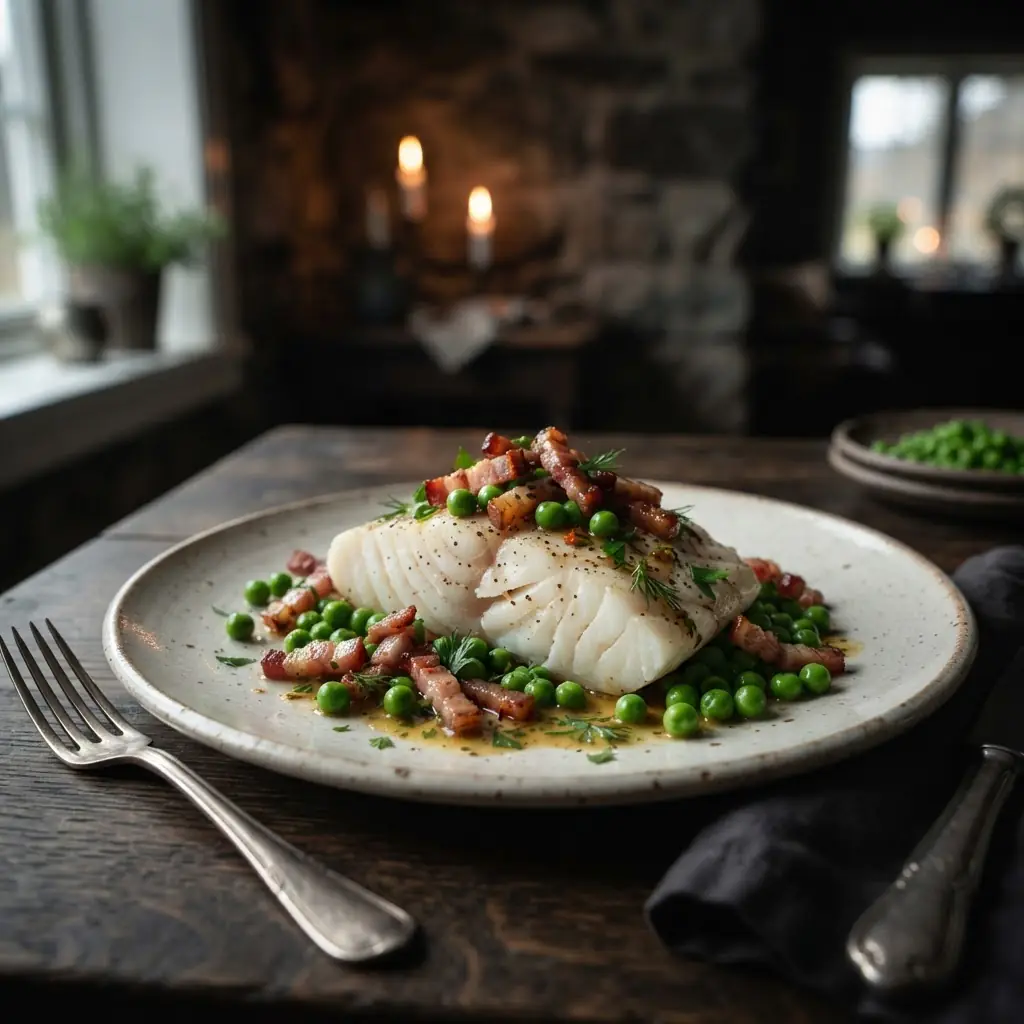
Lightly salted, pressed cod with a firm, silky bite, poached and served with bacon-butter and peas.
Written by the Norcook editorial archive. No individual author is named on this hub, and its source panel is not a qualified review of any linked recipe — see the editorial and food-safety policy.
Content last checked: