Easy2 hr 30 min
Fårikål
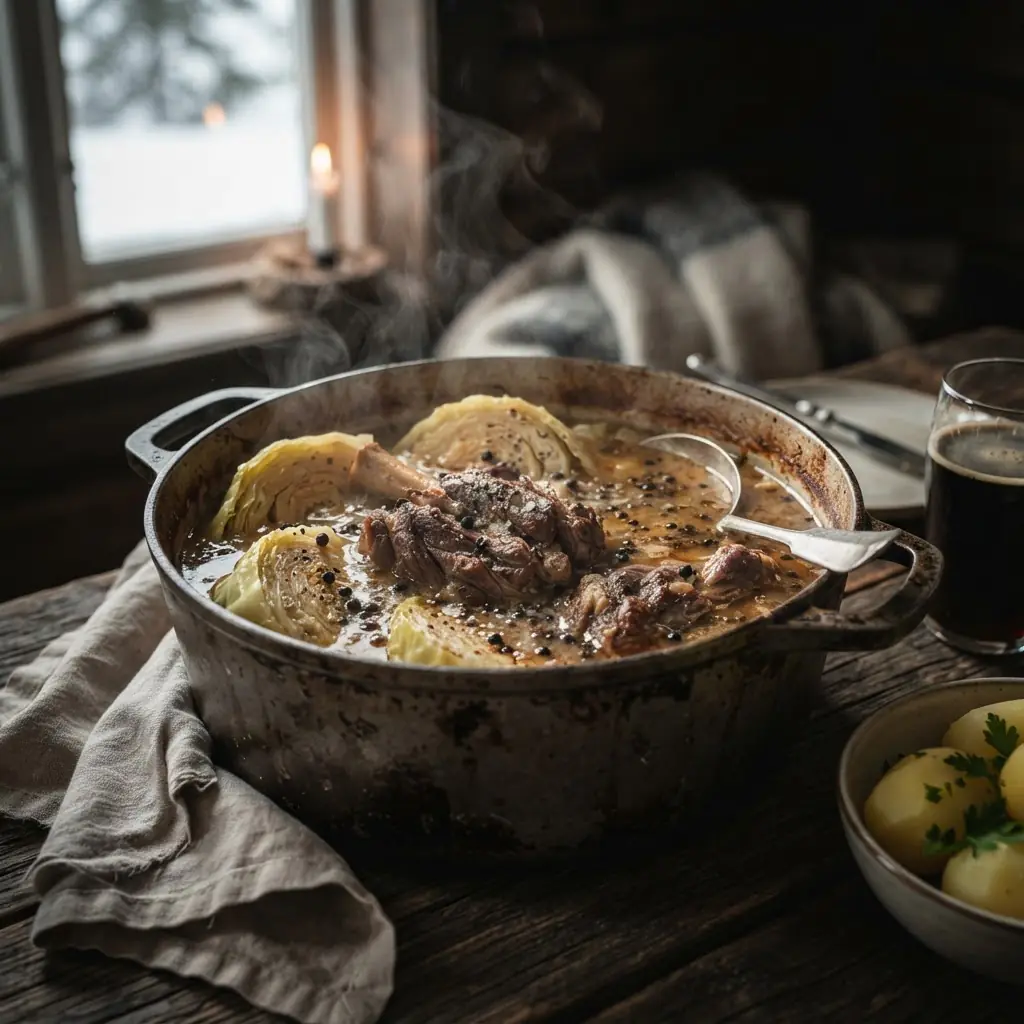
Norway's national dish — mutton and cabbage layered with whole peppercorns and slowly braised to tenderness.
MuttonCabbageBlack peppercornsFlour
View RecipeSeasonal collection
The busiest weeks of the working year: the hunt, the gathering, the autumn slaughter, and the salt-and-cellar logic that feeds the table until spring.
16 recipes · content last checked
Høst — autumn — is the shortest of the Norwegian working seasons and the busiest. Between the end of the summer grazing and the first hard frost, a farm household traditionally brought in everything it meant to eat until spring: the animals down from the mountain pasture, the roots out of the ground, the berries off the bog, the fish out of the lake. What survives of that work in the kitchen is not really a set of autumn dishes. It is an autumn logic — salt, smoke, cellar and cold — that goes on shaping the table for the rest of the year.
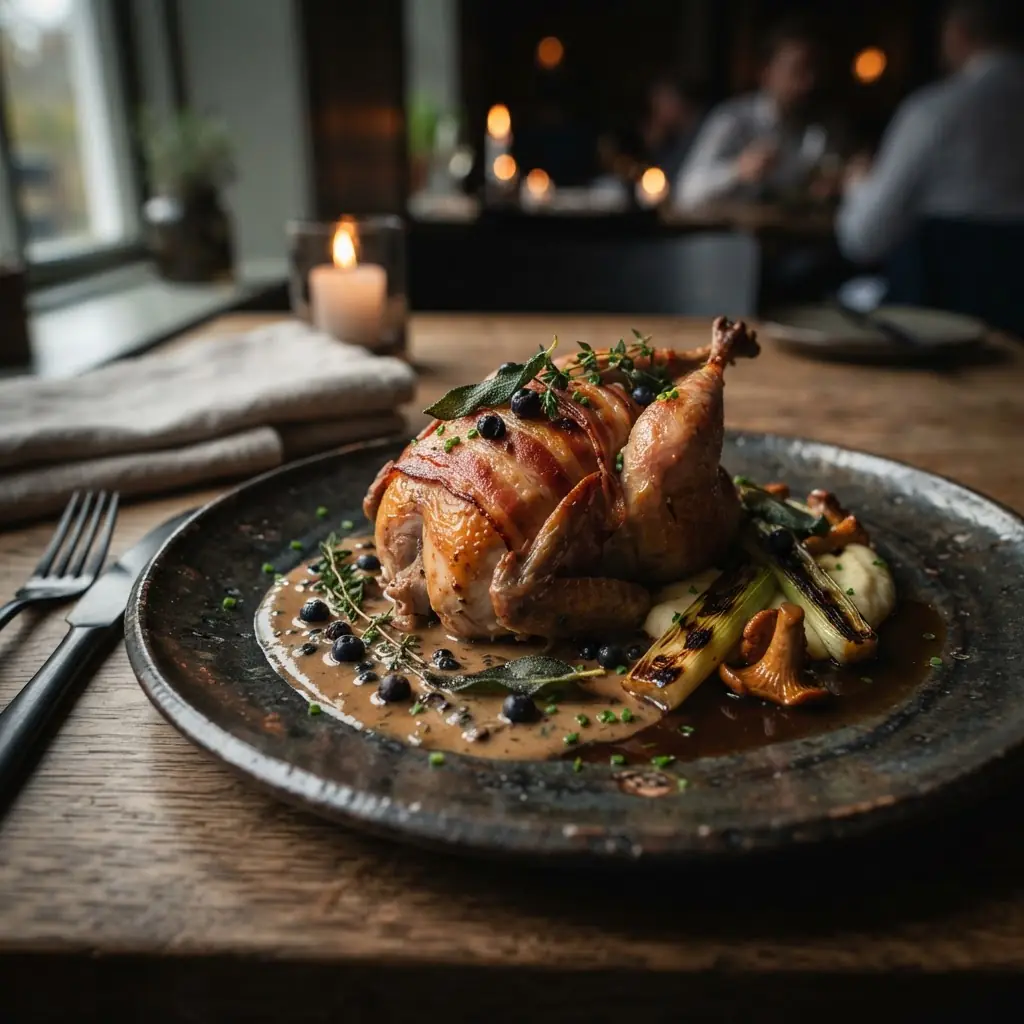
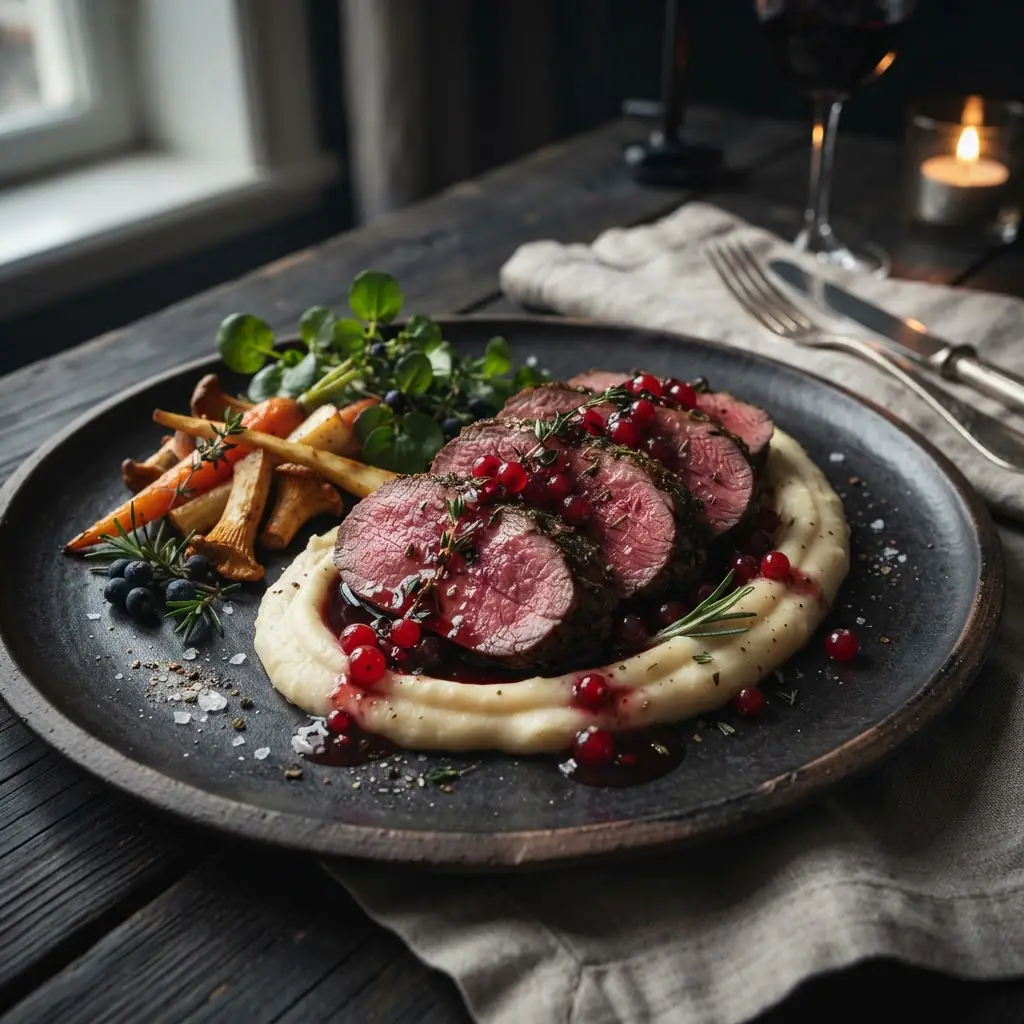
The game seasons open in early autumn and run on into winter, and the northern kitchen follows them. Rype, the ptarmigan of the high tundra, is the leanest of the birds and the most carefully handled, barded with bacon for rypestek. Hjortestek takes wild red deer from the forest edge and sets it against root purée and a jus sharpened with berries. Reindeer sits slightly apart: in Sápmi it is herded rather than stalked, and the autumn work is a gathering of the herds, but what it puts on the plate — finnbiff, bidos — belongs to the same weeks.
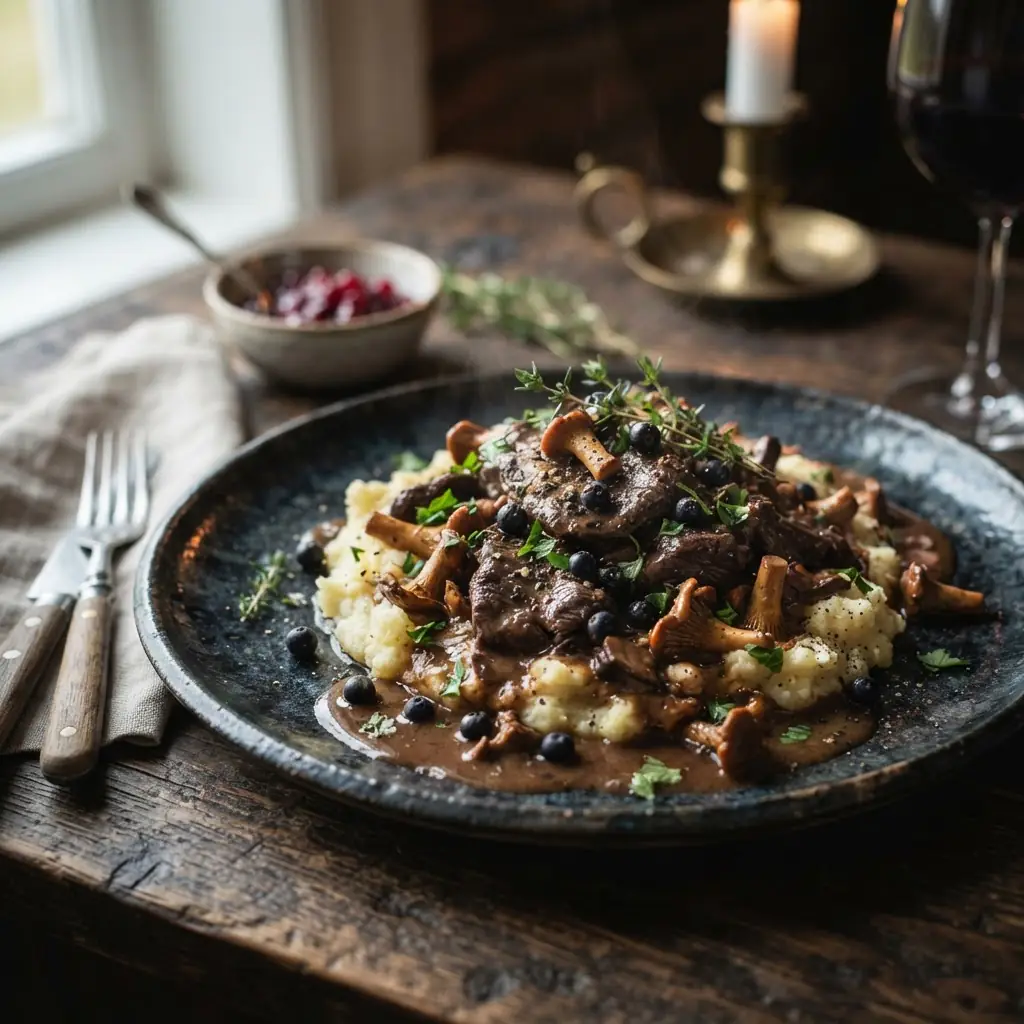
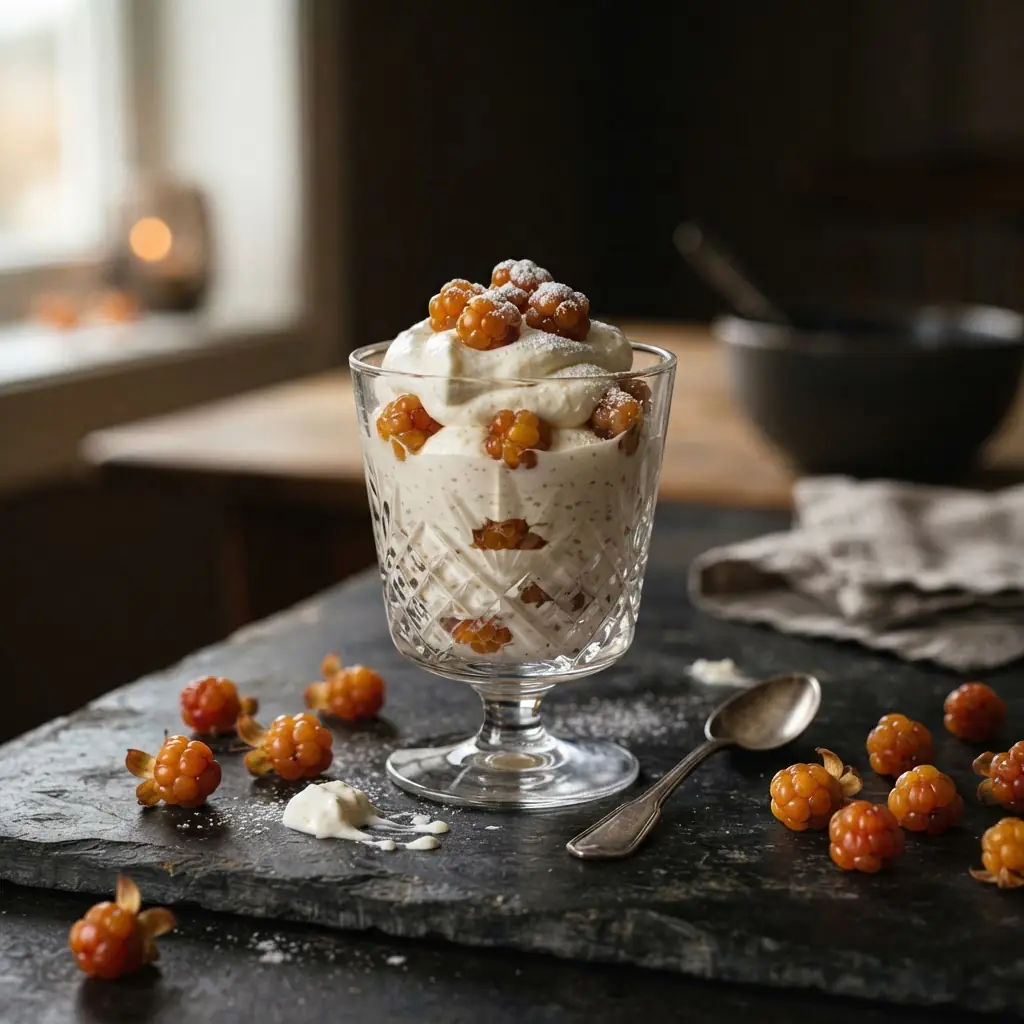
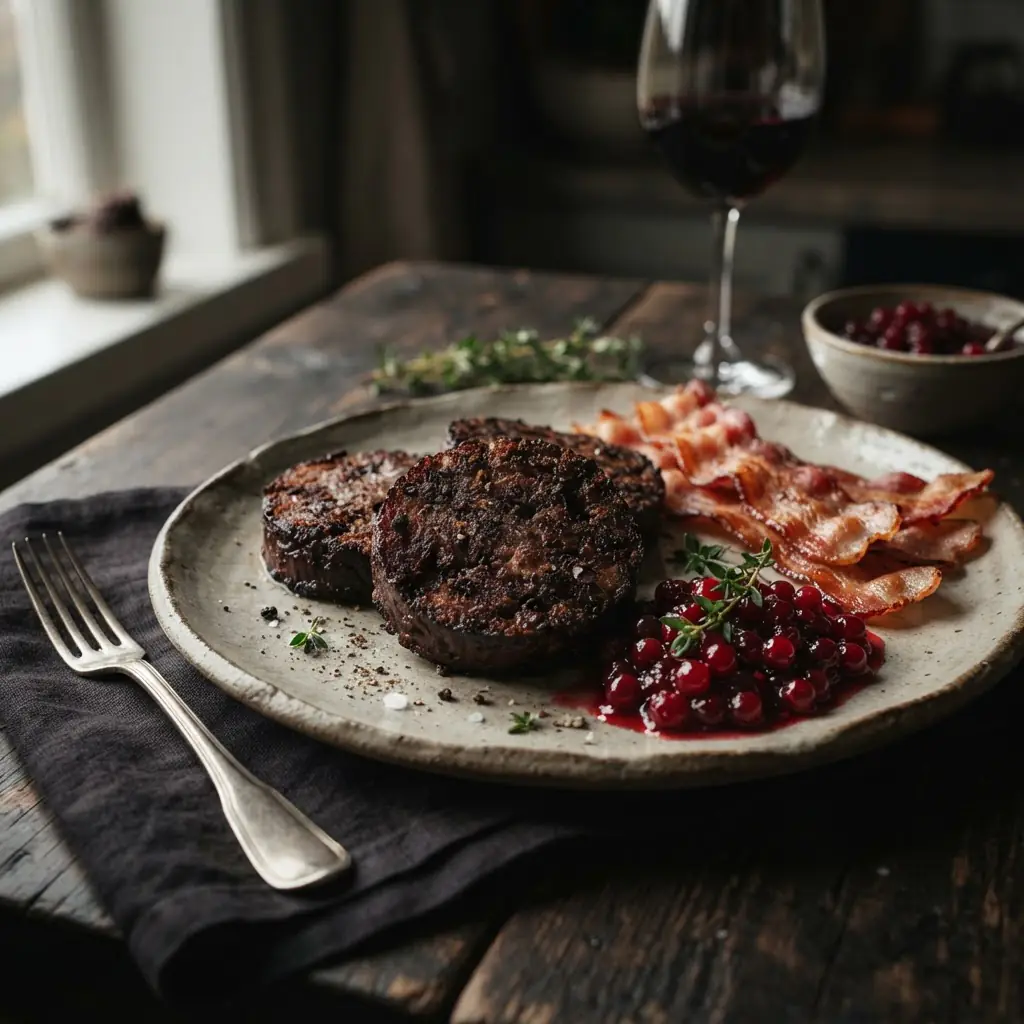
Foraging runs alongside the hunt. Multe, the cloudberry, ripens across the northern bogs in a window of a few weeks from late summer into early autumn, and picking grounds are still spoken of carefully; folded through lightly whipped cream it becomes multekrem. Tyttebær — lingonberries — come later, keep almost indefinitely, and are why a sharp red spoonful sits beside blood pudding, pork and game rather than in a bowl of its own. Kantareller come off the forest floor in the same weeks and go straight into the pan ahead of shaved reindeer.
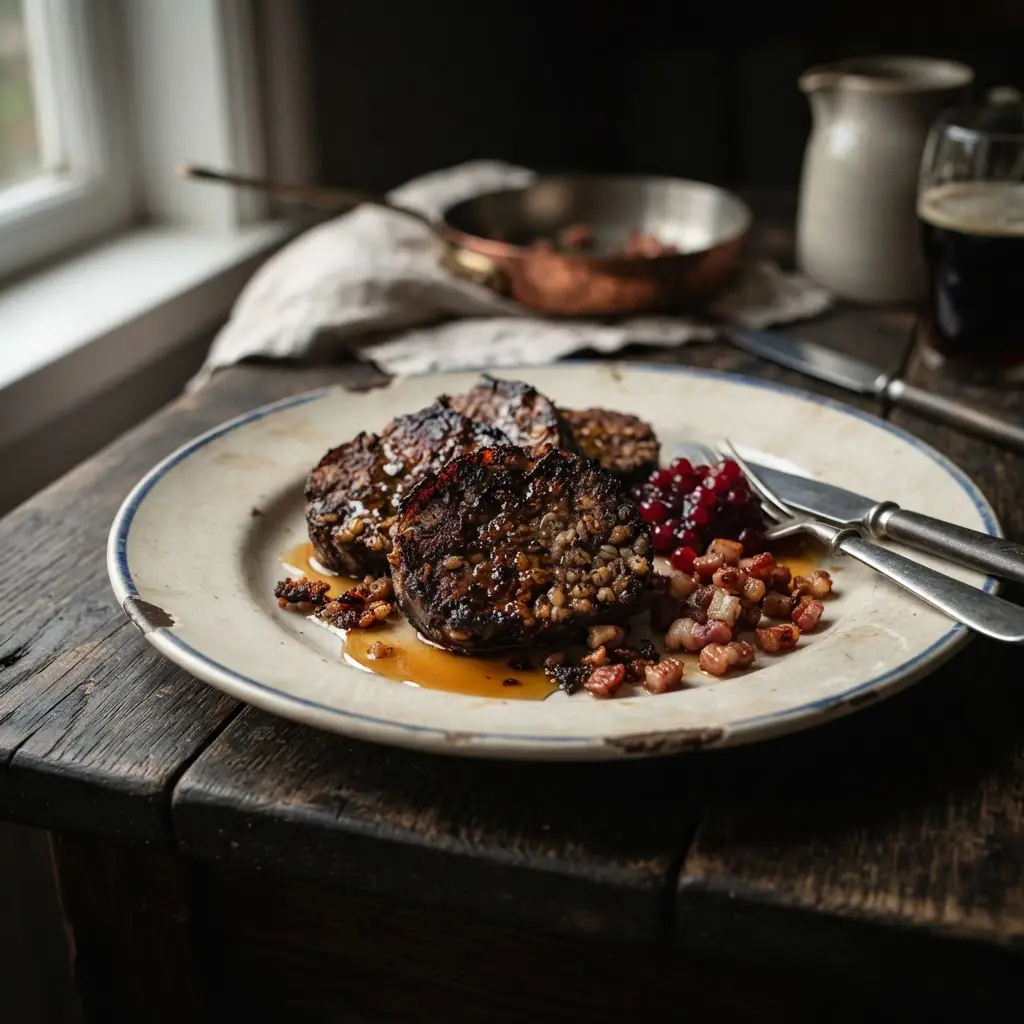
Then the slaughter. Autumn killing was, in most accounts, a matter of arithmetic: winter fodder was finite, and the animals that could not be carried through were taken in a few concentrated days. What followed was more fresh meat than any household could eat and every by-product it would need. Blood became blodpudding in the eastern valleys and blodklubb in the north, baked, cooled, sliced and fried the next day with lingonberries. Legs went into salt and then into moving air, which is where fenalår and the wider spekemat tradition begin. Trout went down into brine to come out as rakfisk months later, in time for the weeks before Christmas.
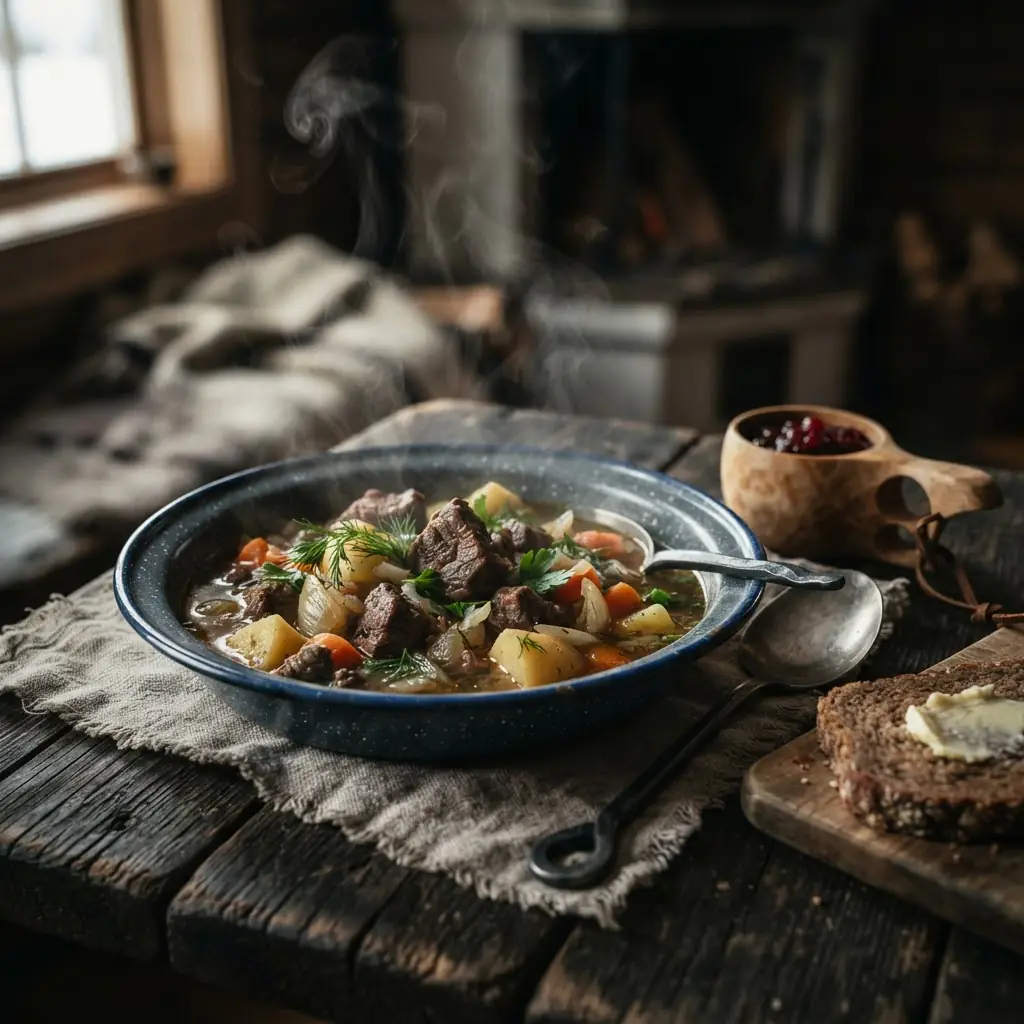
What the harvest itself left was roots, cabbage and barley, and the pot cooking that follows is plain and unhurried. Fårikål is the marker — bone-in mutton and cabbage layered with whole peppercorns, and, by common account, a Thursday of its own late in September. Betasuppe simmers lamb and barley with whatever the cellar holds, and bidos does much the same in the Arctic with reindeer and roots. On the southern skerries the crab pots come up heavy as the water cools, and the October opening of the lobster season is the date the whole shore waits on. In the orchards, eplekake and tilslørte bondepiker deal with the windfall.
This collection gathers the recipes in the archive whose own pages already point to autumn — to the hunt, the gathering, the slaughter or the cellar. It is not a complete map of the Norwegian autumn table. Several dishes that belong to the season in practice are left out here because the archive's own text places them somewhere else in the year.
Autumn is the preserving season, and this hub deliberately does not teach preserving. Fenalår, spekemat and rakfisk are each written around professionally produced product and carry their own food-safety callouts. Read the callout on the recipe page before you buy, store or serve them.
Norway's national dish — mutton and cabbage layered with whole peppercorns and slowly braised to tenderness.
Roasted ptarmigan in a cream-and-game sauce, the leanest of northern birds turned rich and tender.
Roast wild venison larded and glazed, served with root-vegetable purée and a dark berry jus.
Thinly shaved reindeer sautéed with mushrooms, finished with brown cheese and a splash of cream.
The Sami wedding stew — tender reindeer simmered with potatoes and carrots in a deeply savoury broth.
Amber cloudberries — the gold of the tundra — folded through softly whipped, lightly sweetened cream.
Sliced blood pudding fried in butter until crisp-edged, served with lingonberry and bacon.
Dense barley-and-blood dumplings, sliced and pan-fried in butter, served with syrup or bacon.
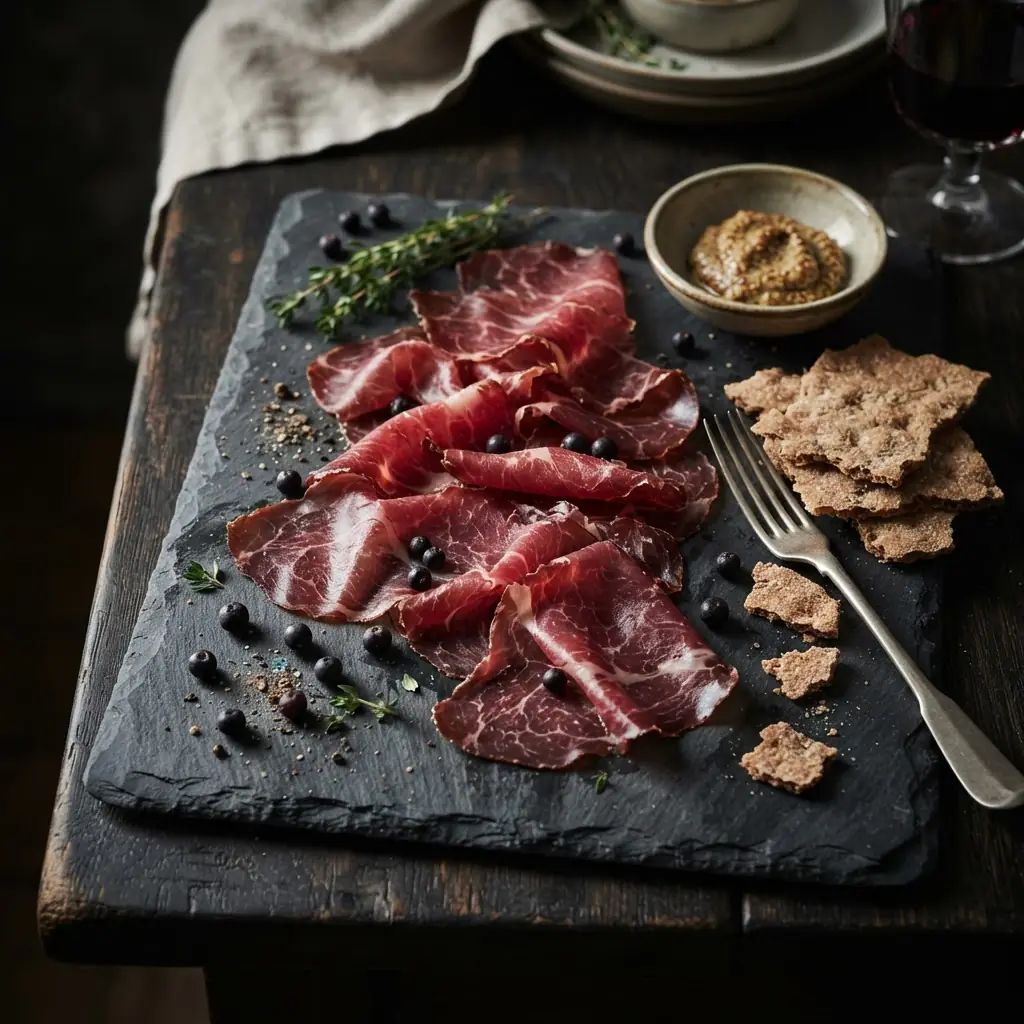
Professionally salt-cured, air-dried leg of lamb from the far north — sliced paper-thin and served with crisp flatbread and juniper.
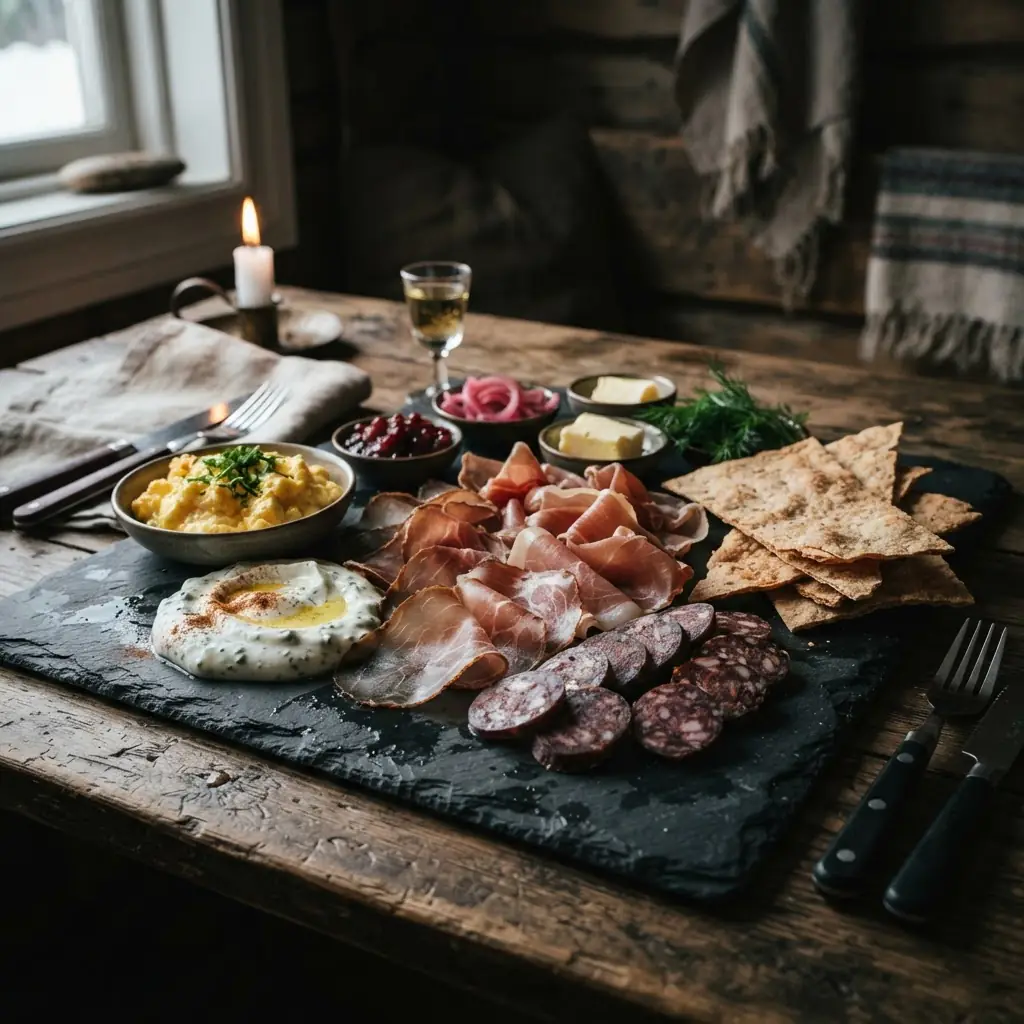
A platter of air-dried cured meats — lamb, ham and sausage — with scrambled egg, sour cream and flatbread.
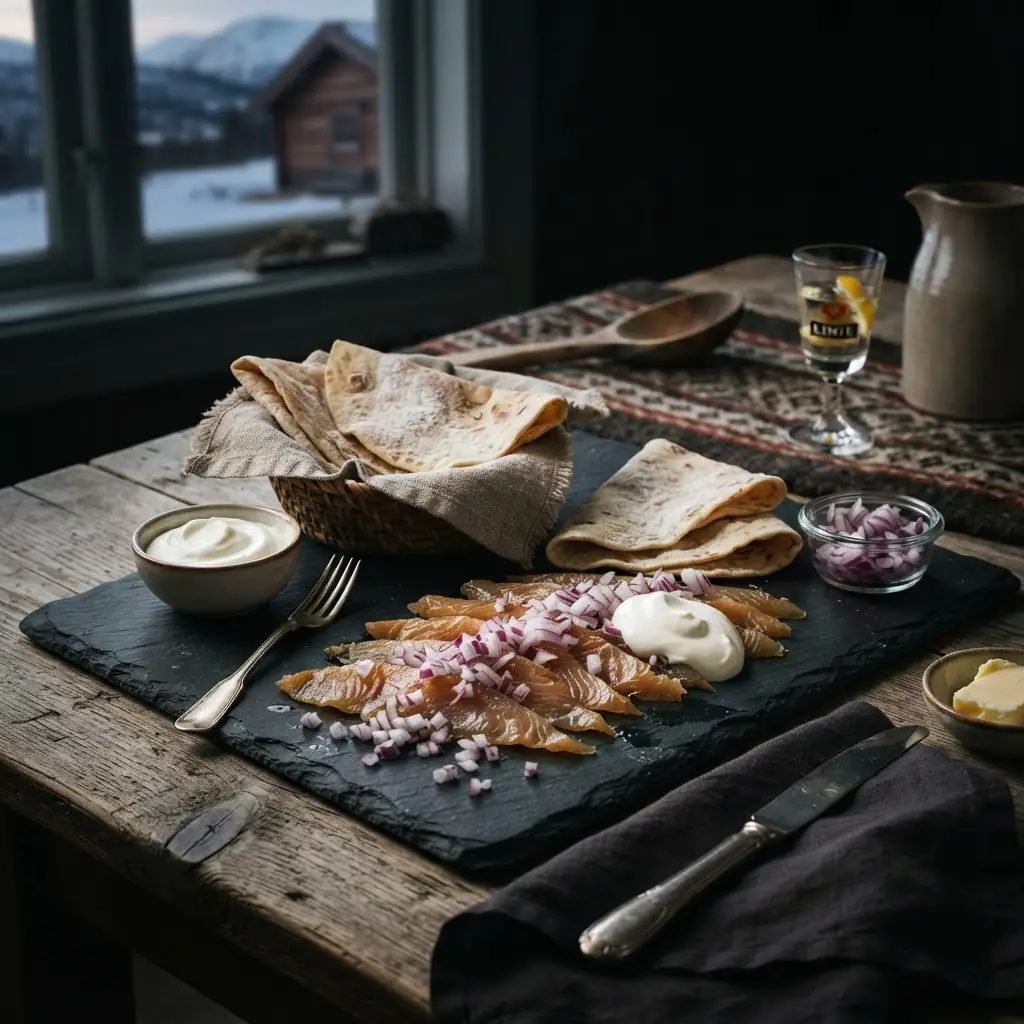
Valdres trout fermented for months to a soft, pungent intensity, served raw with onion, flatbread and sour cream.
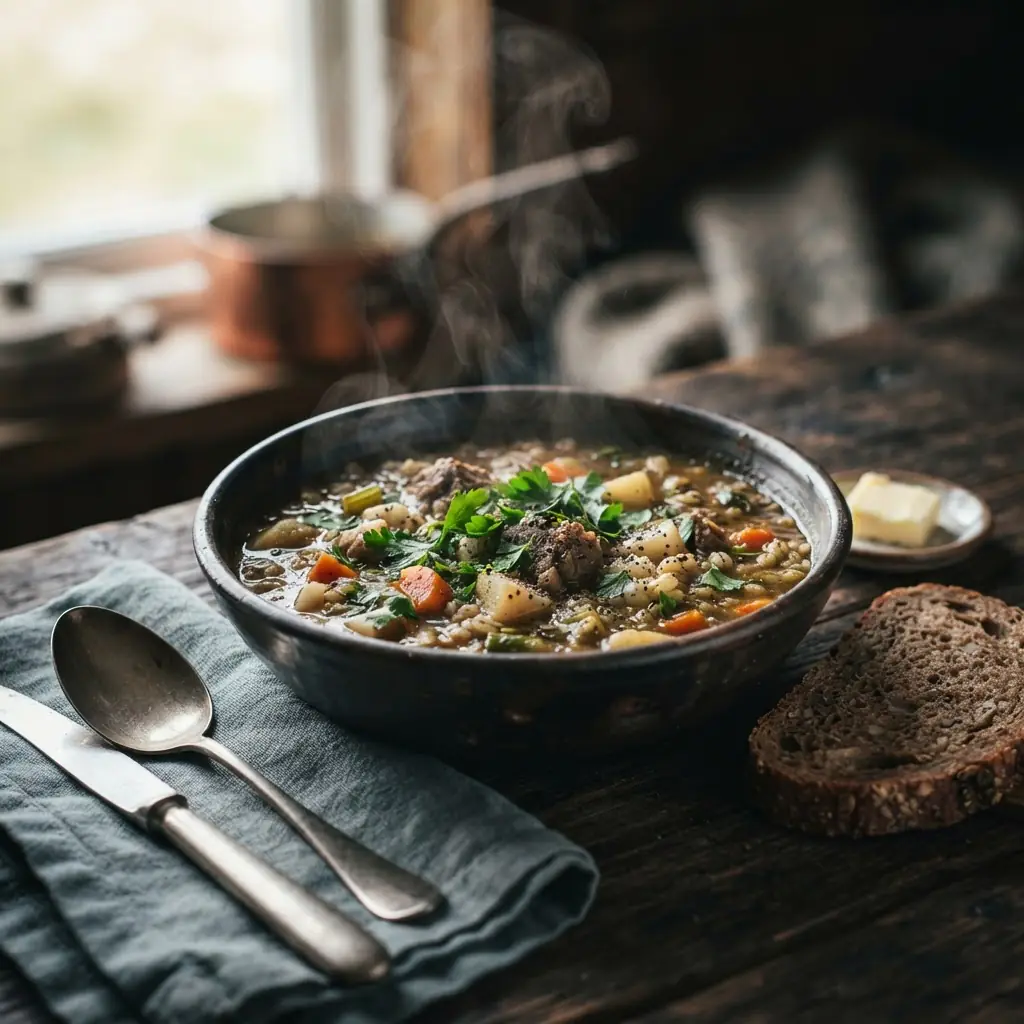
A hearty barley soup thick with lamb, root vegetables and cabbage — a one-pot meal for cold days.
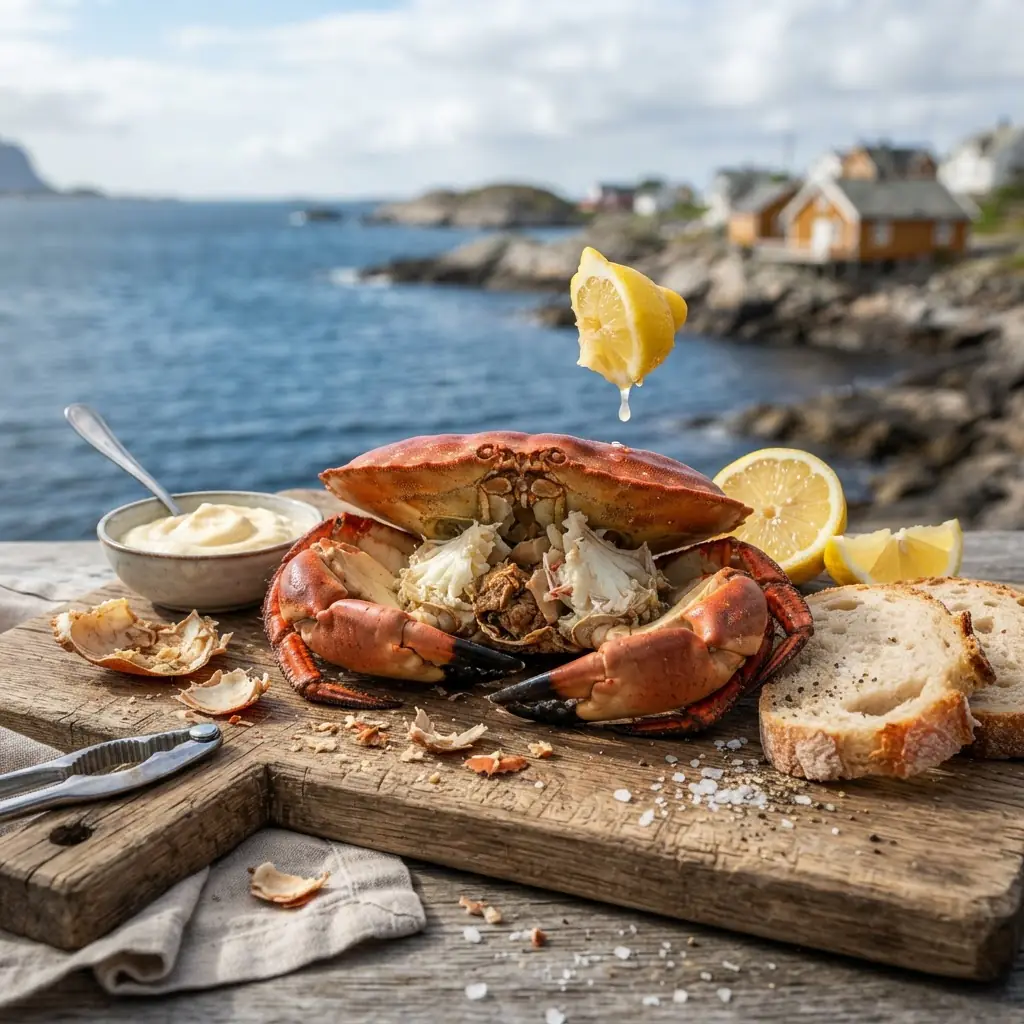
Whole boiled coastal crab, dressed simply and served with mayonnaise, lemon and crusty bread.
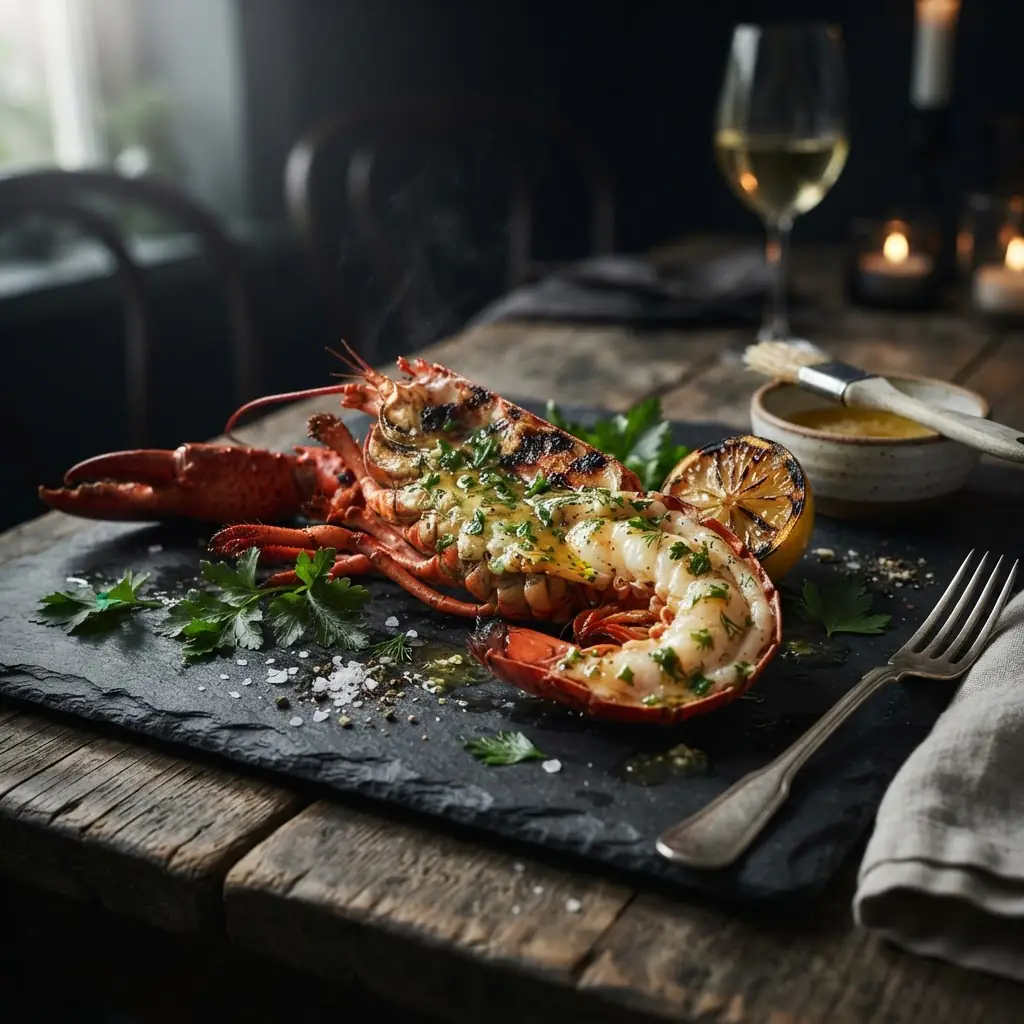
Prized cold-water lobster, halved and grilled with herb butter — the jewel of the southern autumn.
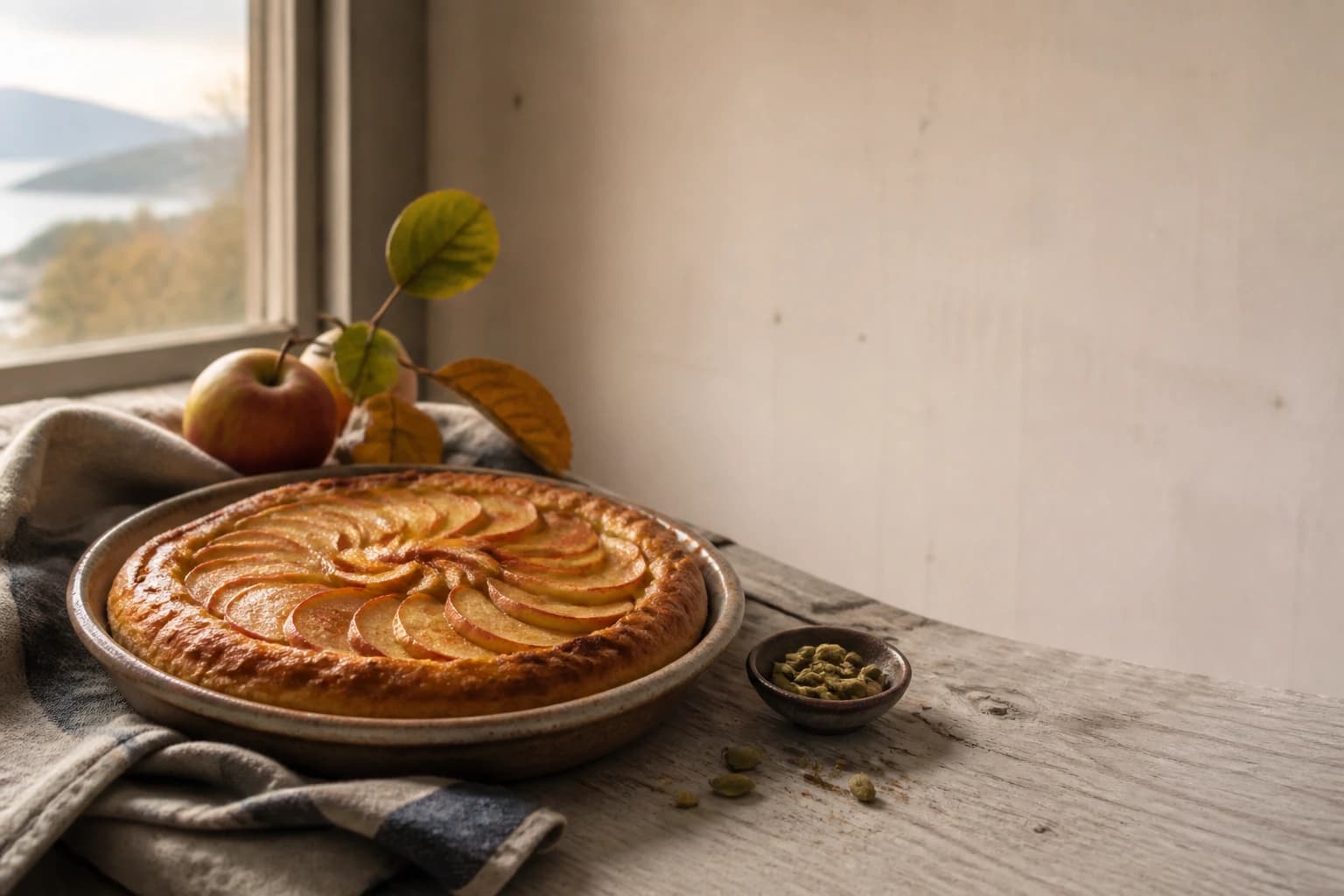
A moist southern apple cake spiced with cinnamon, its top set with tender fruit and a sugar crust.
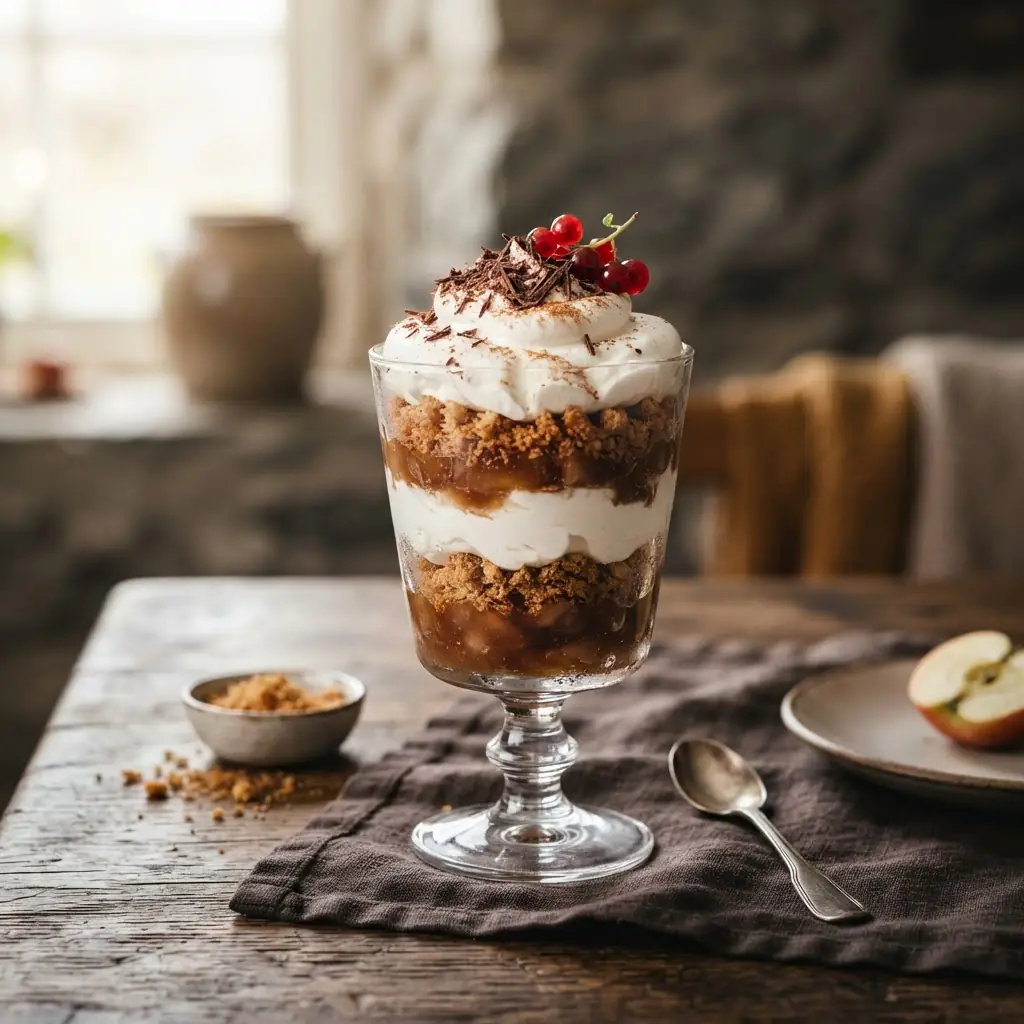
"Veiled farm girls" — layers of apple compote, buttery breadcrumbs and whipped cream in a glass.
Written by the Norcook editorial archive. No individual author is named on this hub, and its source panel is not a qualified review of any linked recipe — see the editorial and food-safety policy.
Content last checked: