Easy1 hr 10 min
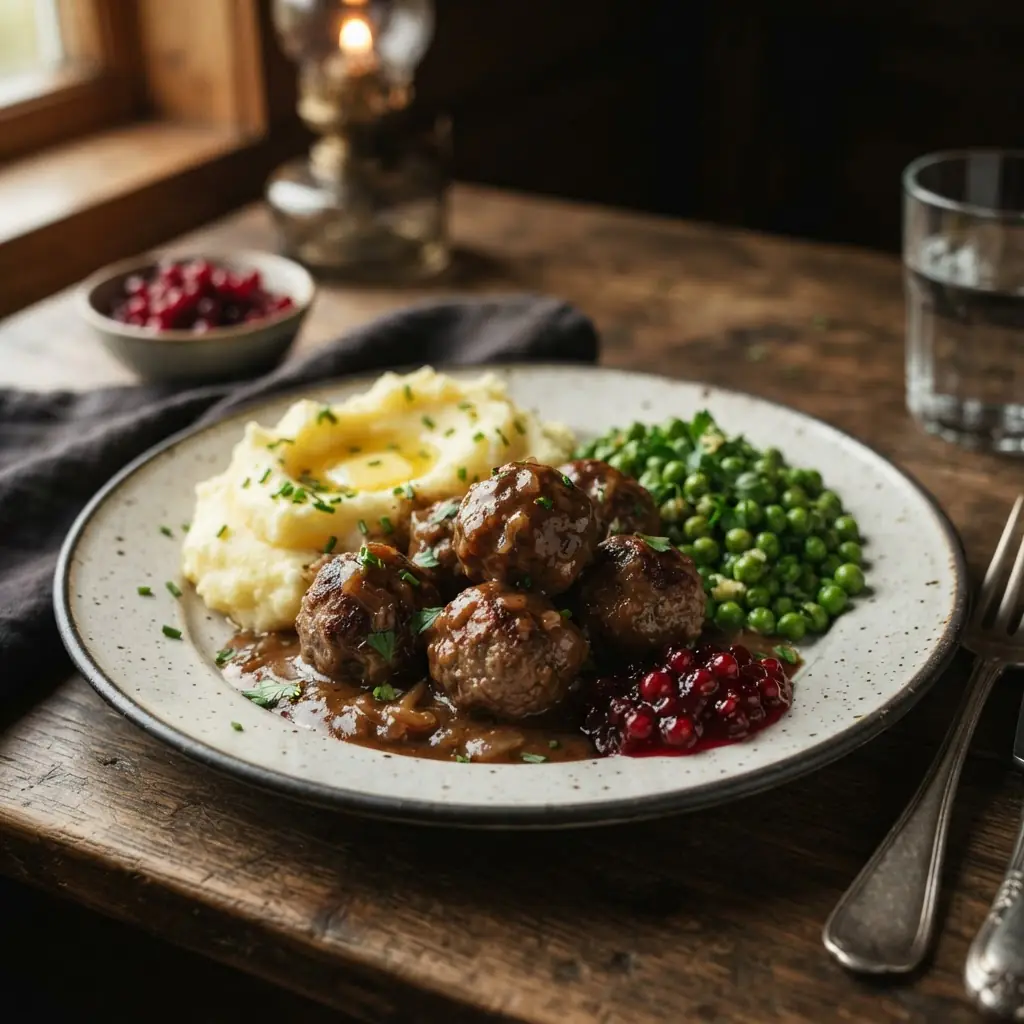
Kjøttkaker
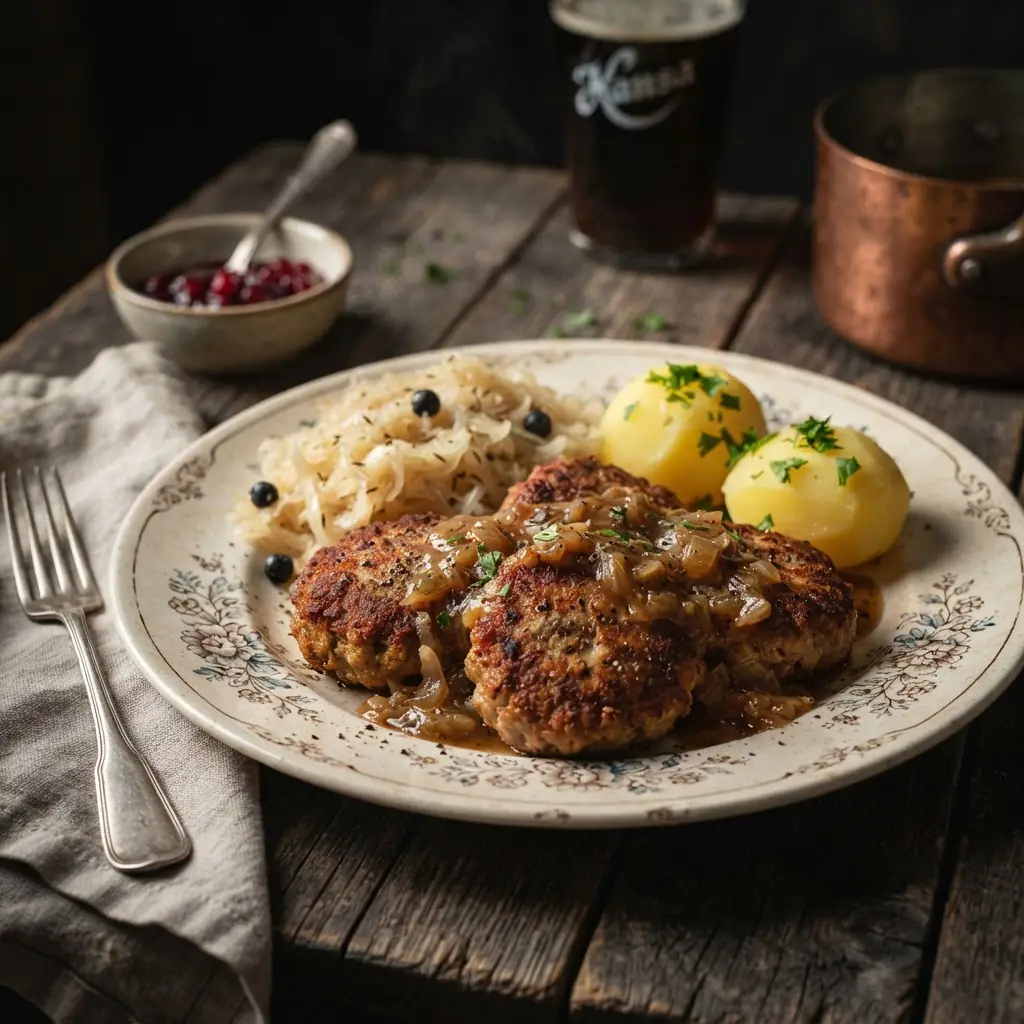
Rustic Norwegian meat cakes in a glossy brown gravy, served with lingonberries, peas and buttery mash.
Ground beefOnionNutmegBeef stock
View RecipeRegion · Eastern Valleys
No sea and no salt air. The eastern valleys cook from grain, dairy, forest and freshwater — and from whatever the cold cellar still holds in February.
16 recipes · content last checked
Østlandet is the Norway that lies east of the mountains — the long valleys of Gudbrandsdalen, Østerdalen, Hallingdal and Valdres, the grain country around Lake Mjøsa, and the spruce forest running on towards the Swedish border. There is no daily catch here and no salt air. The larder is built instead from what a farm can grow, fatten and store, from the forest, and from fish that live in fresh water.
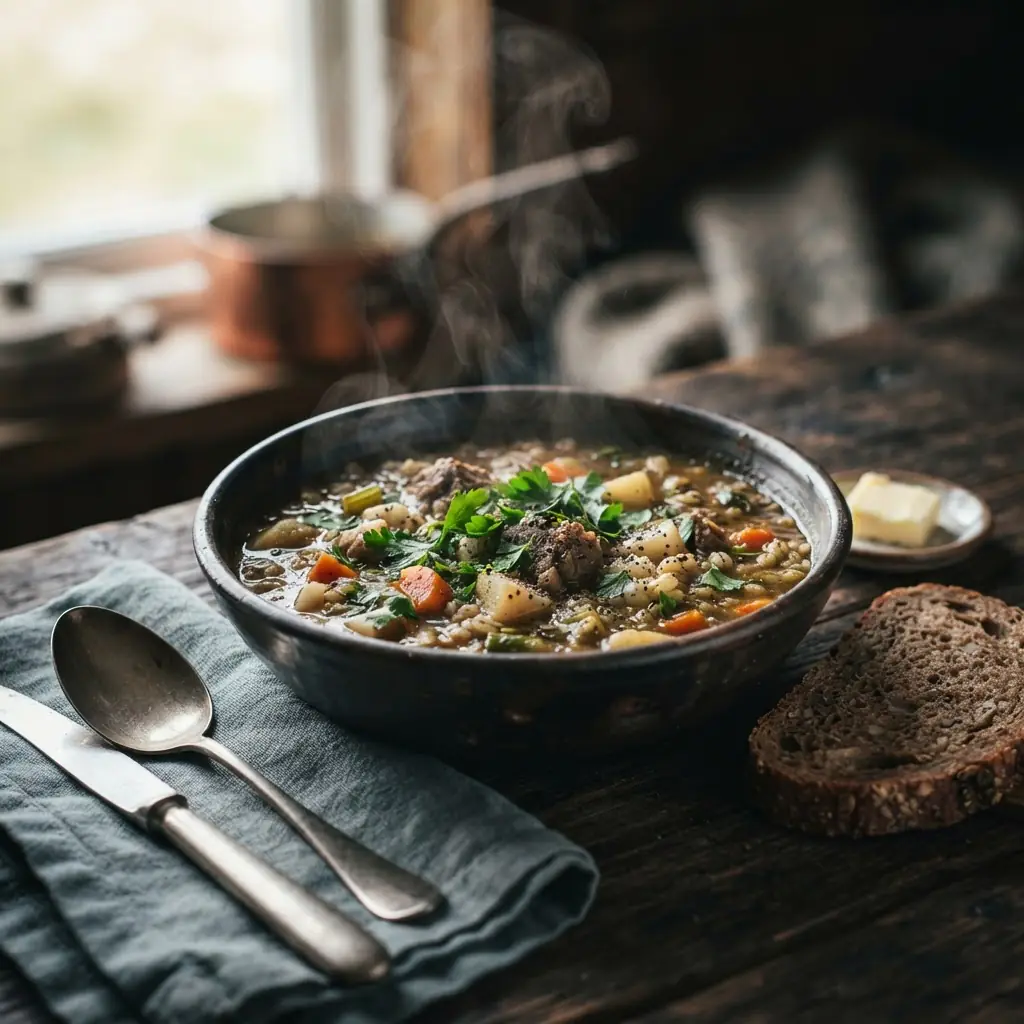
Winter is long and the growing season short, so the eastern kitchen has always been a kitchen of keeping. Barley — bygg — handles the cold better than wheat and turns up as the body of a soup rather than as bread. Roots went into the cold cellar: potatoes, carrots, kålrot, cabbage. Pork and mutton were salted, smoked or dried, and peas were dried yellow. Betasuppe, kjøttsuppe and ertesuppe are versions of one arithmetic — a cured joint, a handful of grain or pulse, and whatever the cellar still held in February. Lapskaus applies the same thinking without ceremony: the week's meat and roots cooked until the potato collapses and thickens the pot by itself.
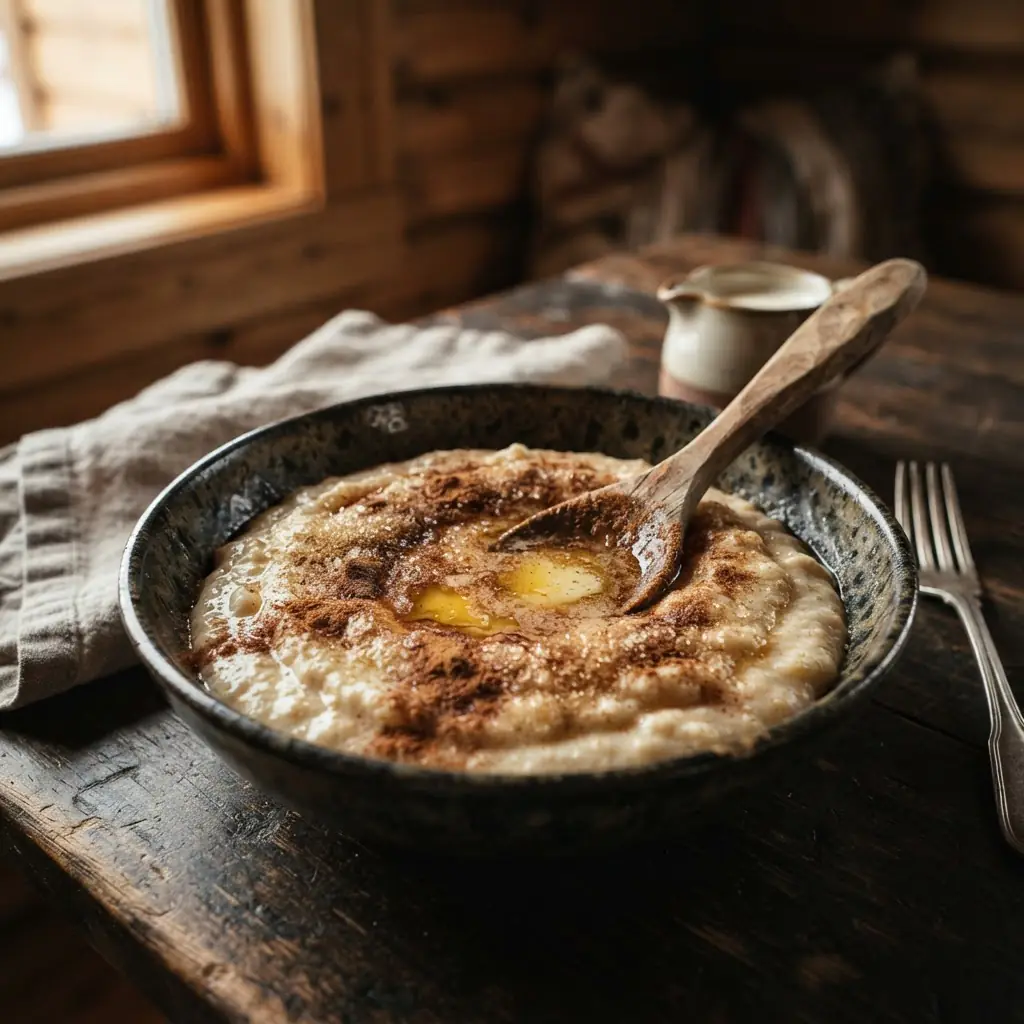
Dairy is the other half. Cattle and goats moved up to the seter, the summer mountain farm, where milk became butter, cheese and rømme — thick soured cream. Rømmegrøt, in which high-fat seterrømme is cooked with flour until its butterfat separates into a golden pool, is the plainest expression of that surplus, and it still belongs to festivals rather than to weekday meals. Baking followed the same logic of storage: flatbrød, rolled paper-thin and baked crisp, keeps for months in a stack, and lefse is its soft cousin, rolled thin with a grooved pin. Flatbrød is not a garnish here — it is what you eat rakfisk on, and what you tear beside a bowl of lapskaus or betasuppe.
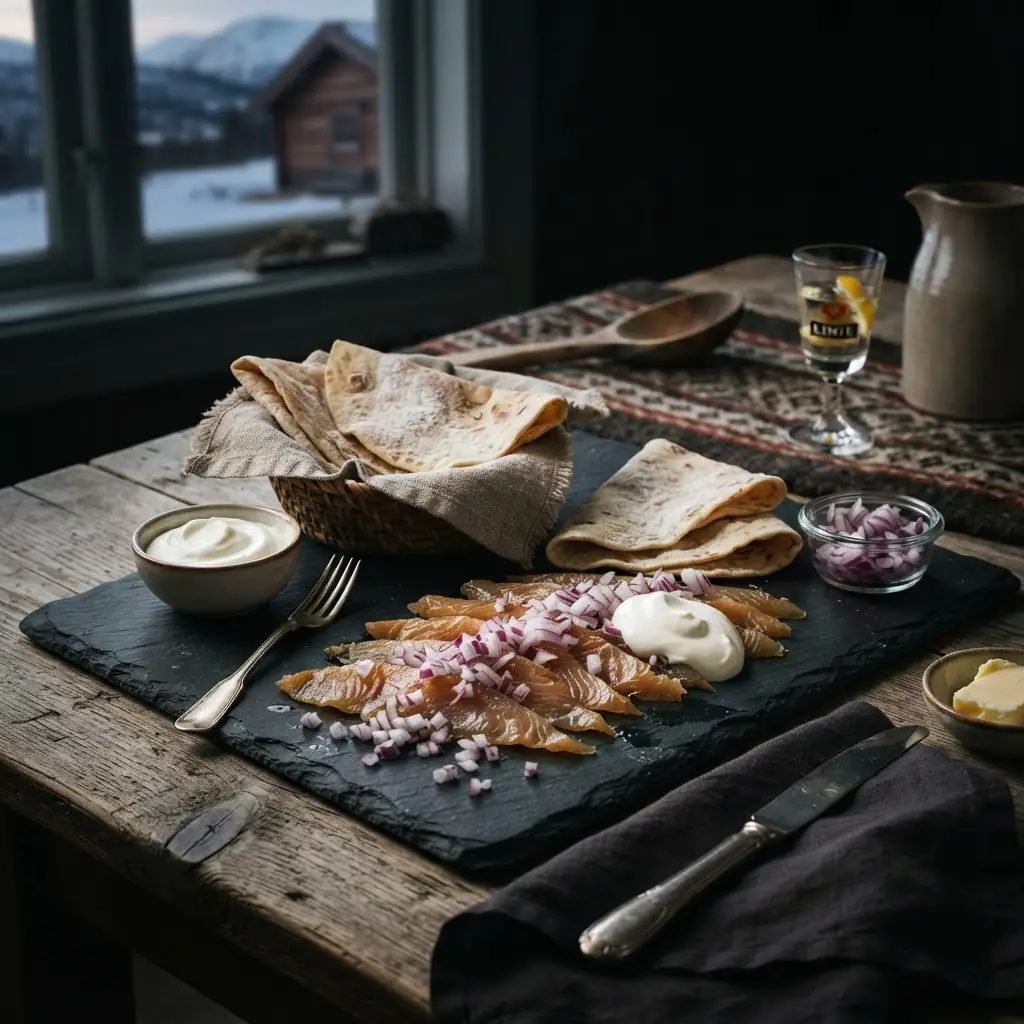
The inland waters do the work the sea does on the coast. Mjøsa, Randsfjorden, the Valdres mountain lakes and the Glomma river system hold trout, char, perch and pike between them, and out of them comes the region's most divisive dish: rakfisk, trout or char salted and fermented cold through the autumn, then eaten raw with flatbrød, sour cream and raw onion. By tradition it belongs to the weeks before Christmas. The forest supplies the rest — elk and roe deer in the autumn hunt, forest birds, and the berries that season everything from blood pudding to a Sunday roast.
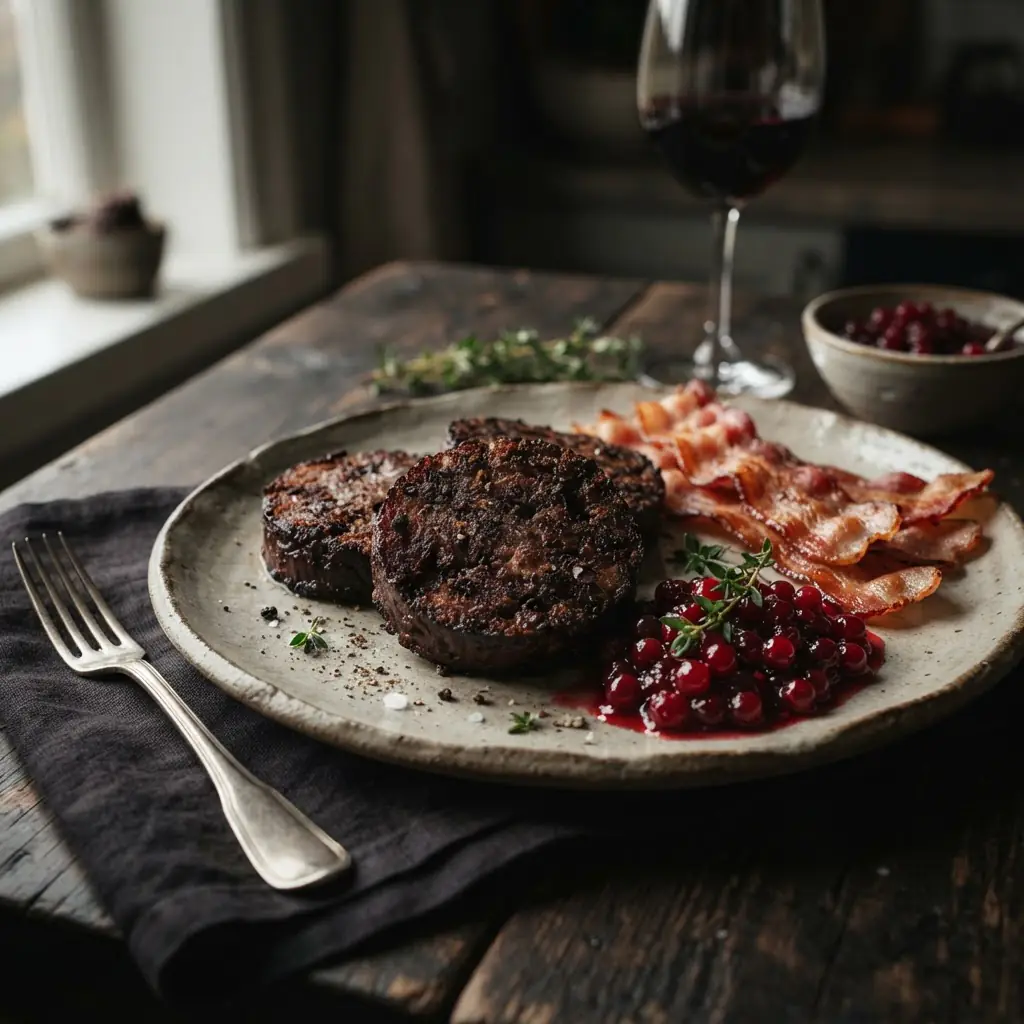
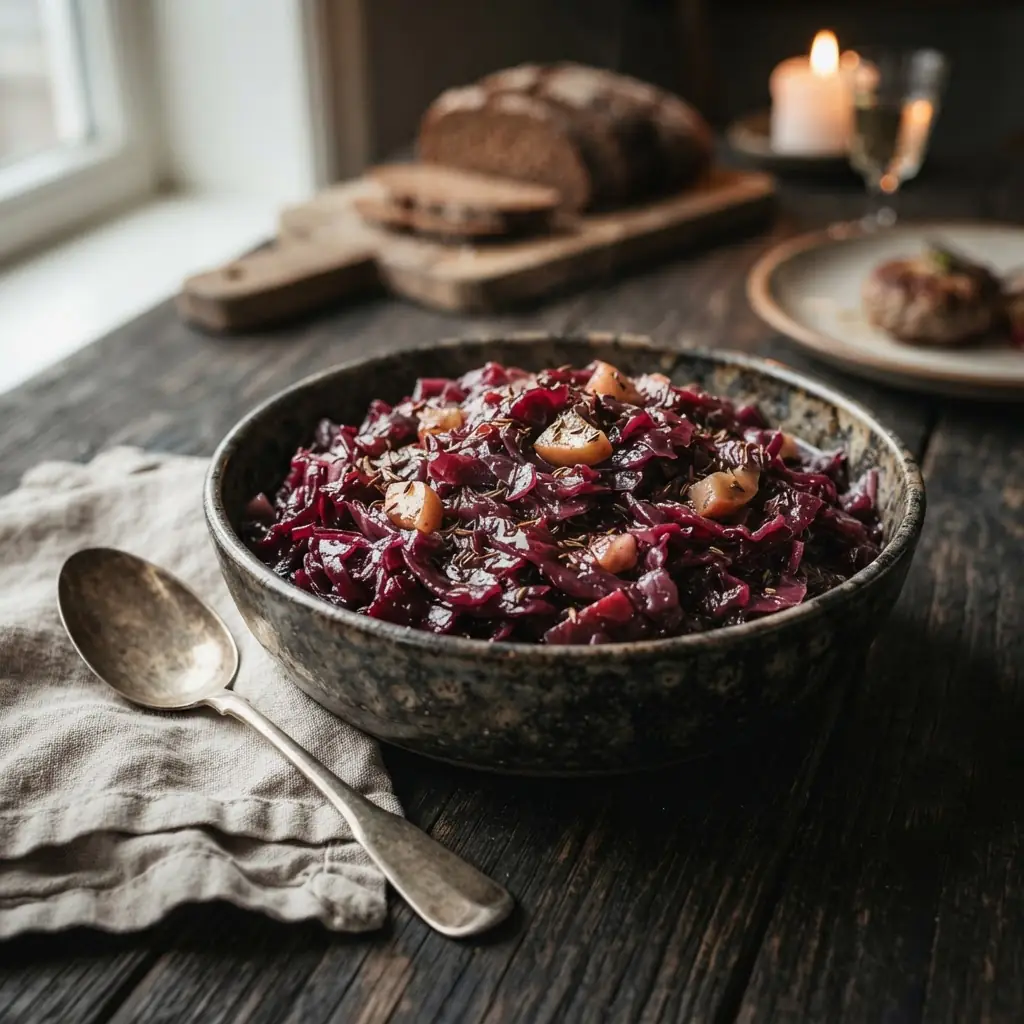
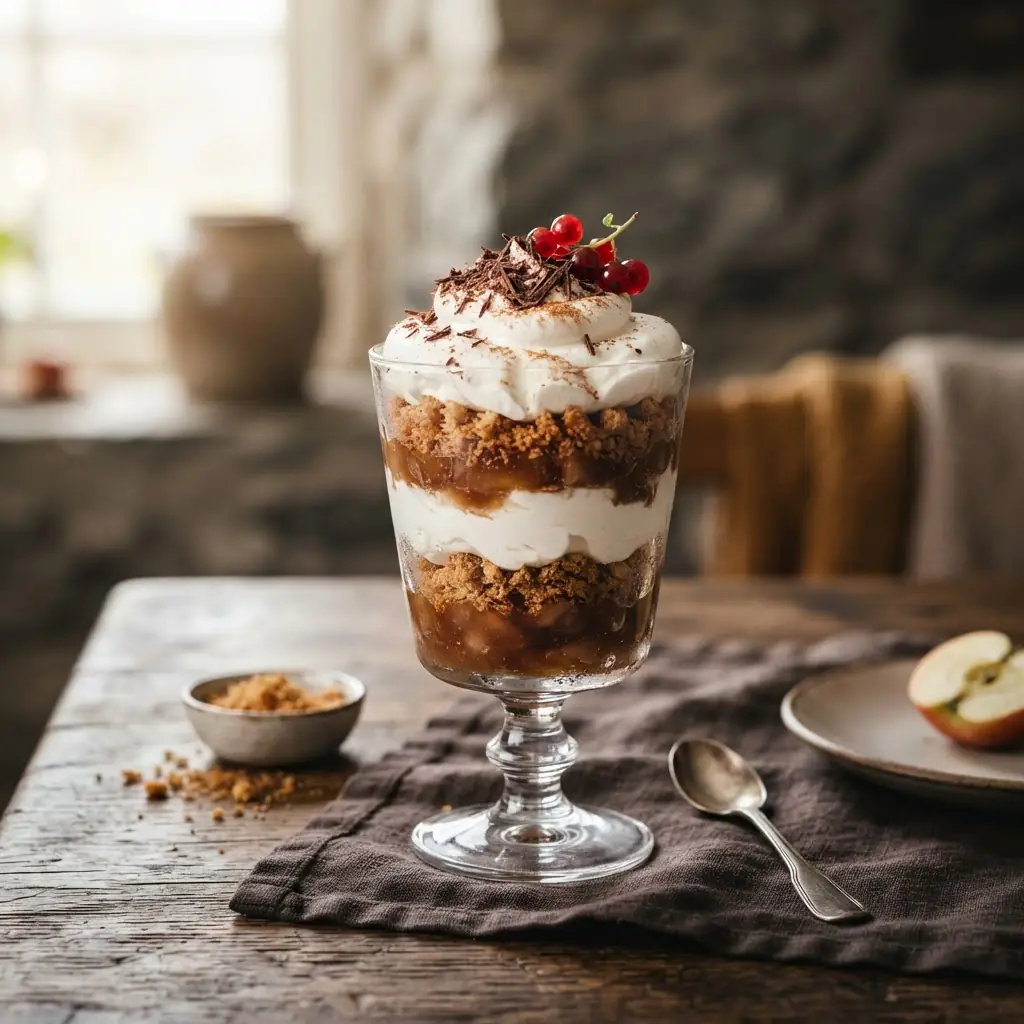
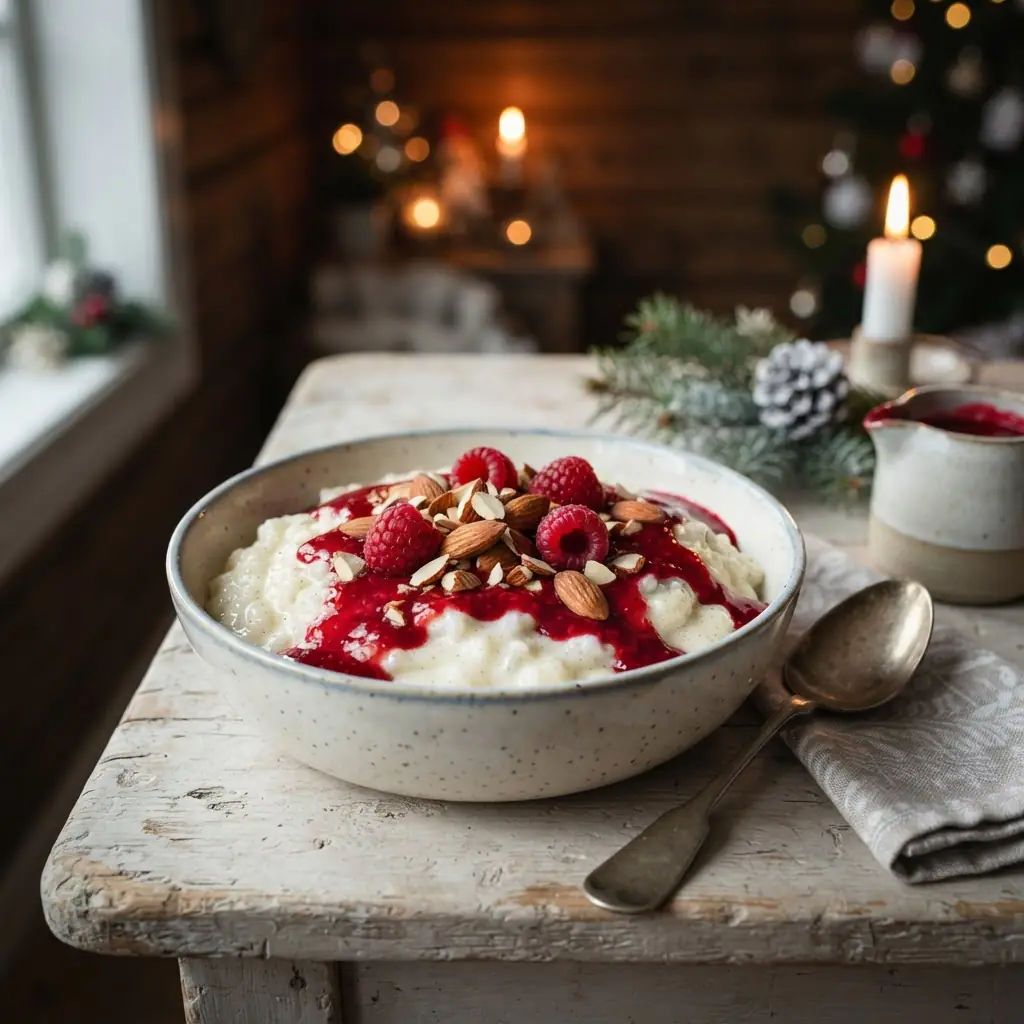
The autumn slaughter set the rhythm of the year, and nothing was wasted: blodpudding baked from blood, barley flour and suet, then sliced and fried the next day with lingonberries, and medisterkaker shaped from the pork trim. The Christmas table that follows is emphatically eastern — ribbe roasted until the rind blisters, svinestek for a Sunday, surkål braised with caraway to cut the fat, and riskrem, the morning's leftover rice porridge folded into whipped cream with a whole almond hidden in it. Tilslørte bondepiker performs the same thrift with windfall apples and stale bread. Sodd, a clear broth of mutton and beef, is the one dish here cooked for an occasion rather than a season.
One entry on this list is not ordinary cooking. Rakfisk is raw fermented fish, and it carries its own food-safety callout on its recipe page, with links to public-health authorities. The cured meats that share its table — spekemat, fenalår — carry callouts of their own elsewhere on the site. This hub points you to them rather than restating any preservation method; read the callout on the recipe page before you buy, store or serve.
Rakfisk is raw fermented fish and carries a food-safety callout on its own page, as do the cured meats that share its table. This hub points you to those callouts and deliberately restates no preservation method; read them before you buy, store or serve.
Rustic Norwegian meat cakes in a glossy brown gravy, served with lingonberries, peas and buttery mash.
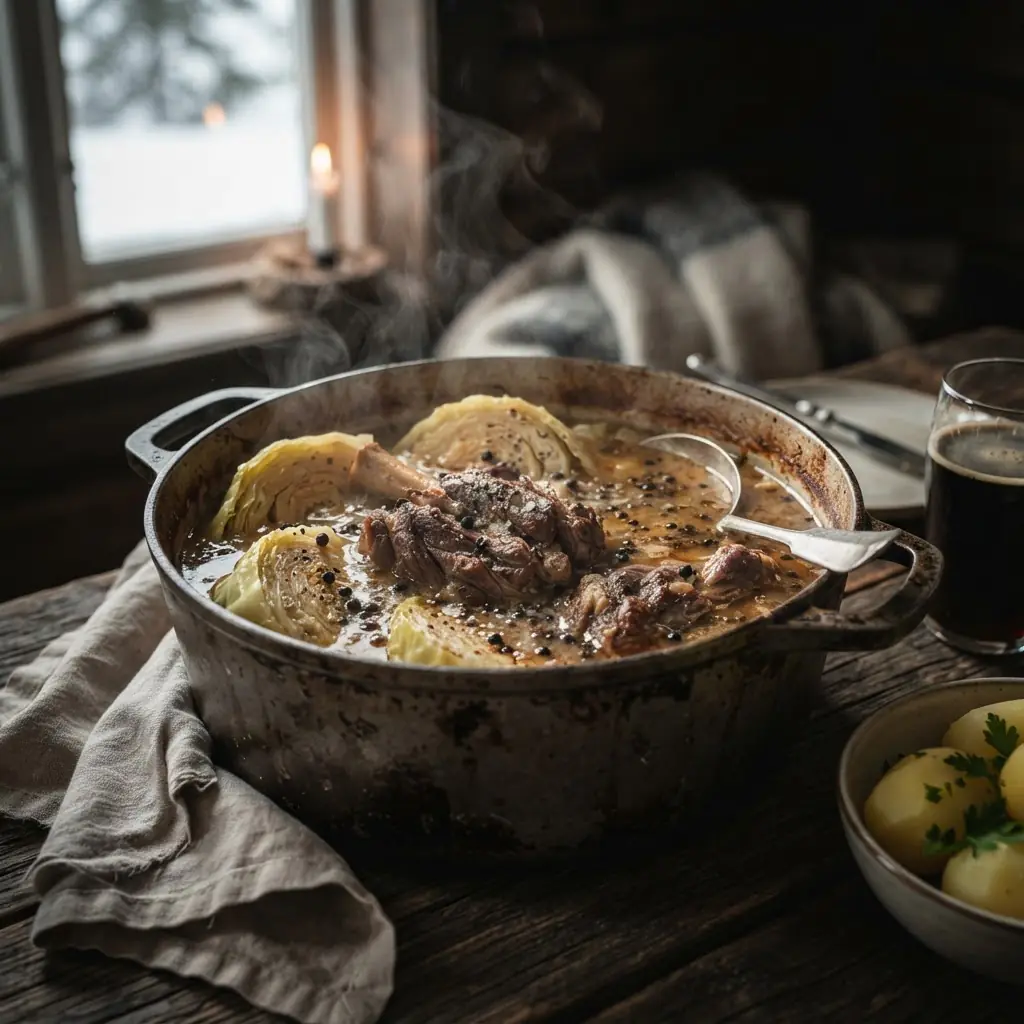
Norway's national dish — mutton and cabbage layered with whole peppercorns and slowly braised to tenderness.
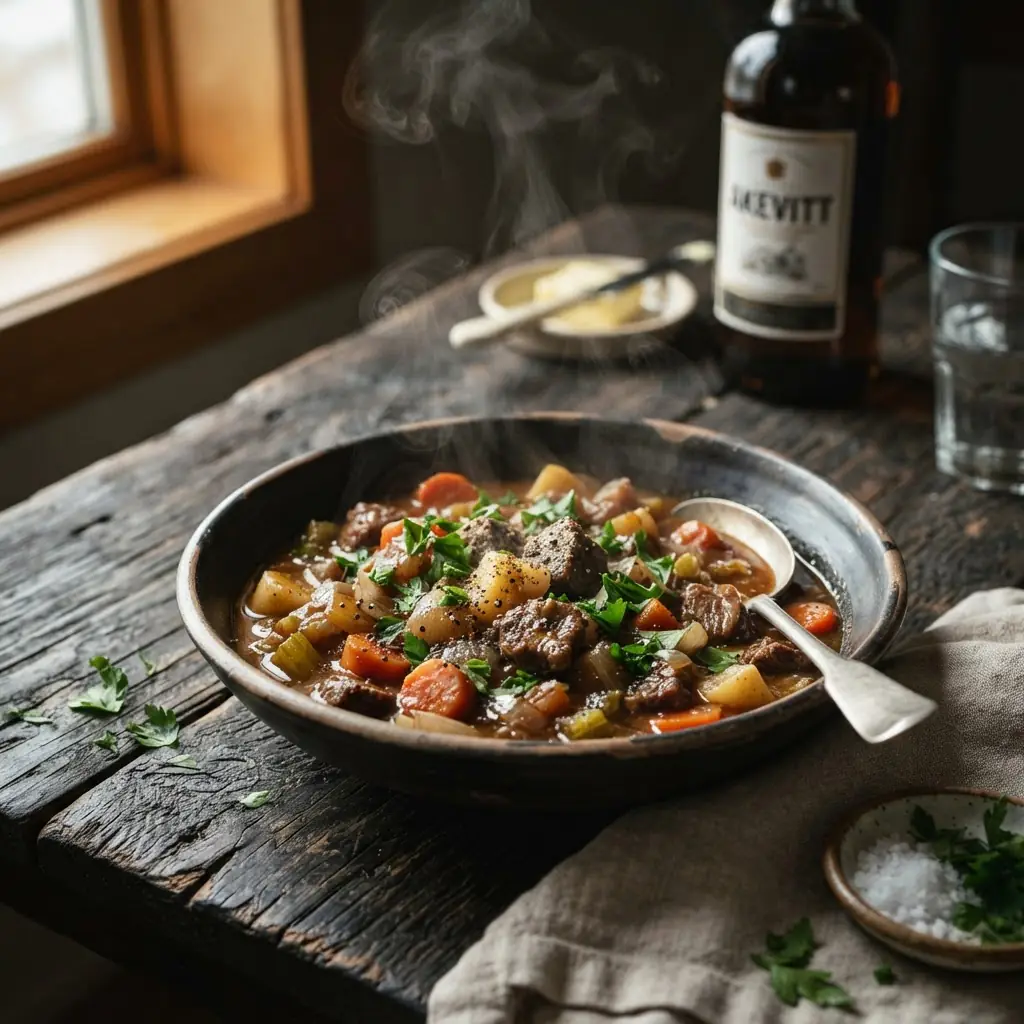
A thick, homely stew of meat and root vegetables cooked down until spoon-tender and deeply savoury.
Valdres trout fermented for months to a soft, pungent intensity, served raw with onion, flatbread and sour cream.
A rich sour-cream porridge with a butter well, dusted with cinnamon sugar — festival food of the valleys.
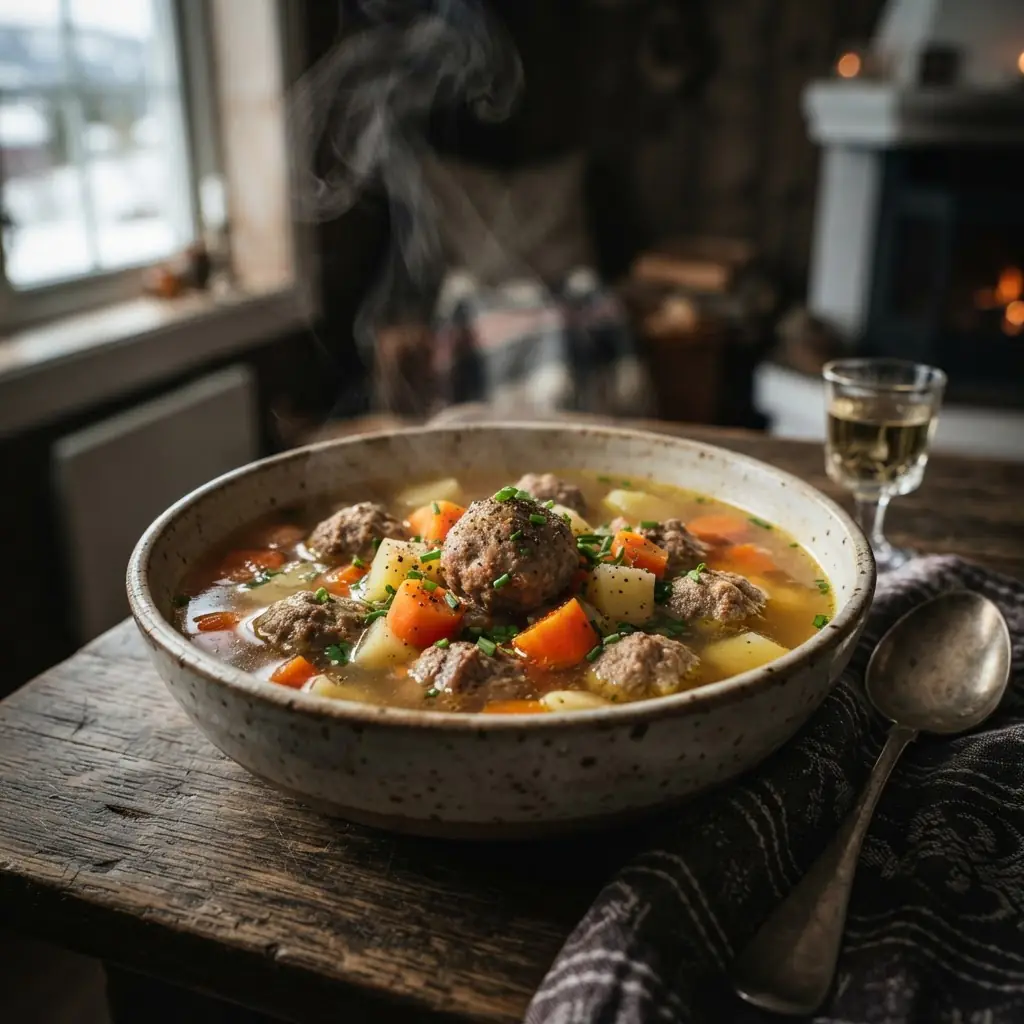
A clear, elegant celebration soup of mutton and beef meatballs in a fragrant broth with root vegetables.
Seasoned pork patties fried golden and simmered in gravy — a mainstay of the Christmas table.
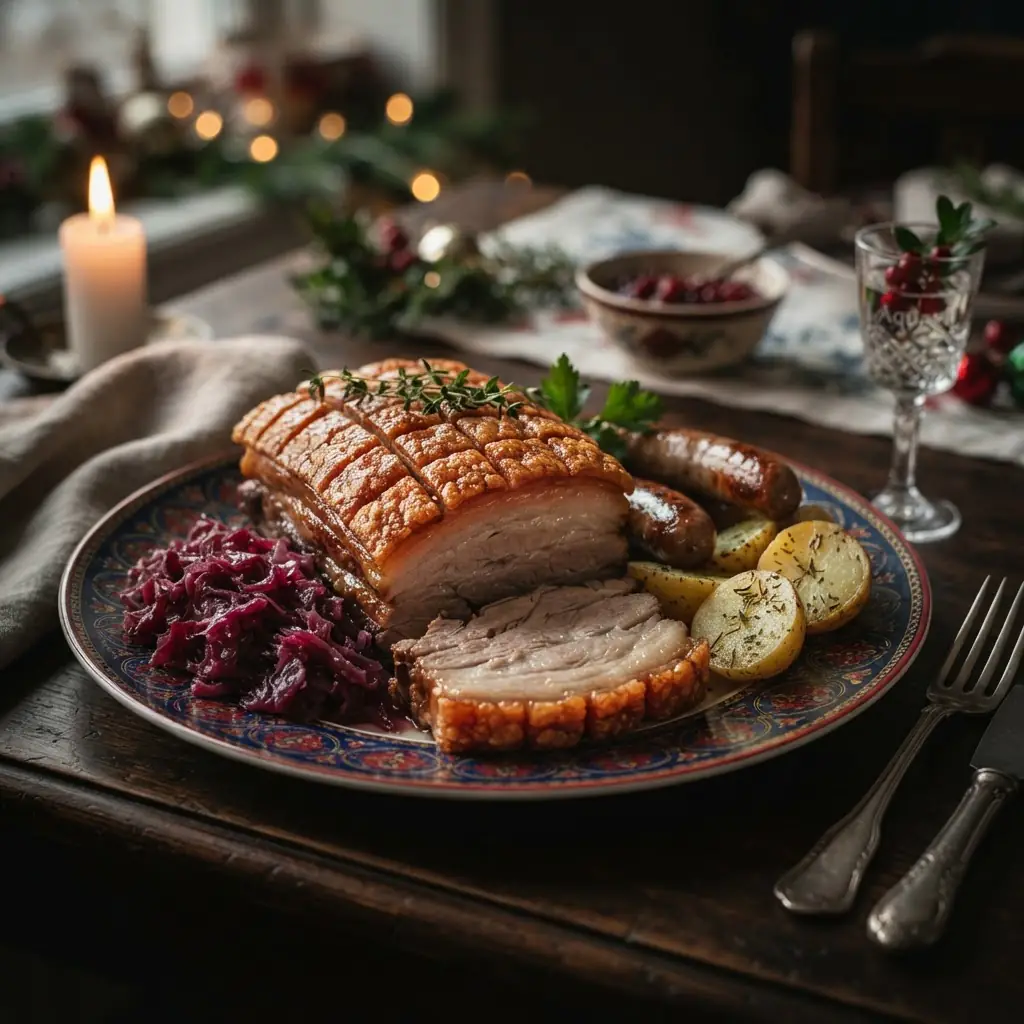
Slow-roast pork belly with shatteringly crisp crackling — the great Christmas Eve roast of the east.
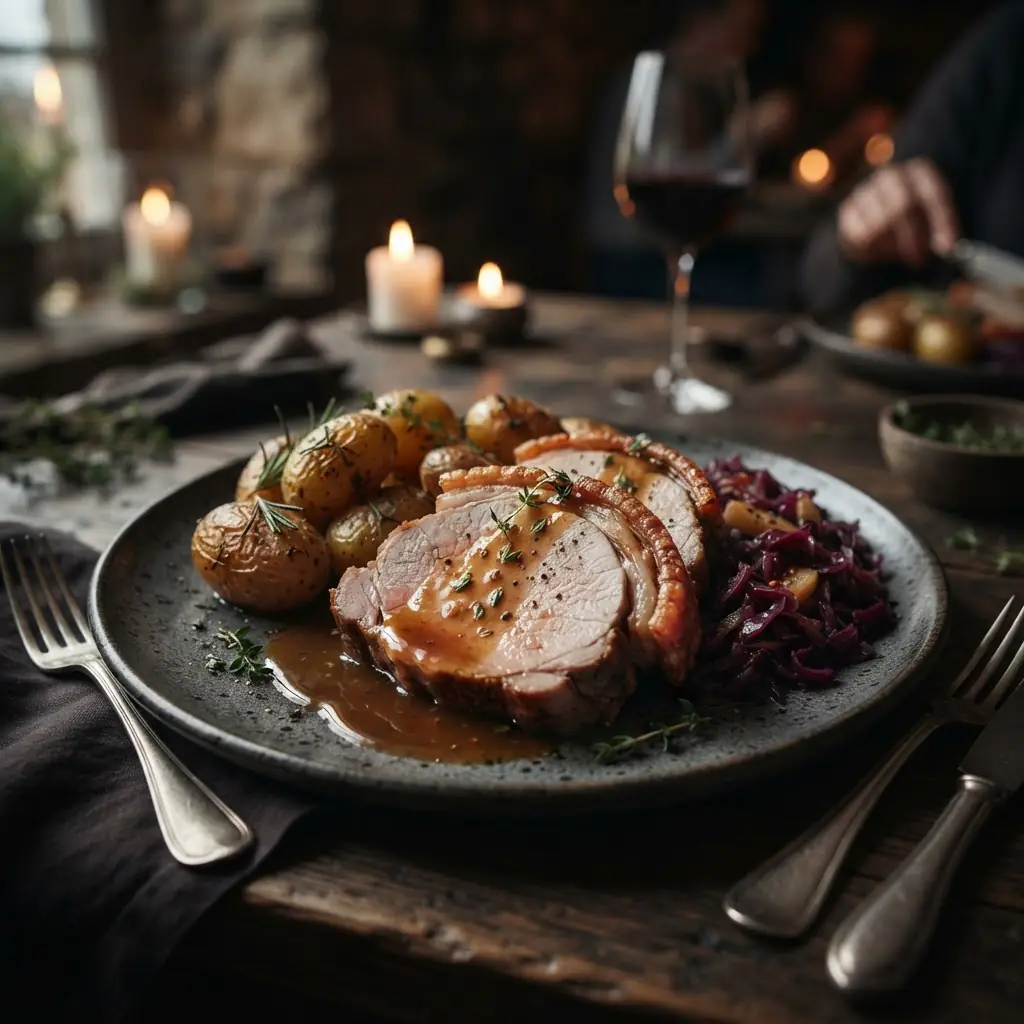
A classic Sunday roast of pork loin with crackling, brown gravy, and lingonberry on the side.
Sliced blood pudding fried in butter until crisp-edged, served with lingonberry and bacon.
A hearty barley soup thick with lamb, root vegetables and cabbage — a one-pot meal for cold days.
Finely shredded cabbage braised with caraway, vinegar and a little sugar — the essential Christmas side.
"Veiled farm girls" — layers of apple compote, buttery breadcrumbs and whipped cream in a glass.
Cold rice pudding folded with whipped cream and vanilla, crowned with a glossy red berry sauce.
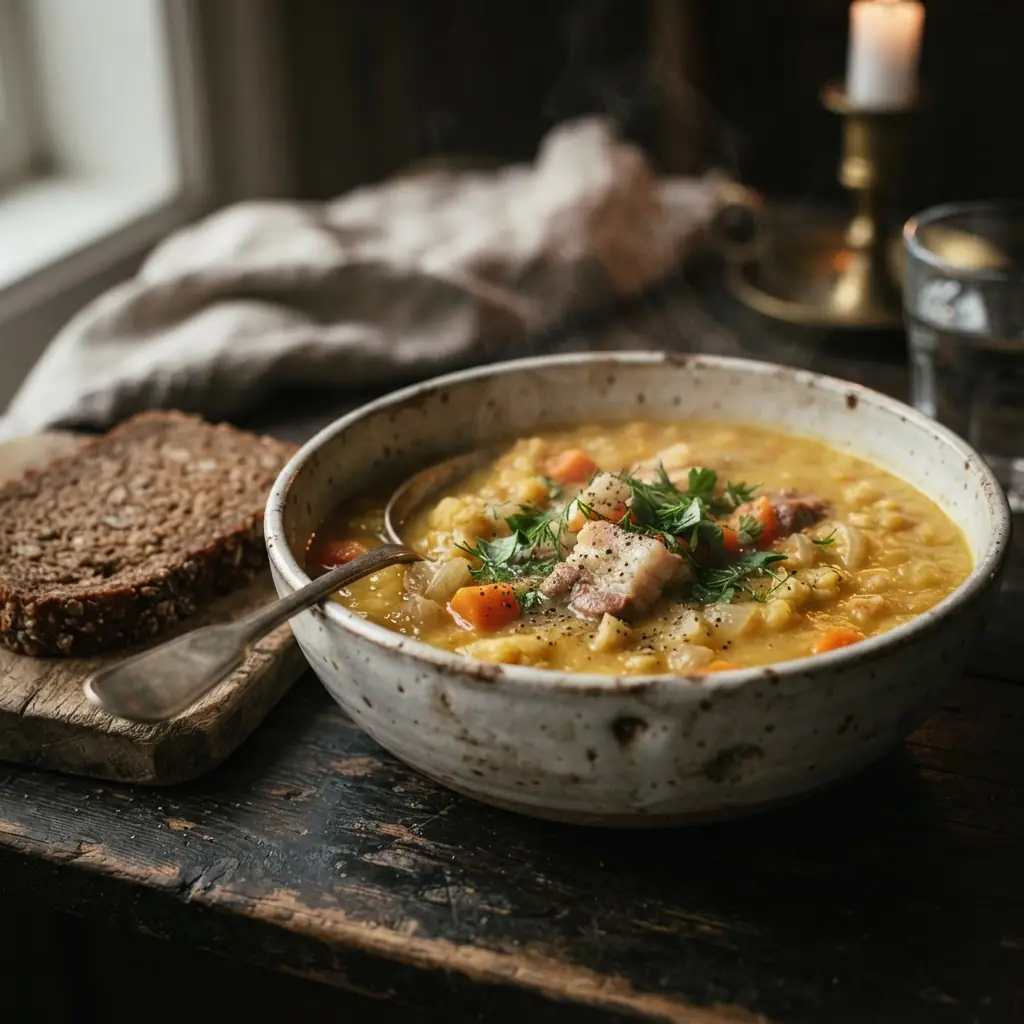
A thick yellow pea soup simmered with smoked pork hock, carrot and thyme — winter in a bowl.
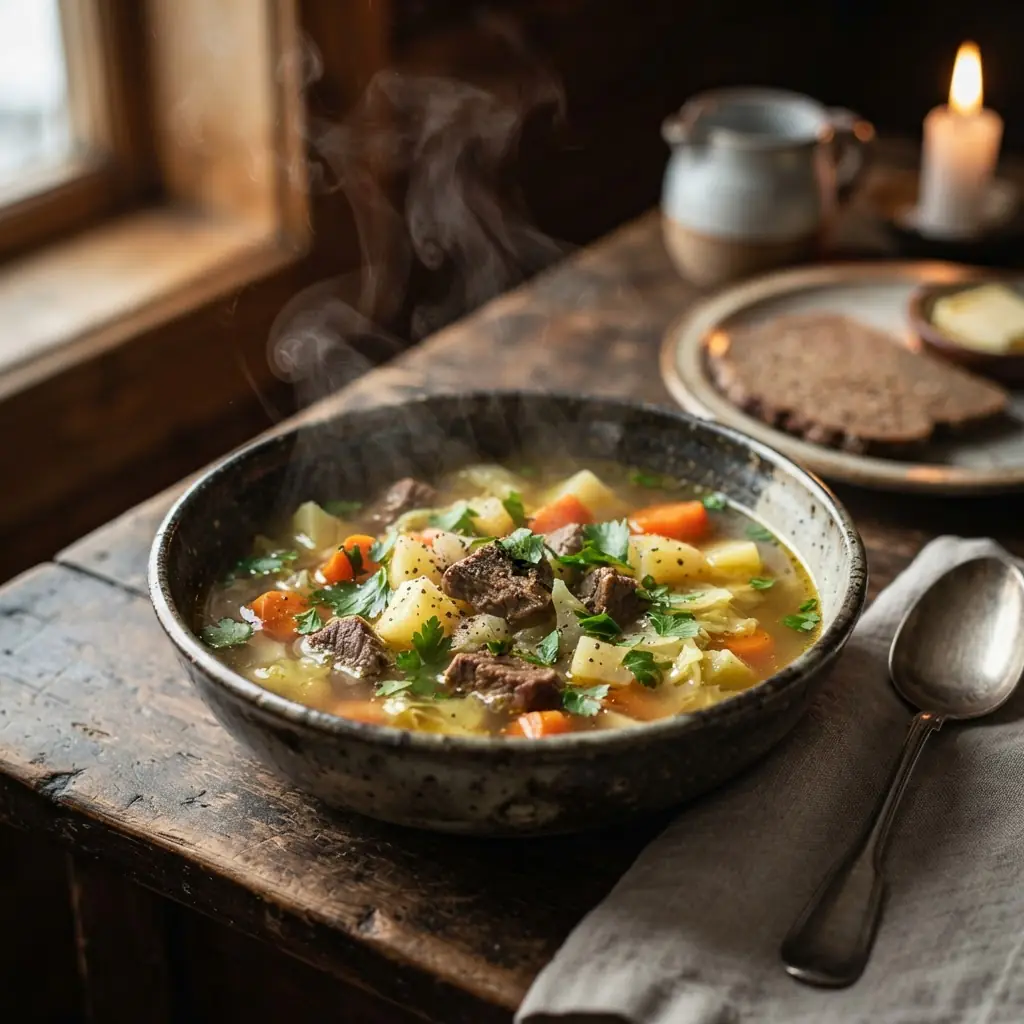
A clear, wholesome meat soup with tender lamb or beef, barley and a garden of root vegetables.
Written by the Norcook editorial archive. No individual author is named on this hub, and its source panel is not a qualified review of any linked recipe — see the editorial and food-safety policy.
Content last checked: