Advanced3 hr
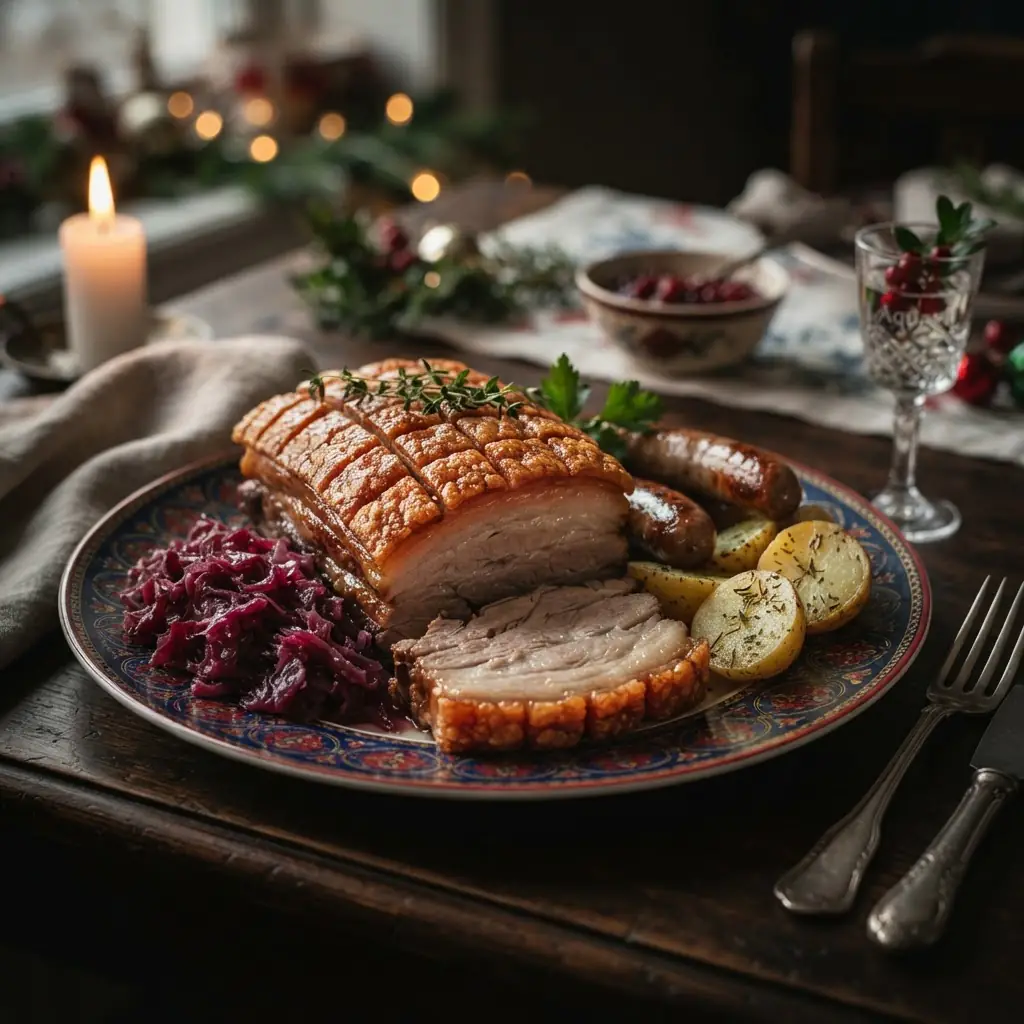
Ribbe
Slow-roast pork belly with shatteringly crisp crackling — the great Christmas Eve roast of the east.
Pork bellySaltPepperCaraway
View RecipeSeasonal collection
Twenty recipes from the archive whose own pages already place them at Christmas — the julaften main course, the cold table, and the baking that starts weeks before.
20 recipes · content last checked
No single dish is Norwegian Christmas dinner. Julaften — Christmas Eve, when the meal is eaten — is settled by region and by family, and the three candidates rarely appear on the same table. Ribbe, pork belly roasted until the rind blisters into crackling, holds most of the east and the south. Pinnekjøtt, salted and often smoked mutton ribs steamed over birch sticks, holds the west. Lutefisk, stockfish returned from a lye bath to something translucent and trembling, holds a smaller and more devoted constituency, and is as likely to be eaten at an office julebord in Advent as on the night itself. Households that have moved keep arguing about it for a generation.
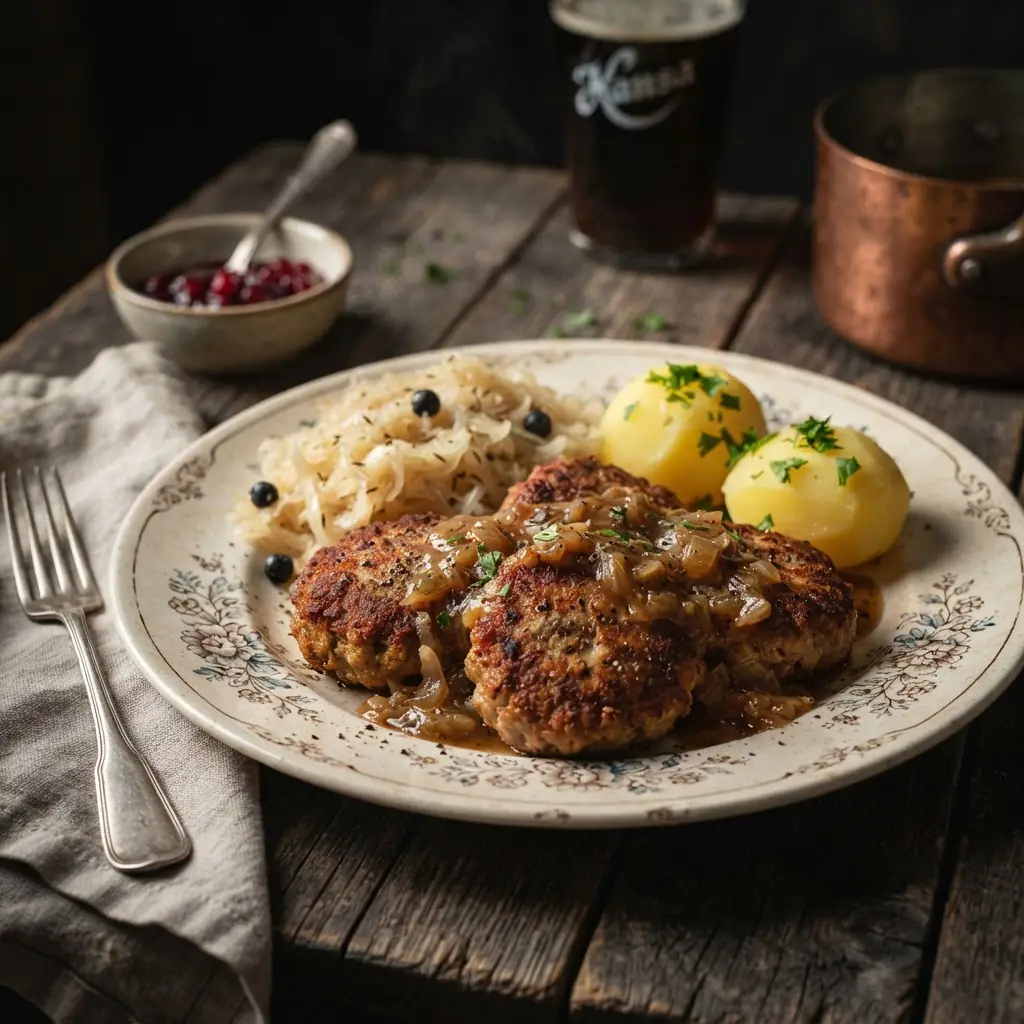
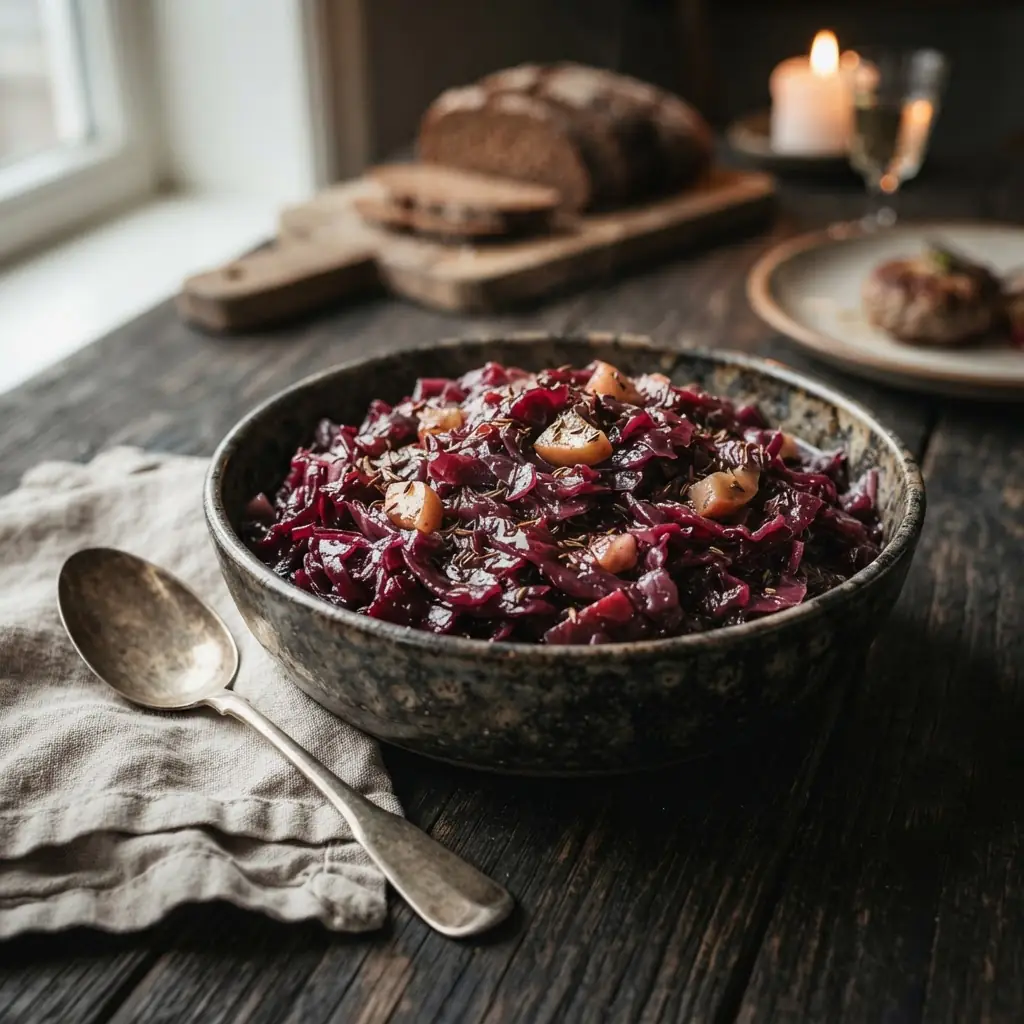
The sides do more work than the centrepiece. Surkål — cabbage braised slowly with caraway, vinegar and a little sugar — is there to cut fat, and so is the lingonberry beside it. Medisterkaker, soft pork patties seasoned with ginger and nutmeg, and medisterpølse alongside them, come from the same animal as the ribbe and were once the reason nothing was wasted from it. Boiled almond potatoes, a pan gravy made from the roasting tin, and stewed peas complete a plate that is deliberately plain around a very rich middle.
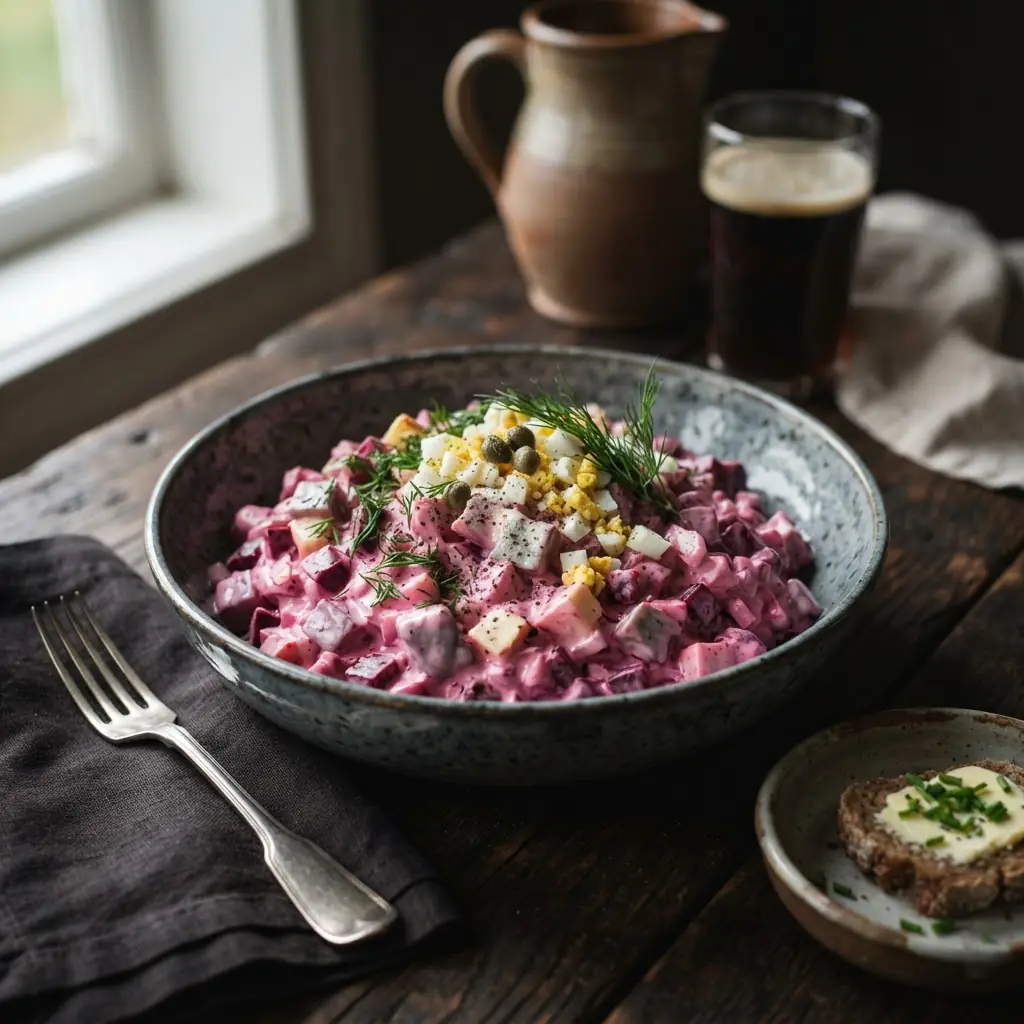
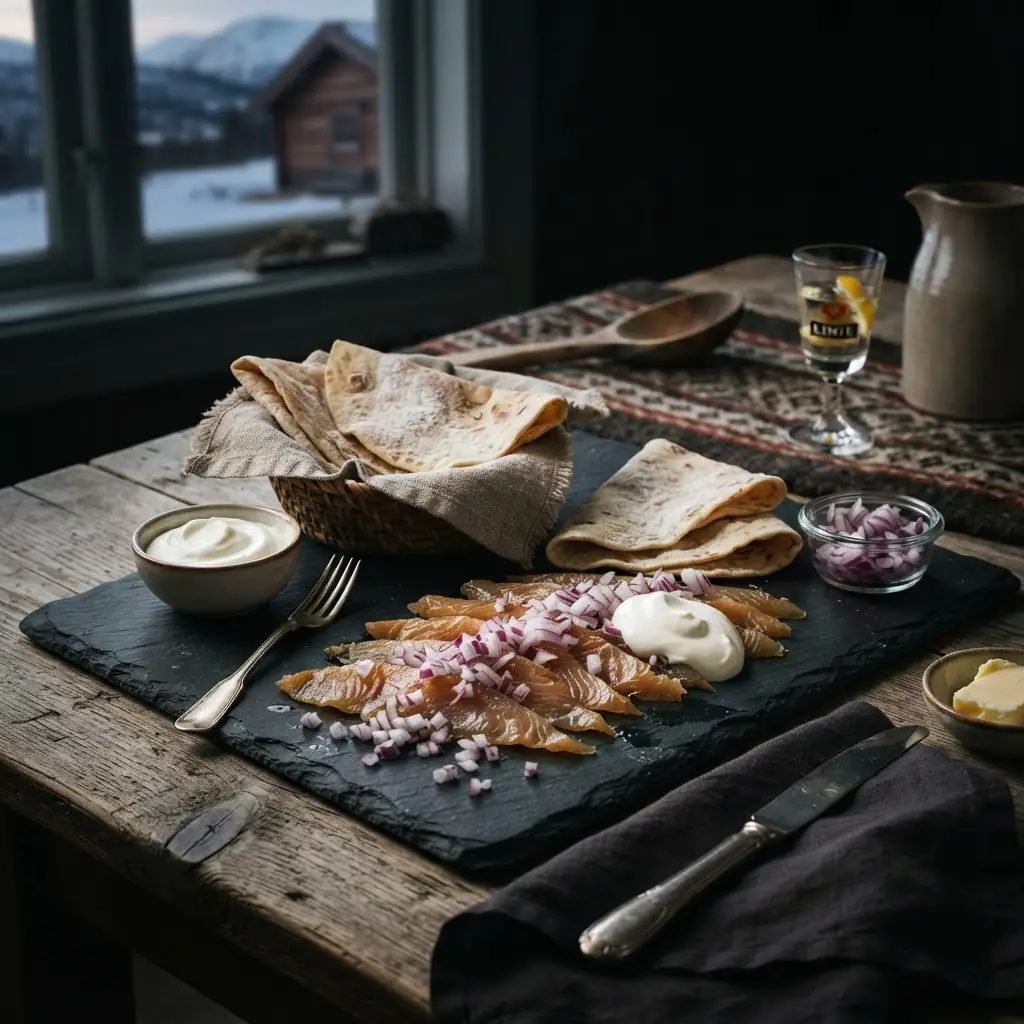
Before any of that comes the cold table. The julebord — the Christmas table, and by extension the Christmas party — leans on things preserved months earlier: cured and dried meats, fenalår among them, sildesalat pink with beetroot, and the pickled herrings. Rakfisk, trout fermented cold through the autumn, belongs specifically to the weeks before Christmas rather than to the day, and is the item most likely to divide a room. Several of these are safety-sensitive; the callouts on their own pages are the place to read before buying or serving them.
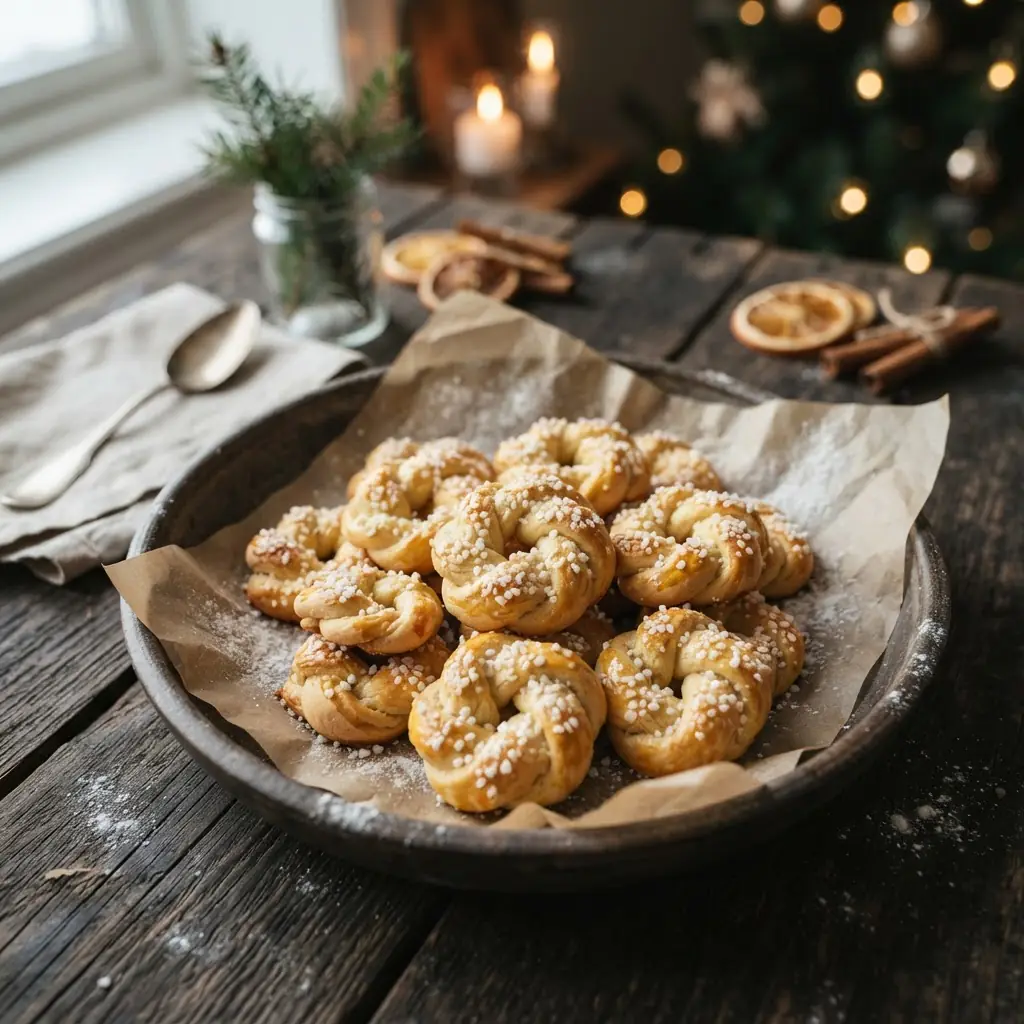
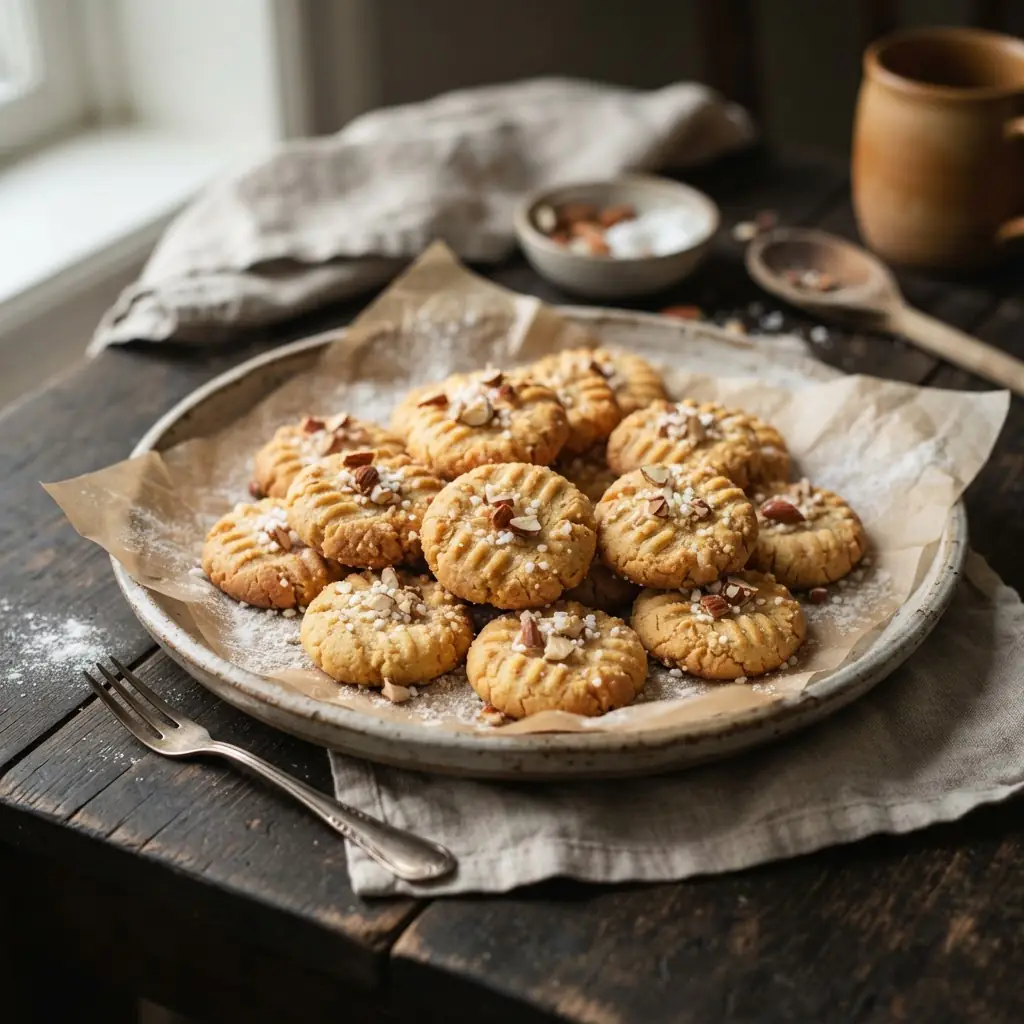
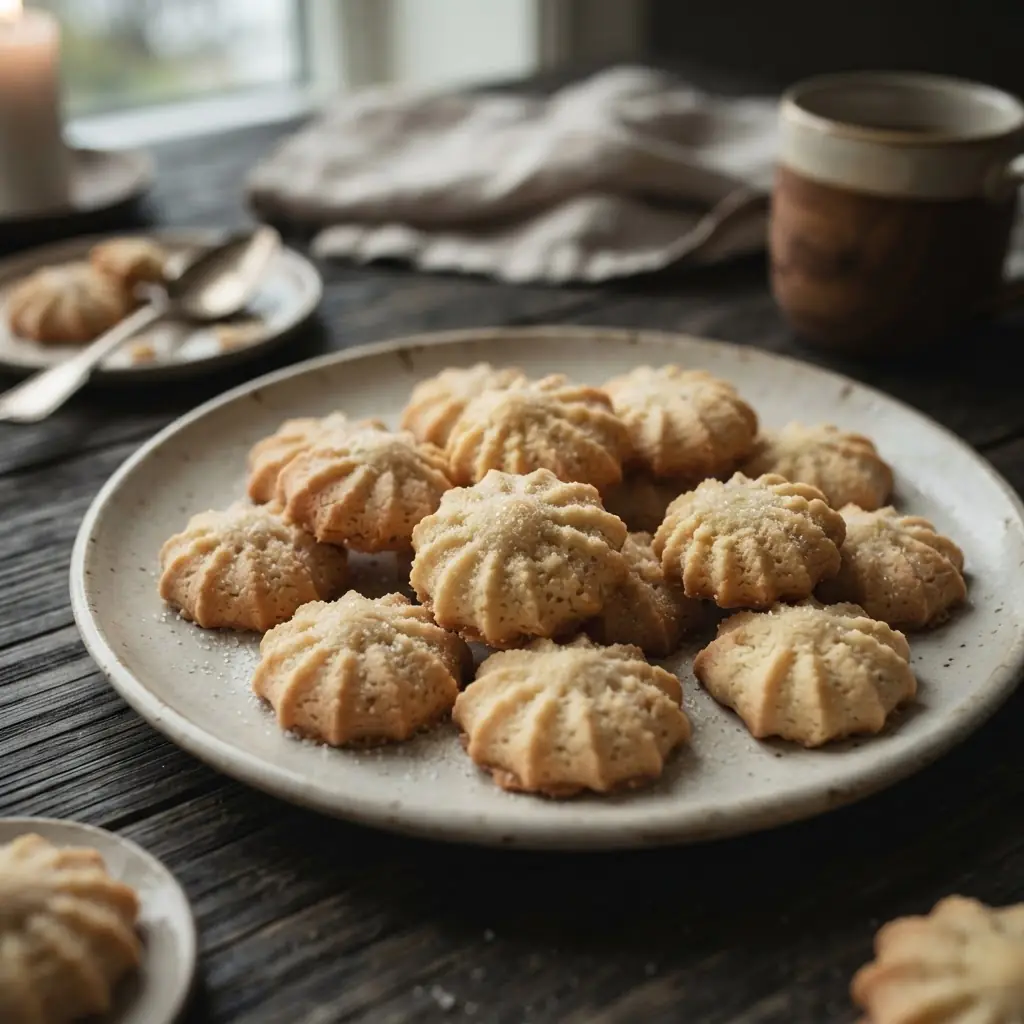
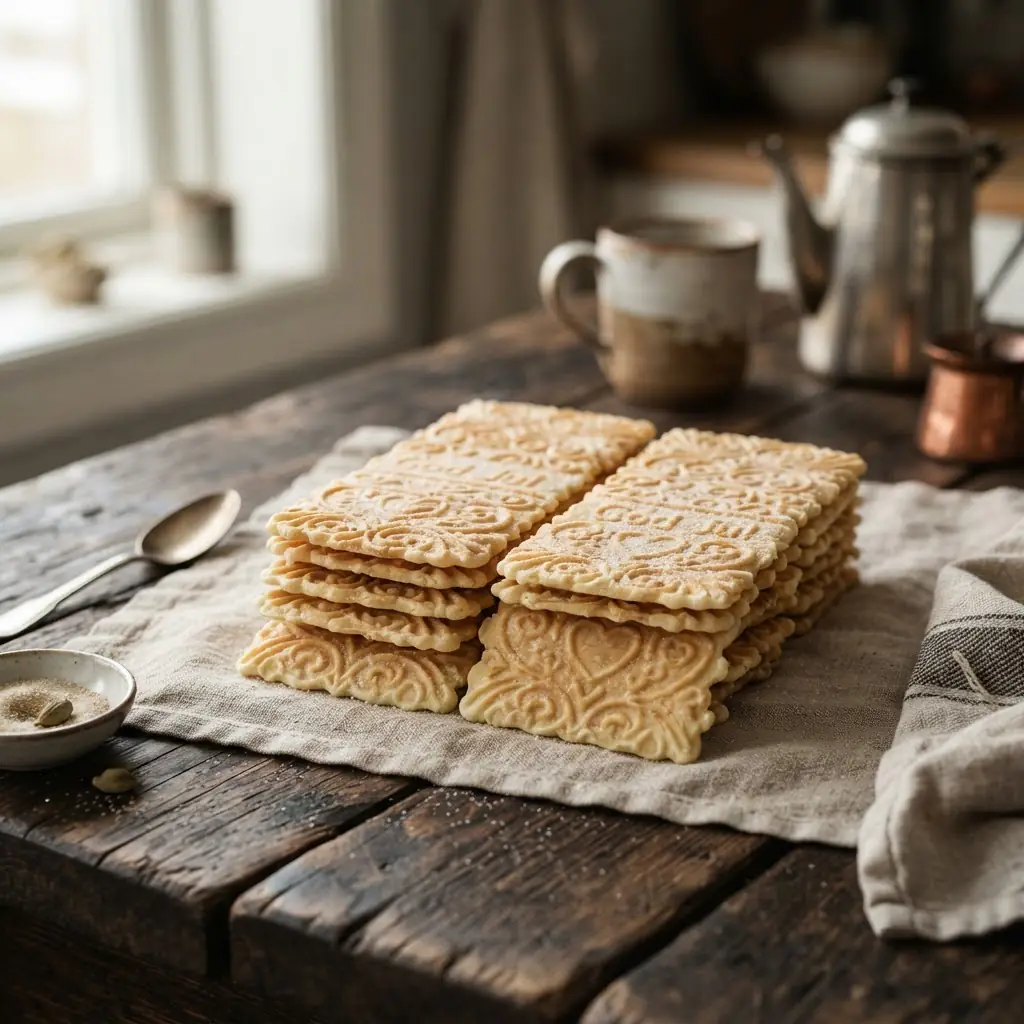
The baking starts weeks ahead and is the part most people actually inherit. Julekake, a cardamom bread studded with raisins and candied peel, is the loaf of the season. Then the syv slag — the seven sorts of small biscuit a household was once expected to have ready: pepperkaker rolled paper-thin into hearts and pigs, krumkake and goro baked on patterned irons, berlinerkranser looped from a dough enriched with sieved hard-boiled yolk, serinakaker forked and scattered with almond, sandkaker pressed into fluted tins, fattigmann cut, threaded and fried. Which seven is a family question. That there should be seven is the tradition.
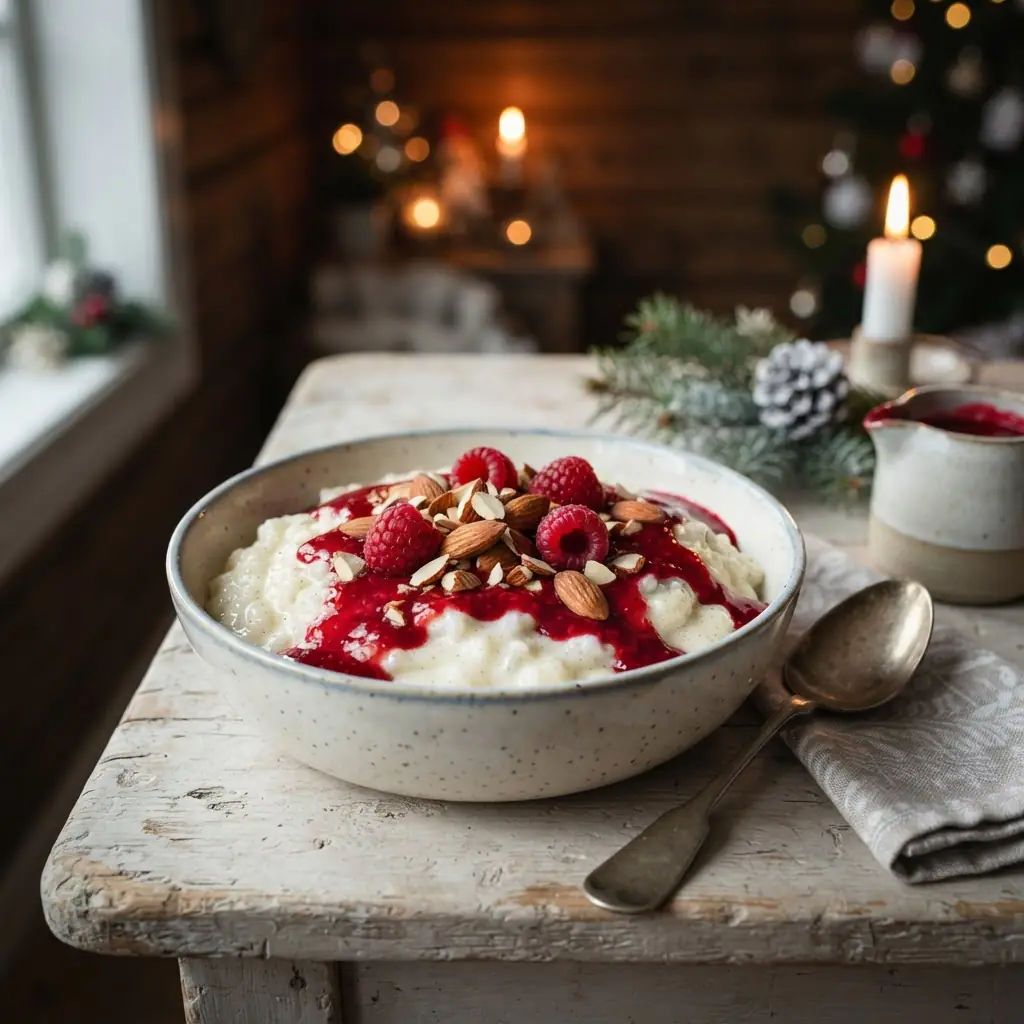
Dessert is riskrem, and it is a leftovers dish by design. Rice porridge cooked earlier — traditionally with a bowl set outside for the fjøsnisse, the barn spirit — is cooled and folded into whipped cream, served with a chilled red berry sauce. A single blanched almond is hidden in the bowl, and whoever finds it wins a marzipan pig. Winning it and saying nothing until the last serving has been dished up is, in many families, considered the correct way to play.
This collection gathers the twenty recipes in the archive whose own text already names Christmas, Advent or the seven sorts. Dishes that belong to the season in practice but that the archive places elsewhere in the year have been left out rather than reassigned.
The cold table is where this collection's risk sits. Rakfisk is raw fermented fish and fenalår is a cured meat; both are written around professionally produced product rather than a home cure, and both carry food-safety callouts on their own pages with links to public-health authorities. Read the callout before you buy, store or serve them.
Slow-roast pork belly with shatteringly crisp crackling — the great Christmas Eve roast of the east.
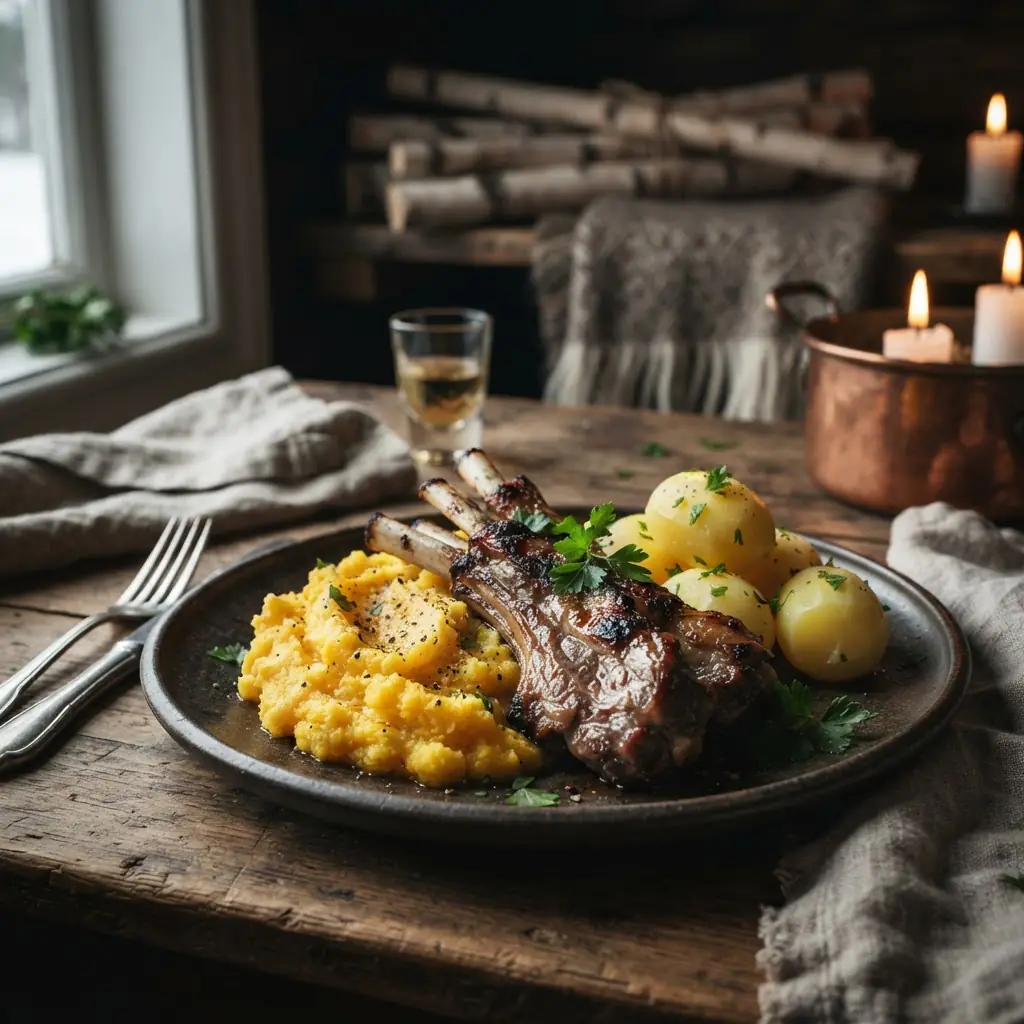
Salt-cured, dried lamb ribs steamed over birch sticks until falling from the bone — the western Christmas roast.
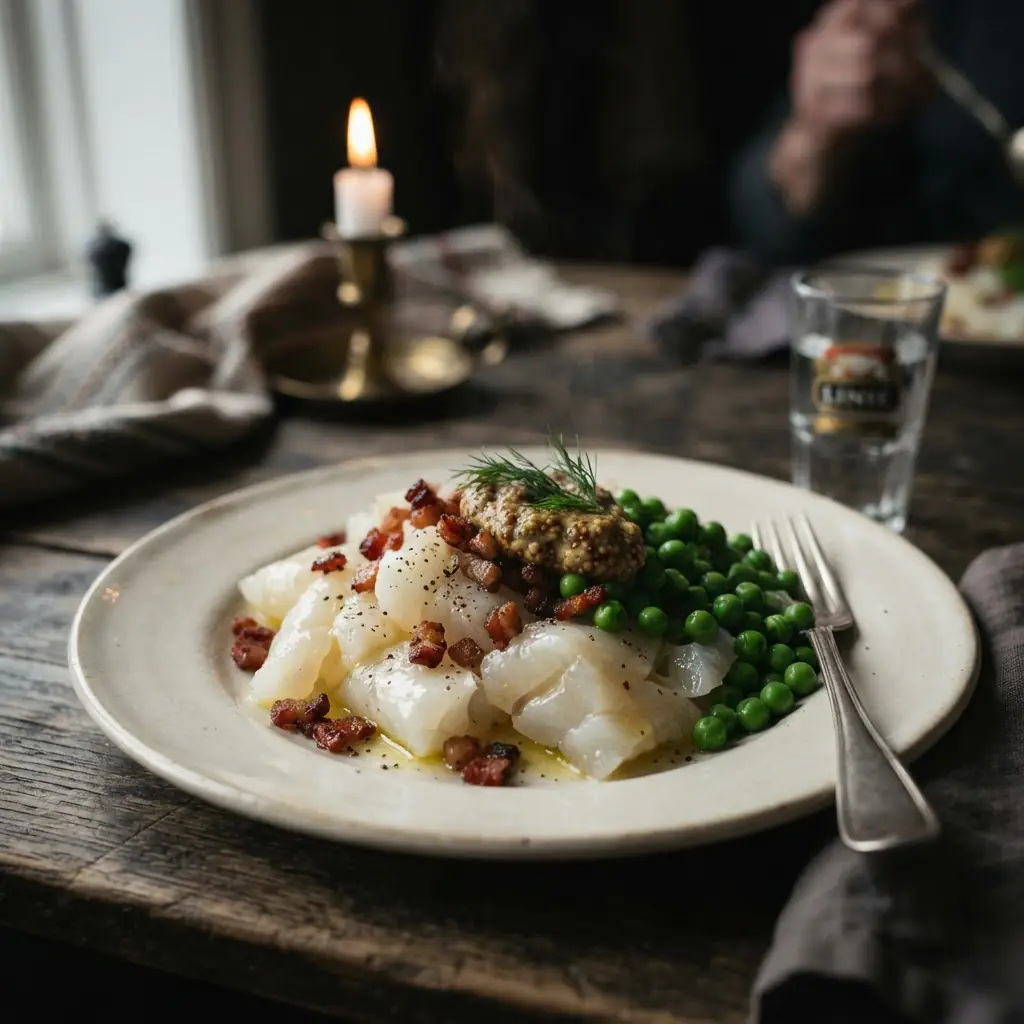
Lye-cured stockfish poached to a translucent, quivering jelly, served with bacon, peas and mustard.
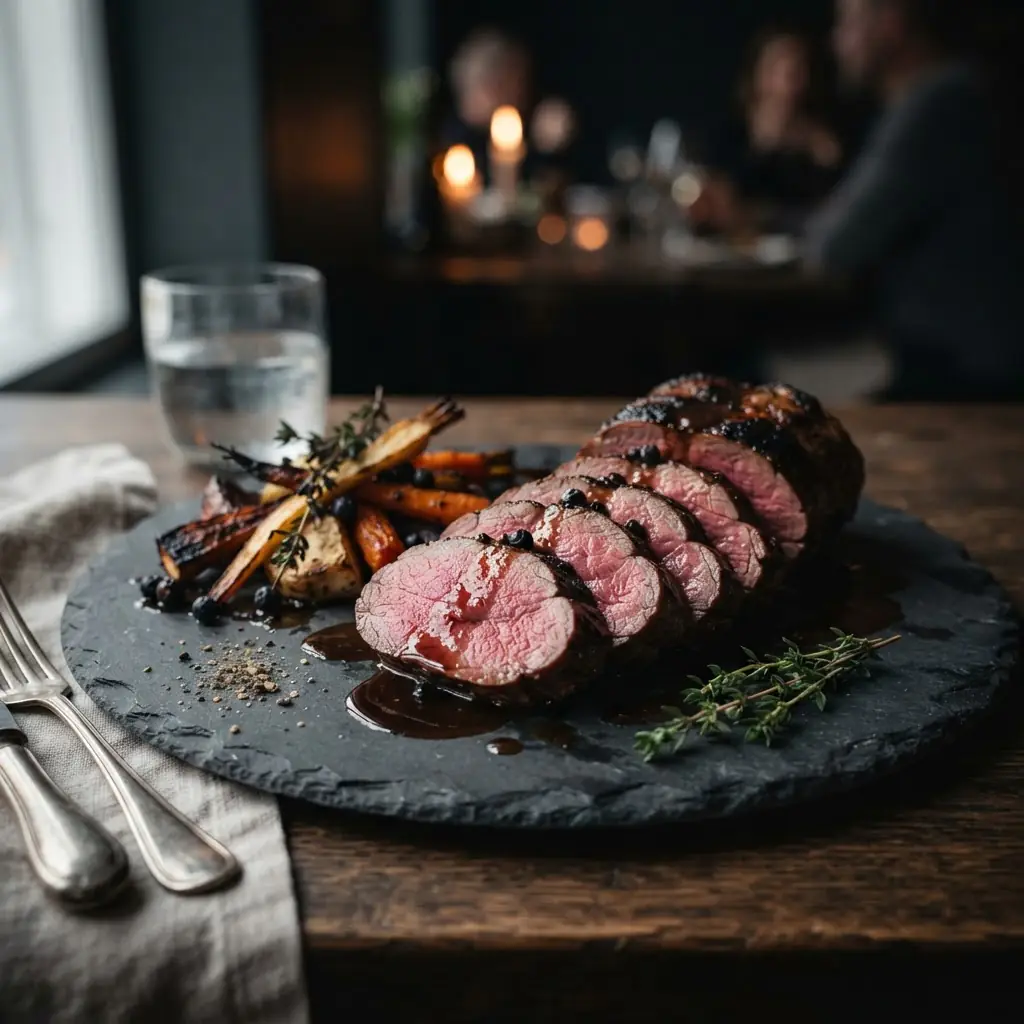
Roast saddle of reindeer with a juniper-and-thyme crust, served pink with a glossy game sauce.
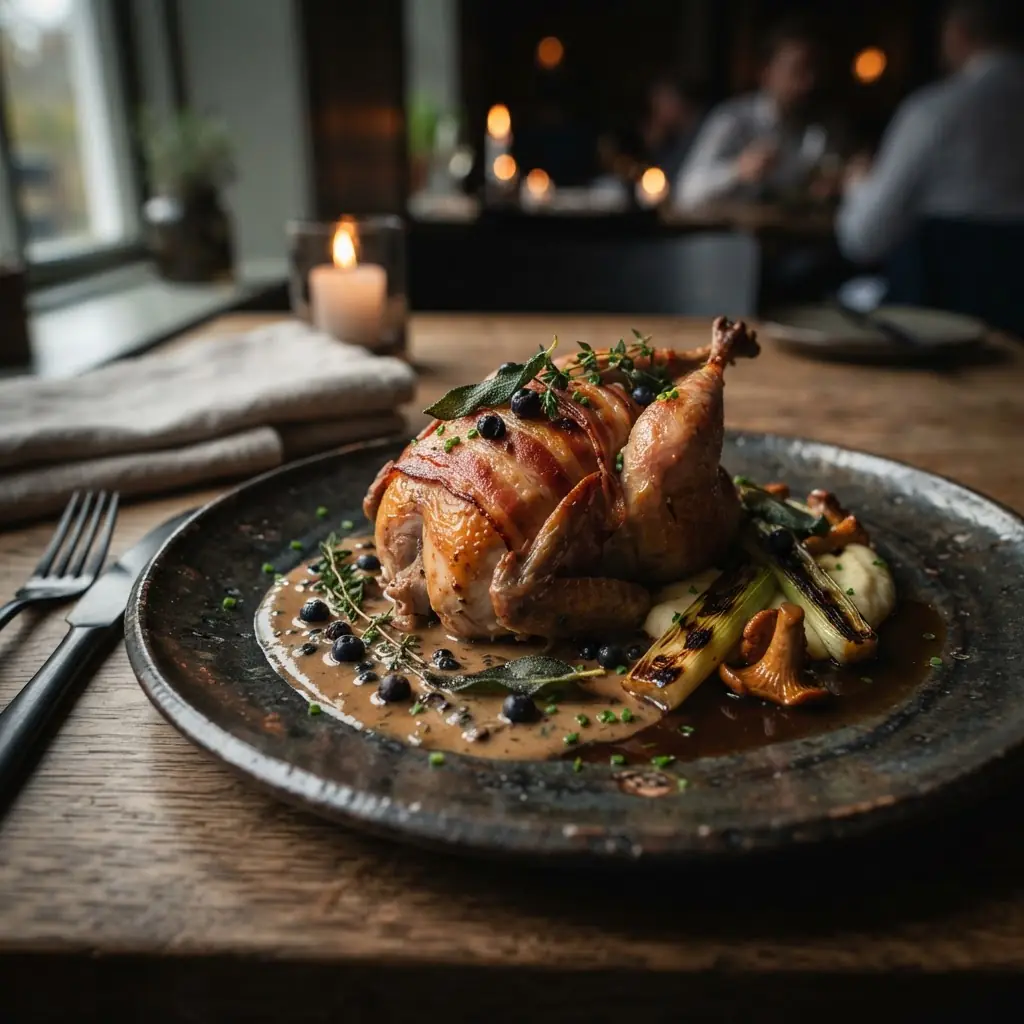
Roasted ptarmigan in a cream-and-game sauce, the leanest of northern birds turned rich and tender.
Seasoned pork patties fried golden and simmered in gravy — a mainstay of the Christmas table.
Finely shredded cabbage braised with caraway, vinegar and a little sugar — the essential Christmas side.
A jewel-toned salad of pickled herring, beetroot, apple and potato bound in a light soured cream.
Valdres trout fermented for months to a soft, pungent intensity, served raw with onion, flatbread and sour cream.
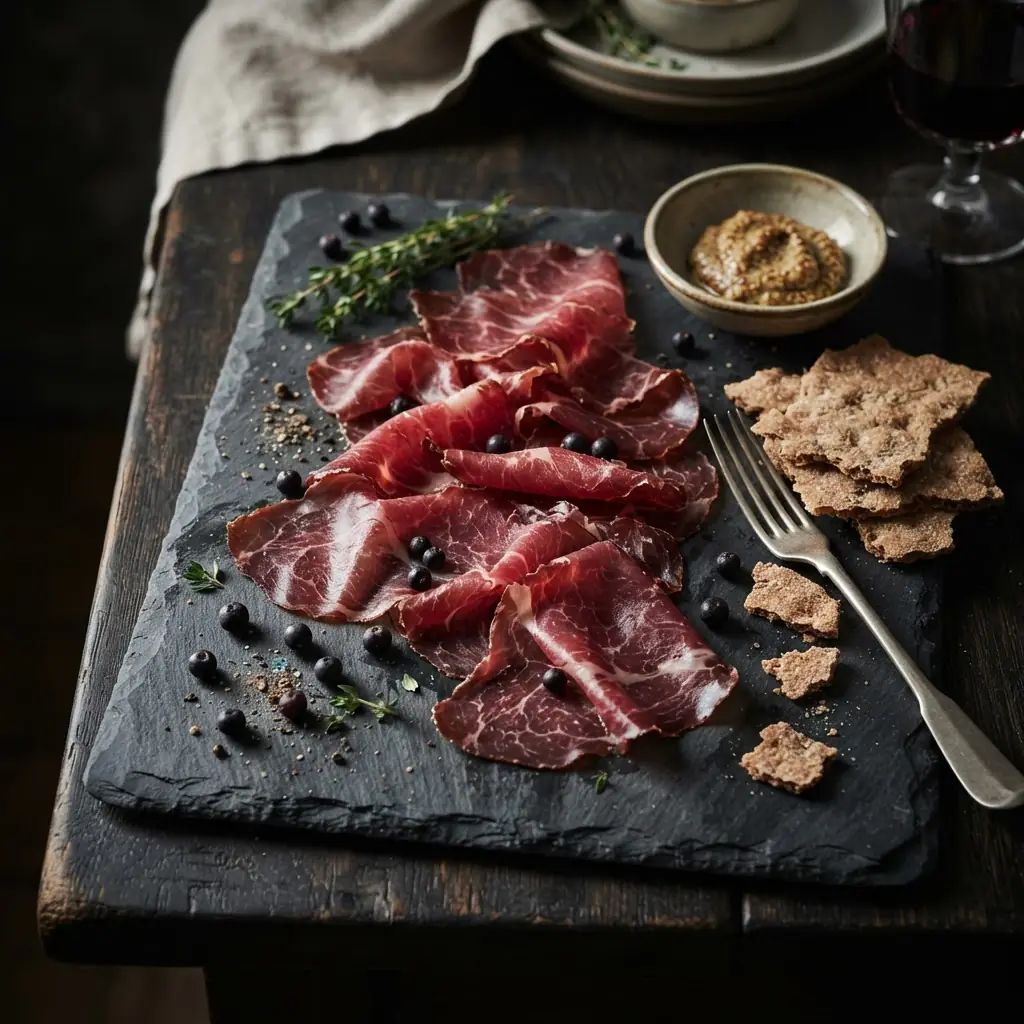
Professionally salt-cured, air-dried leg of lamb from the far north — sliced paper-thin and served with crisp flatbread and juniper.
Cold rice pudding folded with whipped cream and vanilla, crowned with a glossy red berry sauce.
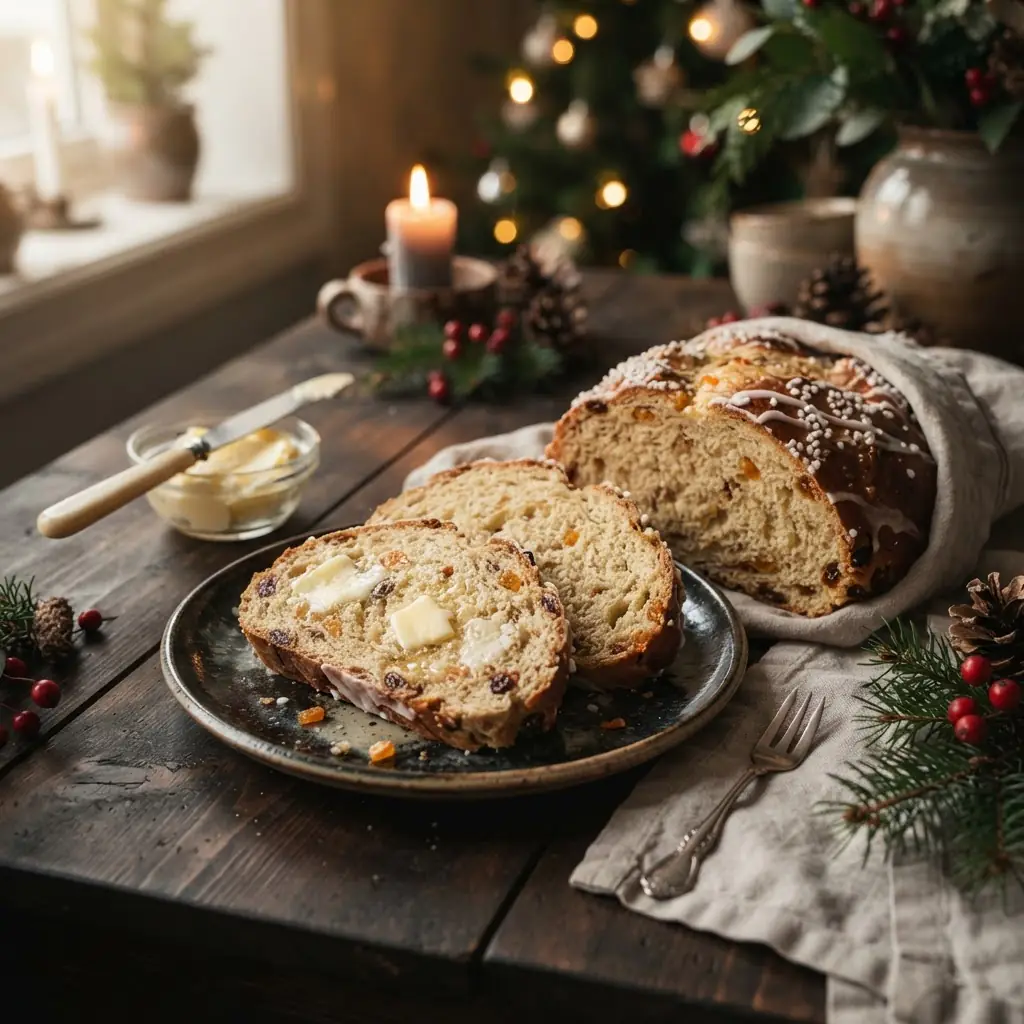
A cardamom-scented Christmas bread studded with raisins and candied peel, sliced and spread with butter.
Wafer-thin, deeply spiced gingerbread snapped from festive shapes — the crispest scent of Christmas.
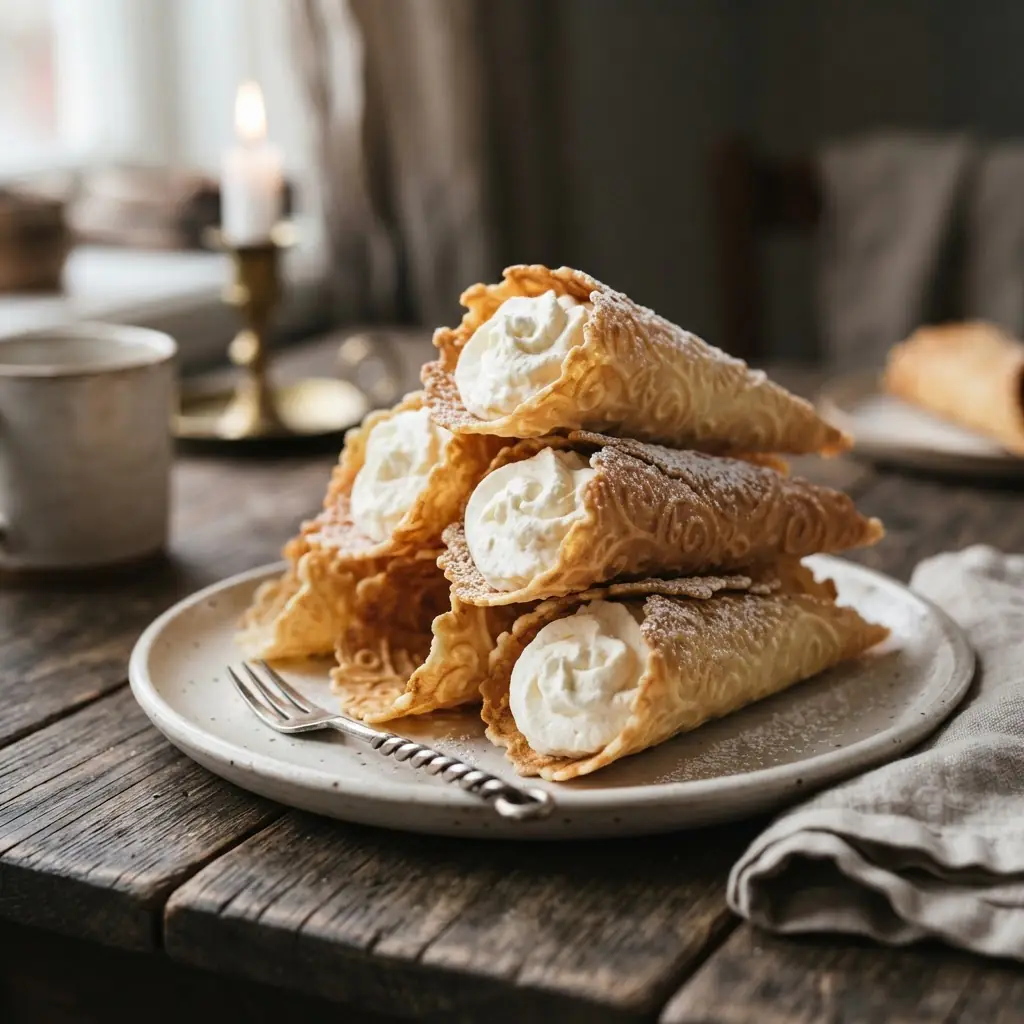
Crisp, patterned wafer cookies rolled into cones on a wooden form — often filled with whipped cream.
Delicate wreath cookies of cooked-yolk dough, tied in a knot and finished with pearl sugar.
Crumbly vanilla butter cookies brushed with egg and pearl sugar, pressed with a fork before baking.
Buttery almond tart shells pressed into fluted moulds and baked until sandy-crisp and golden.
A delicate cardamom-and-cream wafer, pressed with a decorative iron into elegant rectangles.
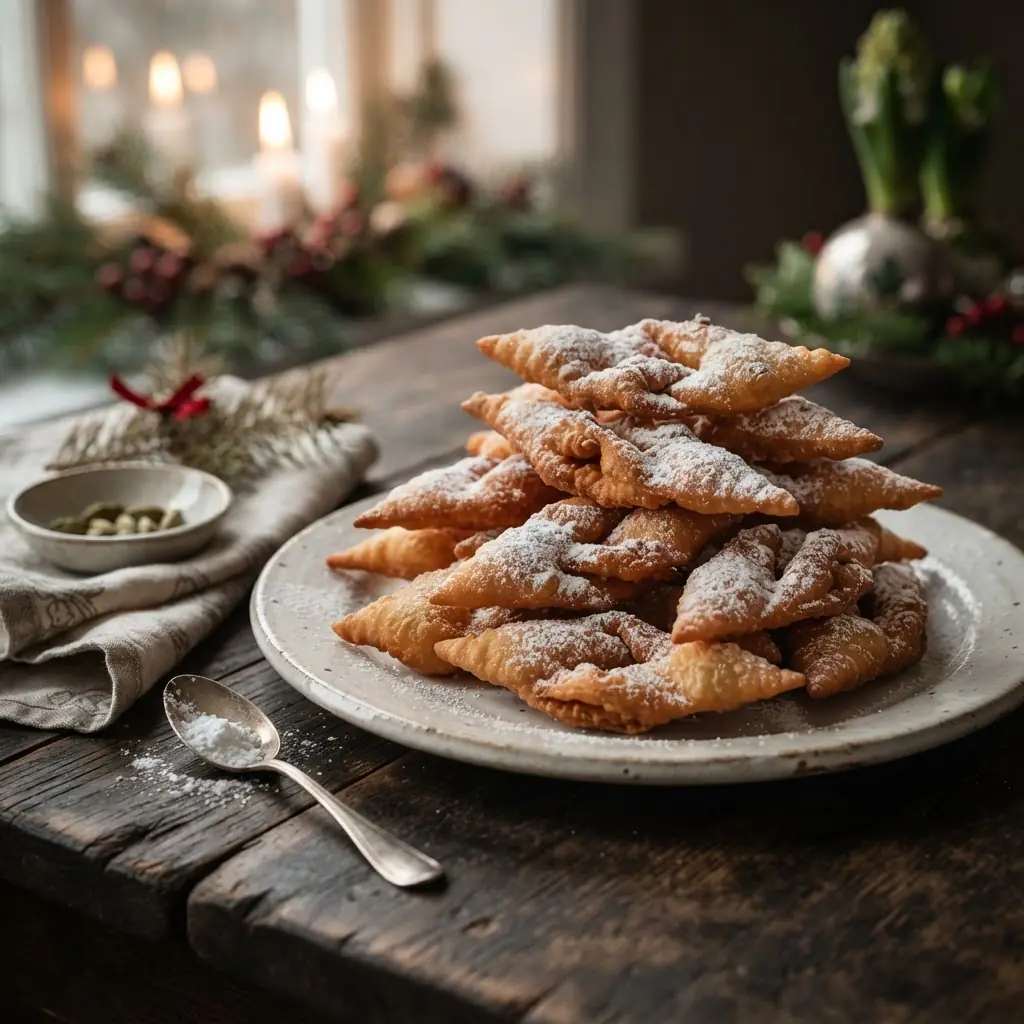
Cardamom-and-cognac dough cut into diamonds, knotted and deep-fried, dusted with icing sugar.
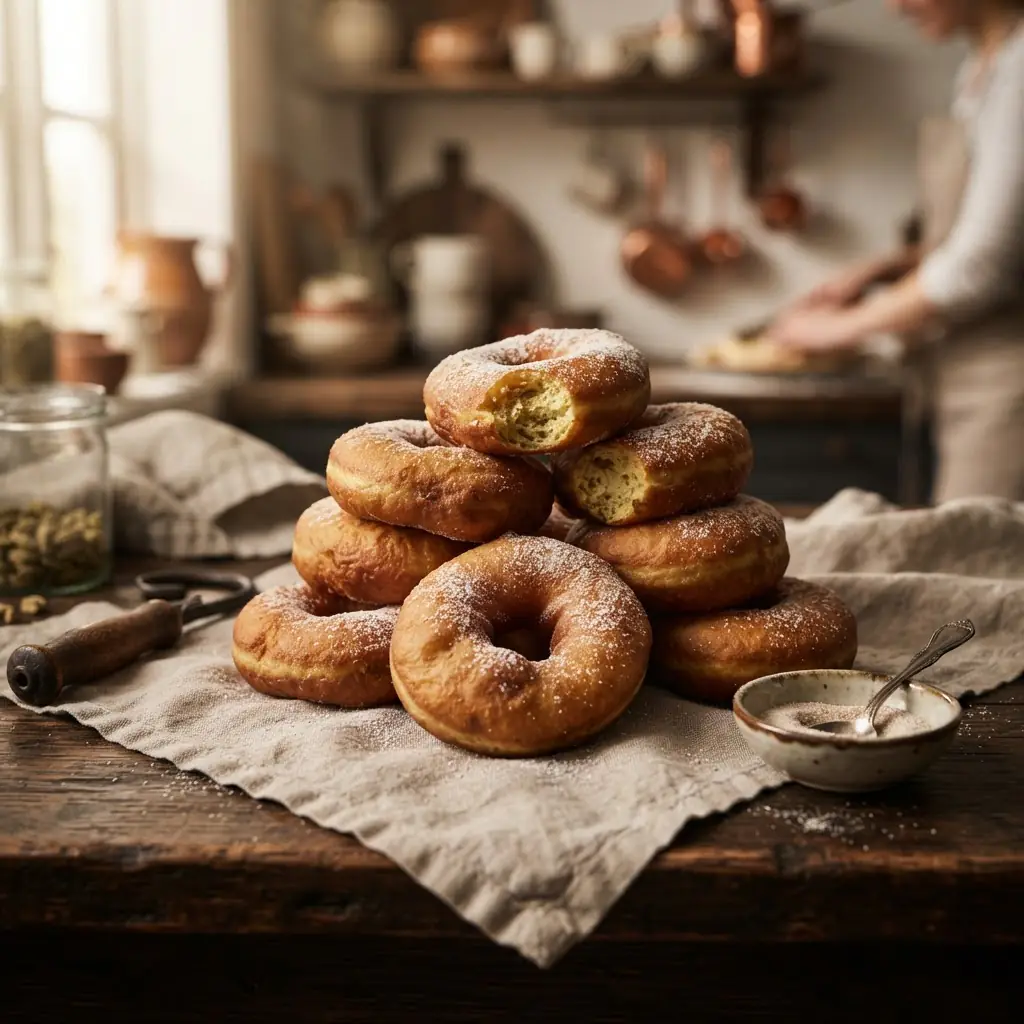
Old-fashioned cardamom doughnuts fried until golden — cakey, lightly spiced and dusted with sugar.
Written by the Norcook editorial archive. No individual author is named on this hub, and its source panel is not a qualified review of any linked recipe — see the editorial and food-safety policy.
Content last checked: